Spaghetti Sauce

Updated Mar 16, 2026
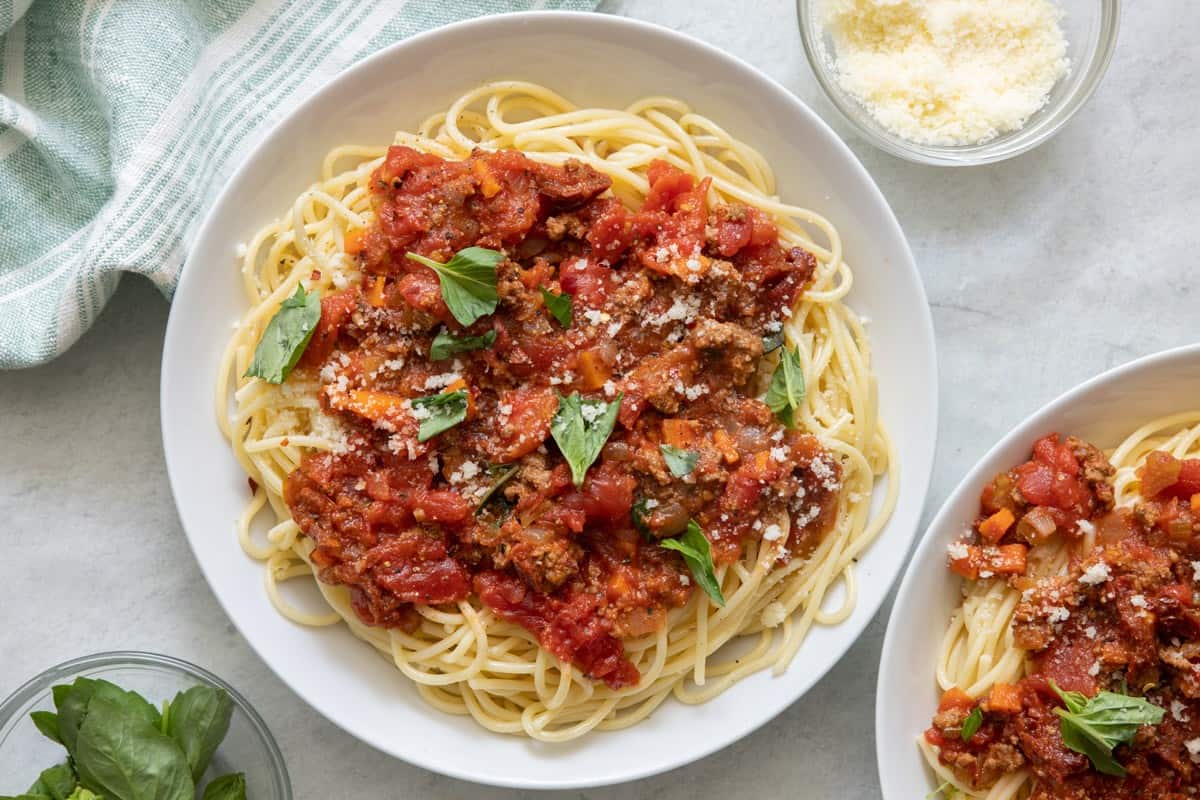
Homemade Spaghetti Sauce with ground beef, tomatoes, onion, celery, carrots, and my secret ingredient, sun-dried tomatoes, simmered into pasta sauce.
This post may contain affiliate links. Please read our disclosure policy.
Jump to Section
Spaghetti meat sauce from scratch is soo easy!

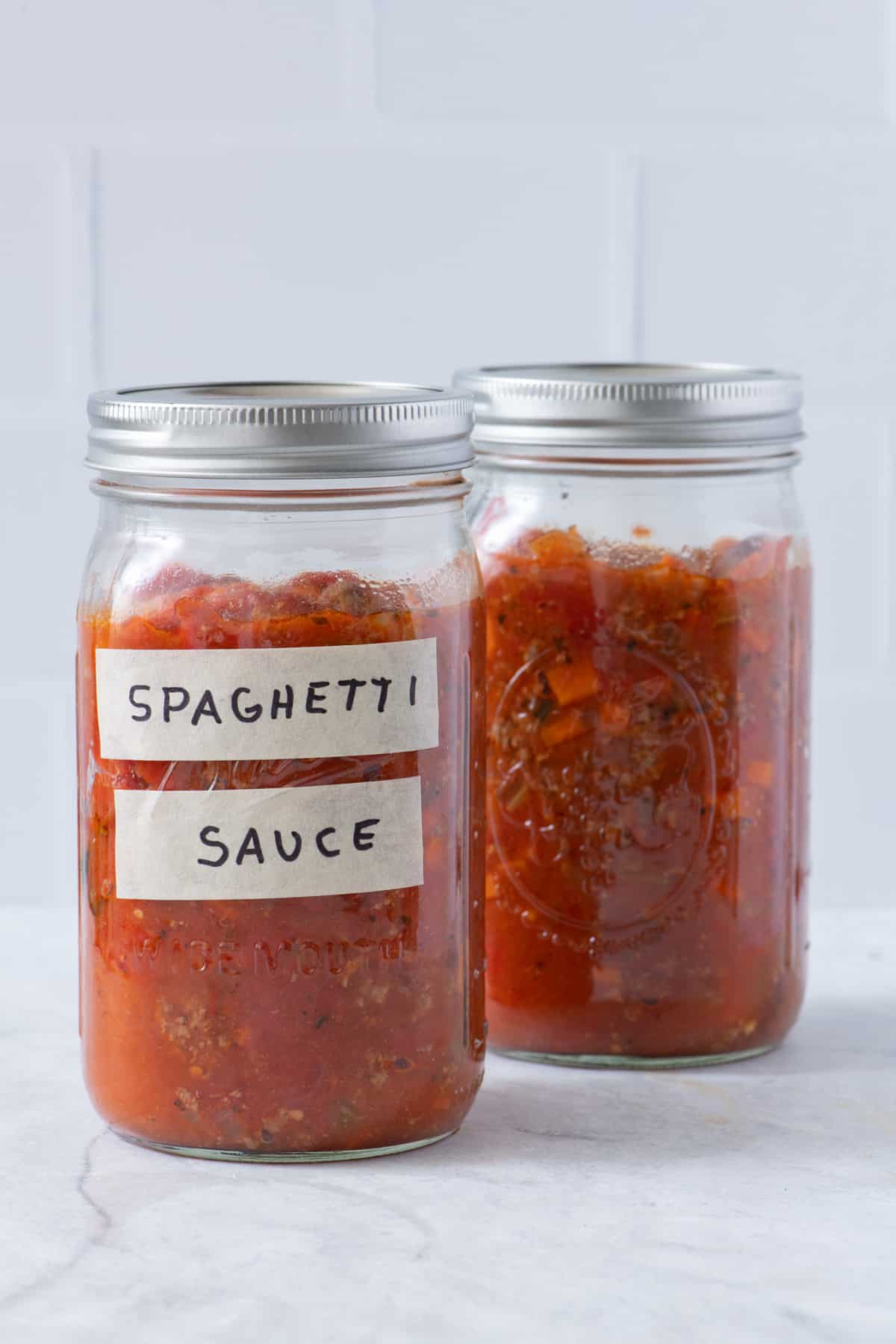
Spaghetti is, without a doubt, one of the easiest fallback meals. It’s simple, filling, and everyone seems to like it. The thing is, I’m not a big fan of jarred spaghetti sauce, and neither are my kids. It’s often watery, bland, and tastes more like tomato paste than anything else. Once I started making it at home, it was hard to go back. This homemade chunky spaghetti sauce is what I make now, and when I make it, I make extra to freeze at least 2 additional servings. It starts with onion, celery, and carrots cooking down in the pot, then ground beef and tomatoes get added, and everything simmers together for a while. I also stir in a little tomato paste and some sun-dried tomatoes, which gives the sauce a deeper tomato flavor without needing to cook it all day. It’s seriously, soo good!
Happy Cooking!
– Yumna
Spaghetti Sauce Ingredients
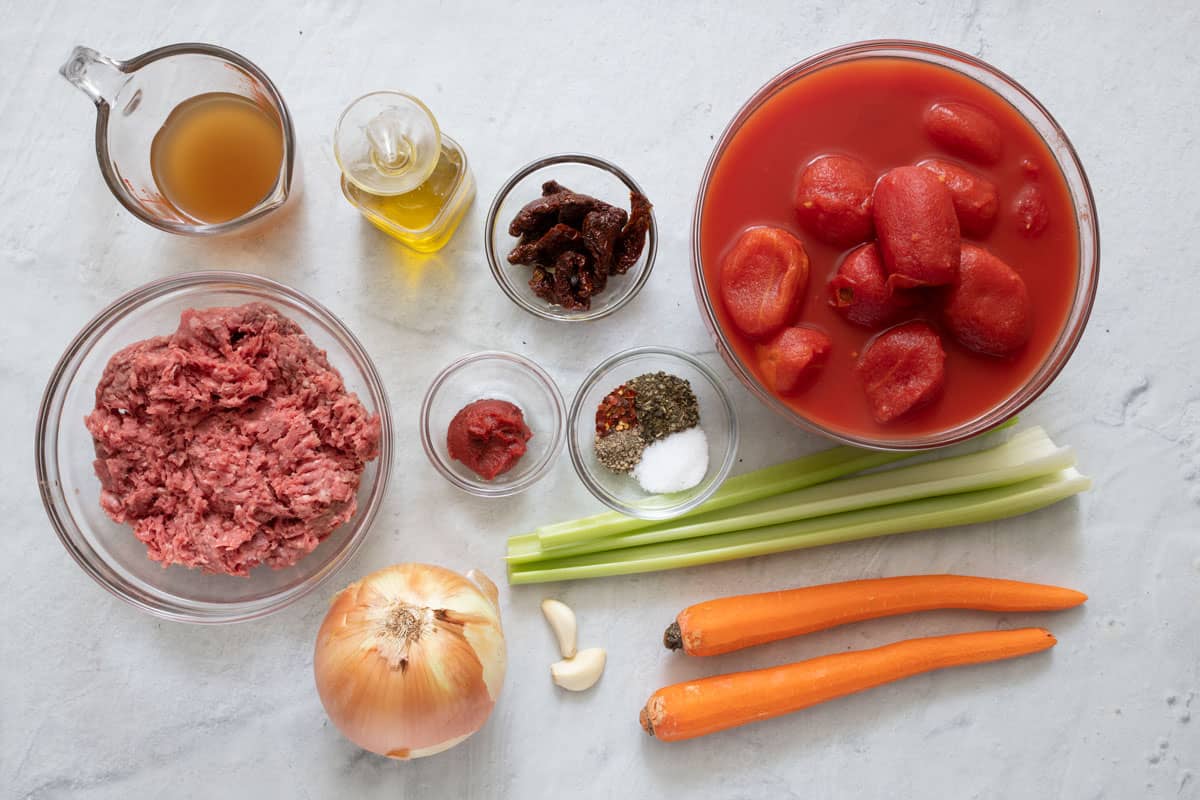
- Ground beef: For spaghetti sauce, I recommend lean ground beef. I typically use 85% lean ground beef, but you can go up to 93% lean if you want. Ground turkey, lamb, or chicken all work well in this recipe, too. Or, to keep it vegetarian, just skip it!
- Vegetables: Start the spaghetti sauce with a base of diced yellow onion, diced celery, and diced carrots, then add minced garlic. Dice the vegetables fairly small so they soften and blend into the sauce as it cooks. Yellow onion works best here, but white onion also works.
- Seasoning: Italian seasoning, salt, pepper, and red pepper flakes.
- Tomatoes: I like to use a combination of canned whole peeled tomatoes, tomato paste, and sun-dried tomatoes. Crush the whole tomatoes by hand before adding them so the sauce stays a little chunky. If you prefer a smoother sauce, you can use canned crushed tomatoes instead (Read my tip on making the entire sauce smooth). If the sun-dried tomatoes are packed in oil, drain them first and chop them before adding.
- Vegetable broth: Homemade vegetable broth or store-bought will work fine in this recipe.
How to Make Spaghetti Meat Sauce
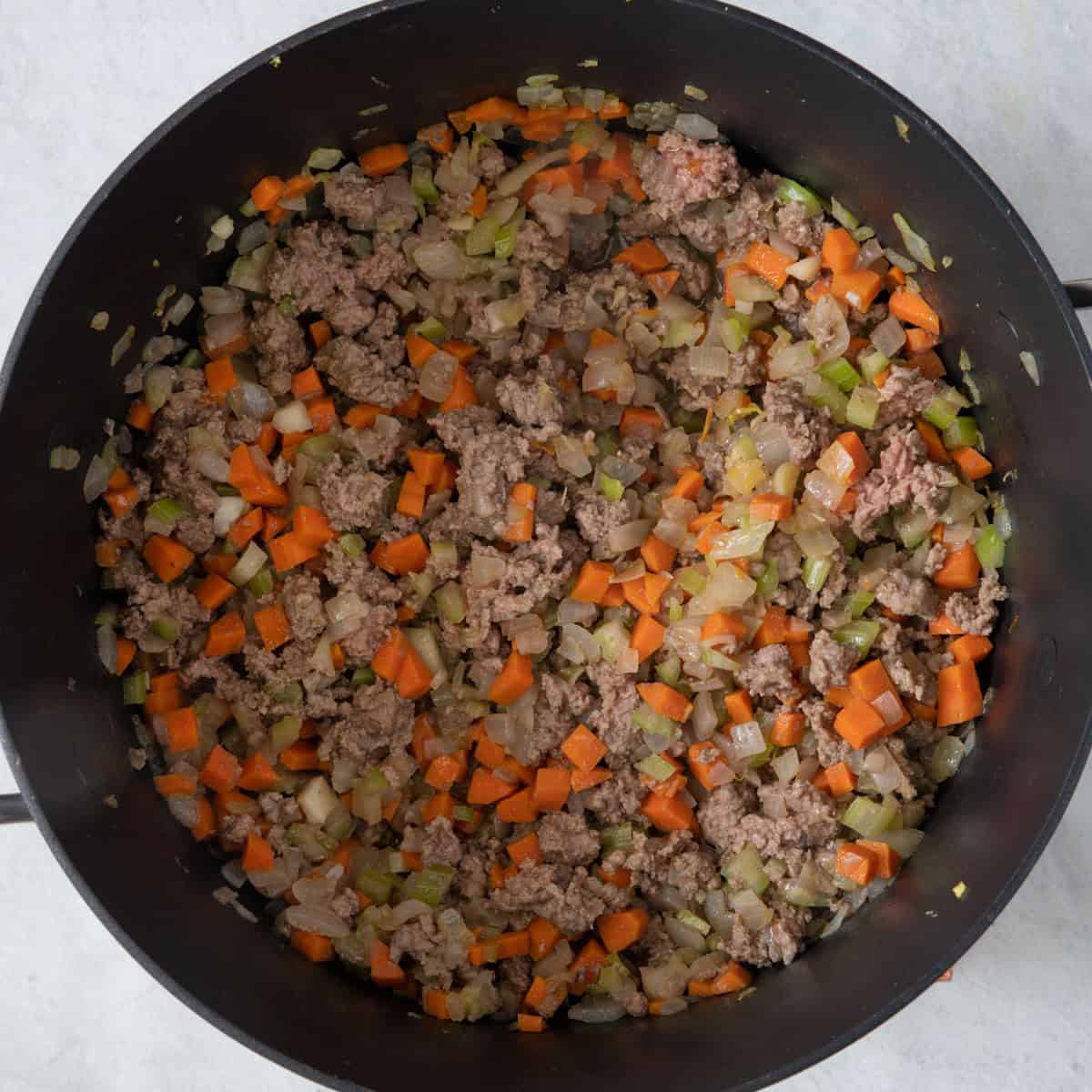
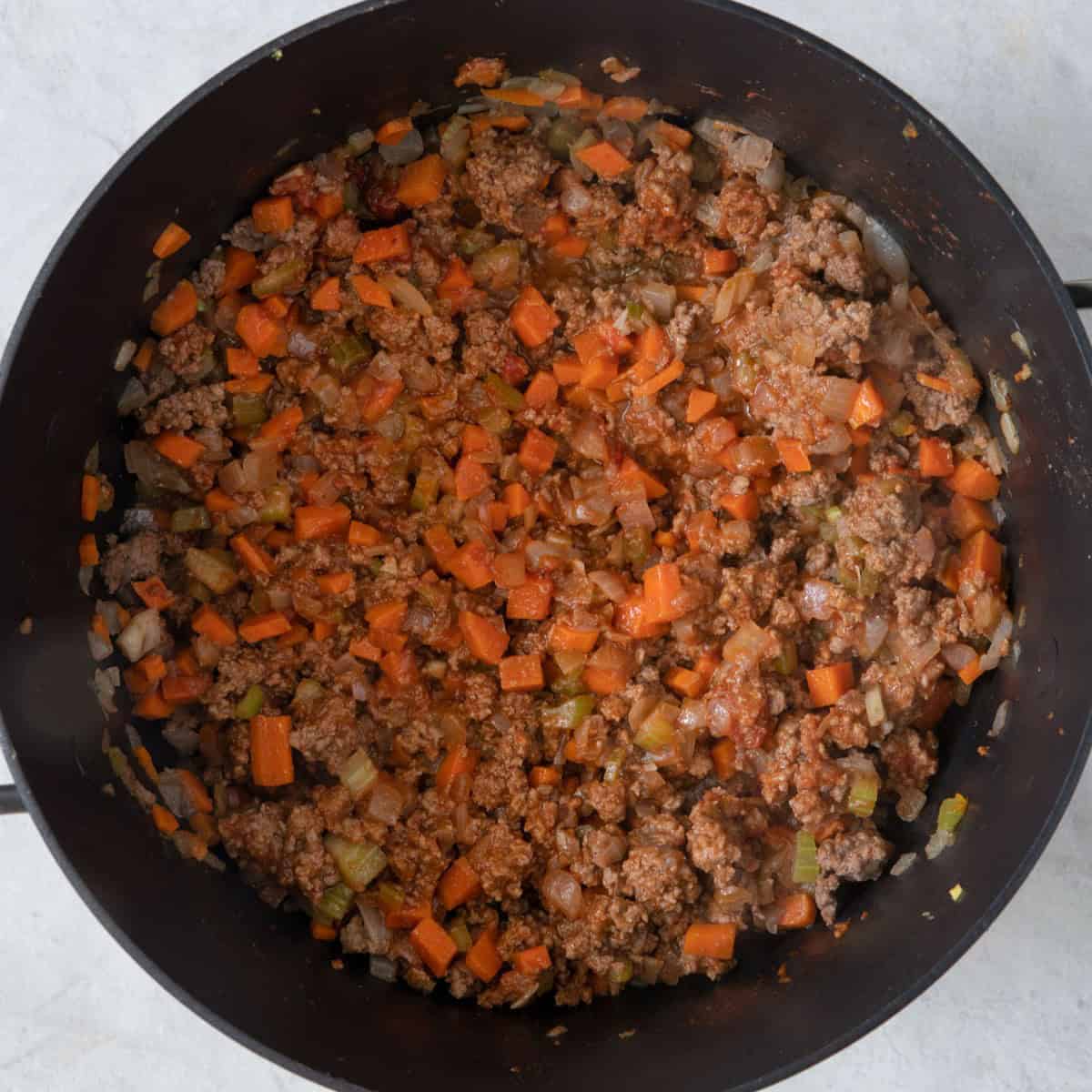
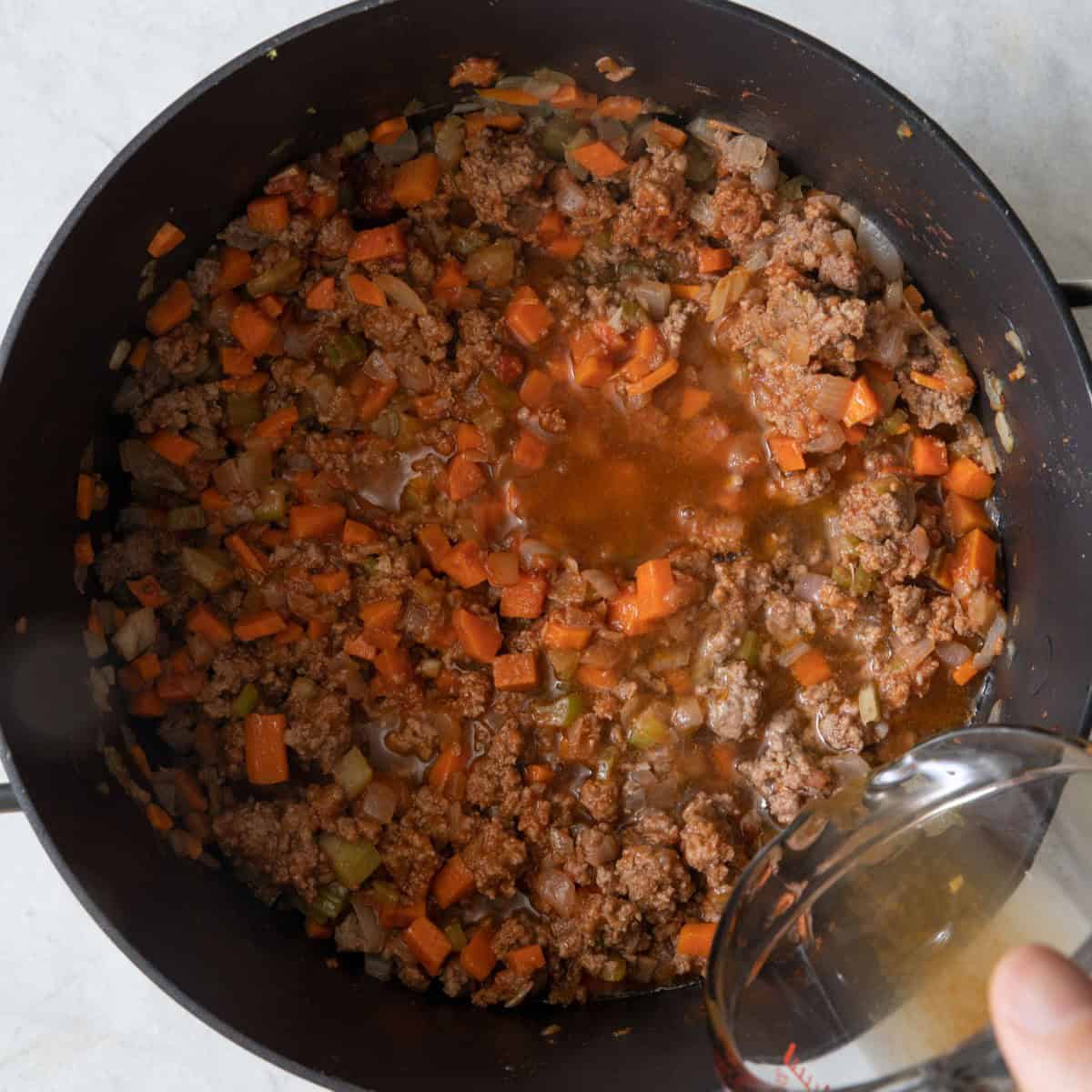
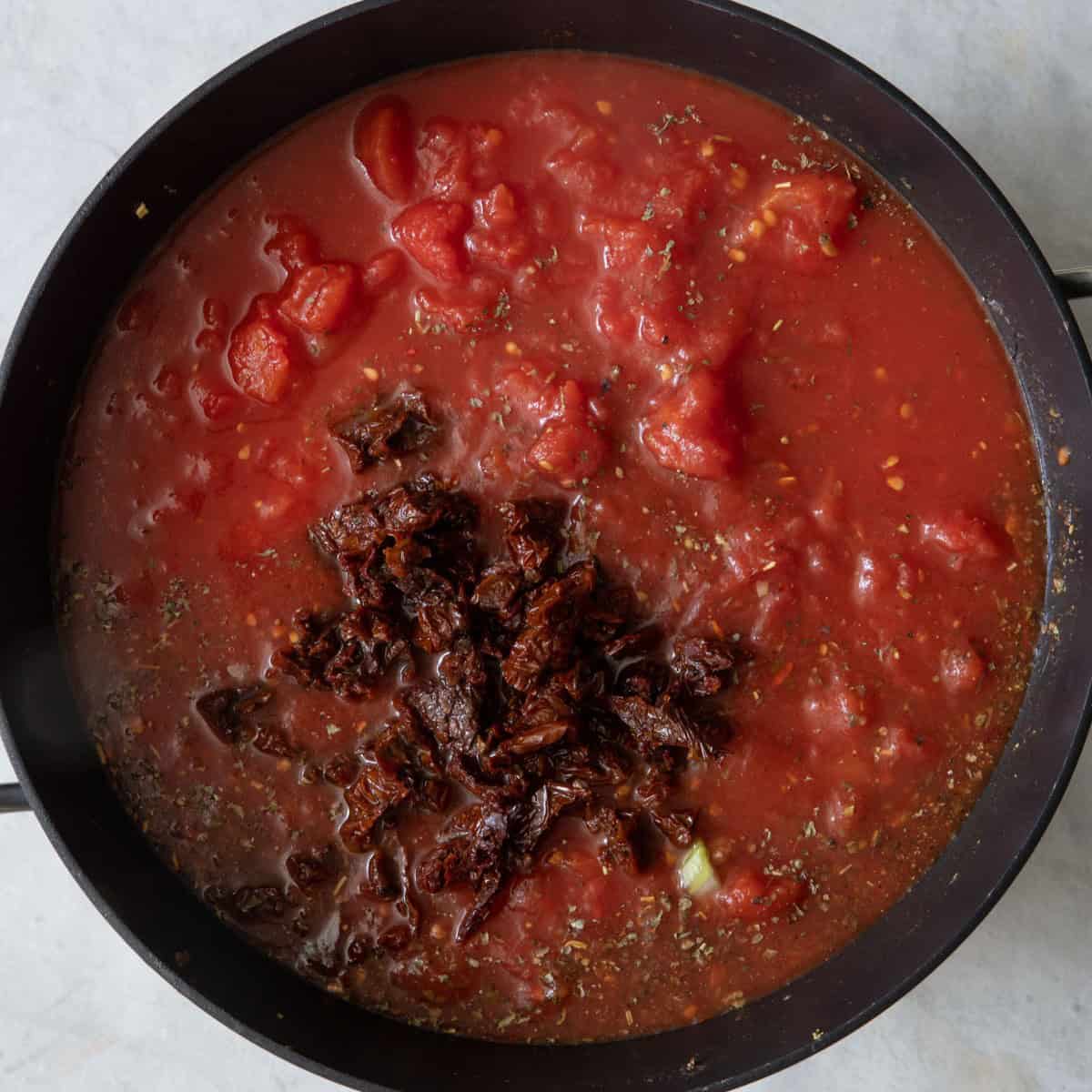
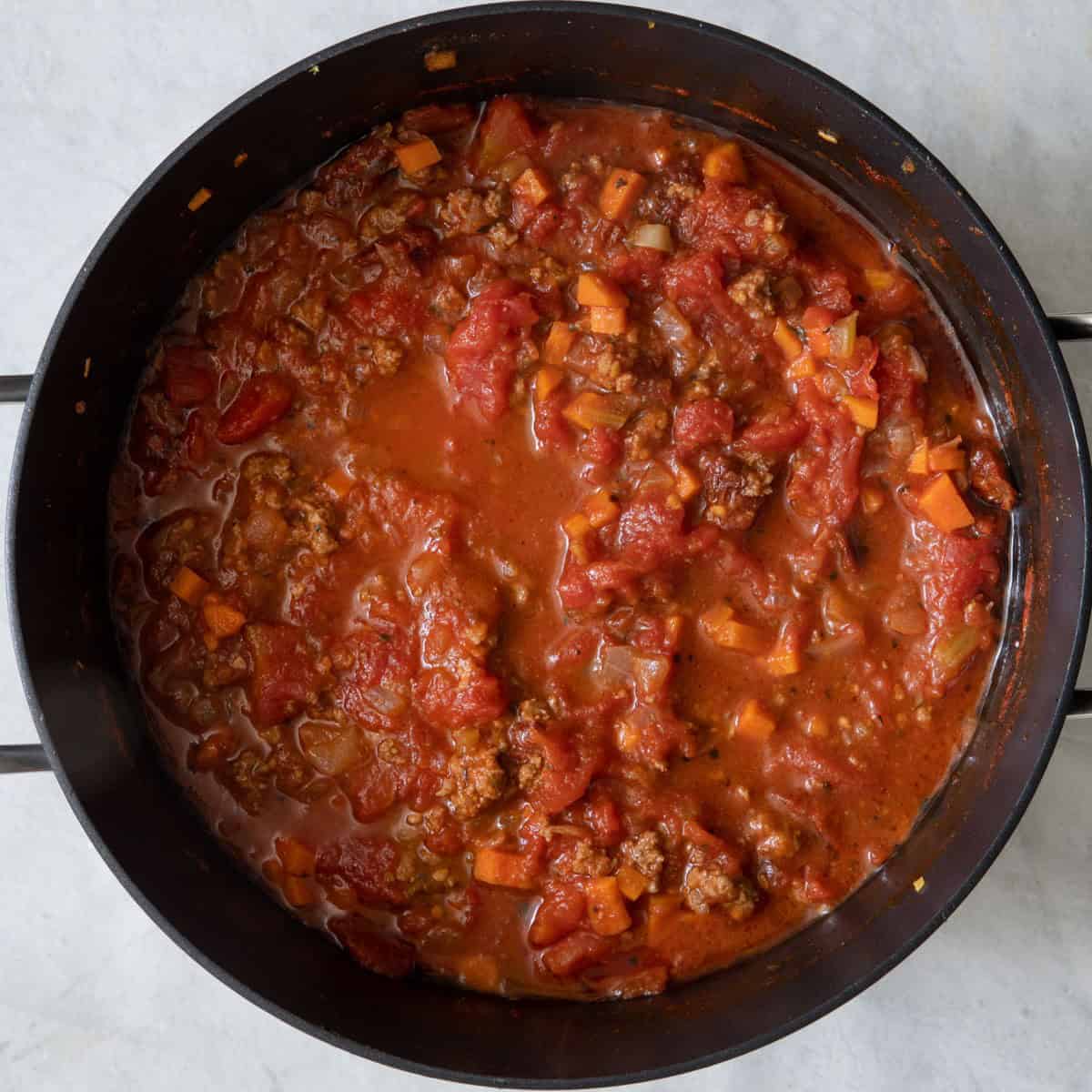
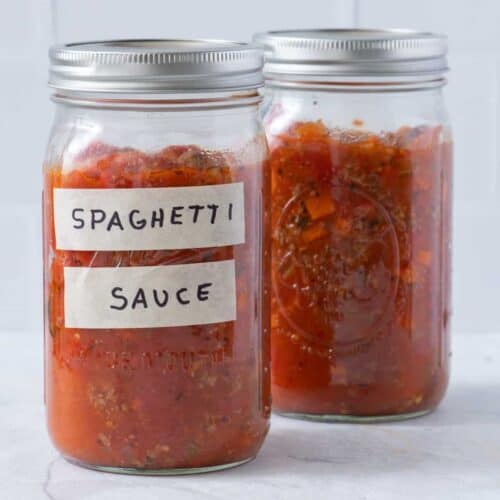
Homemade Spaghetti Sauce Recipe
Ingredients
- 1 tablespoon olive oil
- 1 onion diced
- 3 celery stalks diced
- 2 carrots diced
- ½ tablespoon Italian seasoning no salt added
- 2 garlic cloves minced
- 1 teaspoon salt
- ½ teaspoon black pepper
- ¼ teaspoon crushed red pepper
- 1 pound lean ground beef
- 1 tablespoon tomato paste
- ½ cup low sodium vegetable broth
- ¼ cup sundried tomatoes in oil
- 2 28-ounce canned whole peeled tomatoes crushed by hand into a chunky consistency
- spaghetti for serving
Instructions
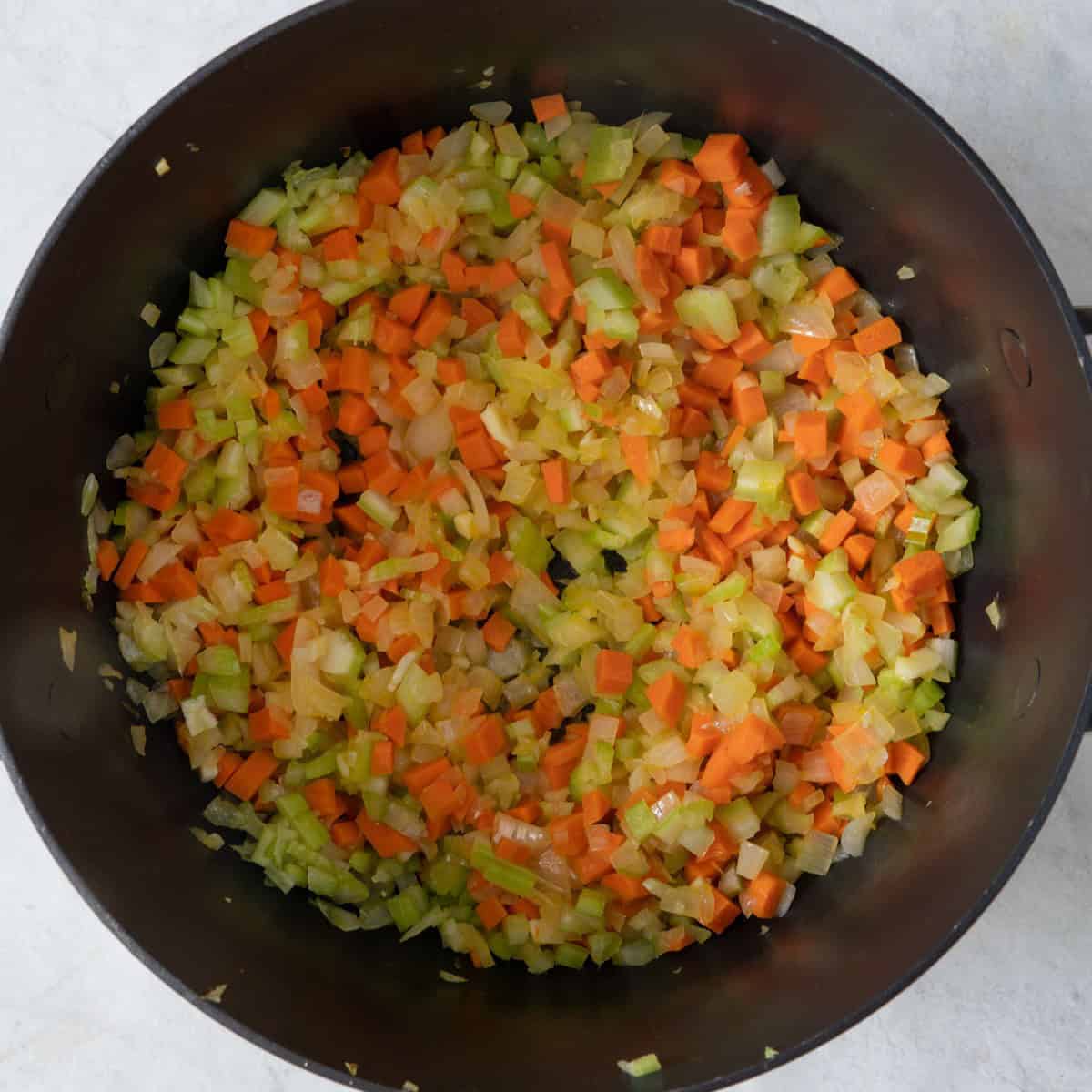
- In a large Dutch oven, add the olive oil and heat over medium heat. Add the onion, celery, and carrot and cook until the onion is translucent and the vegetables have begun to soften, 7–9 minutes.
- Add the Italian seasoning, garlic, salt, pepper, and red pepper flakes to taste. Cook until the garlic is fragrant, 1–2 minutes.
- Add the ground beef and cook, stirring occasionally to break up any large chunks, until the meat is cooked through and no pink remains, 3–5 minutes.
- Add the tomato paste and cook for 2–3 minutes, then deglaze the pan with vegetable broth, stirring to scrape up any brown bits that have formed on the bottom of the pan. Cook until the broth is reduced, about 2 minutes.
- Add the sun-dried tomatoes and whole peeled tomatoes and stir well to combine. Bring the sauce to a boil, then reduce the heat to a simmer and cook for 35–45 minutes. Taste and adjust the seasoning with salt and pepper as needed.
Notes
Nutrition
Nutrition information provided is an estimate. It will vary based on cooking method and specific ingredients used.
How to Make the Sauce Smooth
If you prefer a smoother spaghetti sauce without noticeable vegetable pieces, dice the onion, celery, and carrots very finely before cooking, or even pulse in a food processor so they are itty-bitty. This is actually an old Italian technique used when making a classic soffritto, the vegetable base for many pasta sauces.
The smaller the vegetables are cut, the more they break down as the sauce simmers. During the 35–45 minute cook time, they soften and slowly melt into the tomato base. By the time the sauce is finished, the vegetables are barely noticeable, but they’ve added a lot of flavor to the spaghetti sauce.
Recipe Variations
- Add more vegetables: This spaghetti sauce is a great way to clean out your fridge of extra vegetables. You could add zucchini, mushrooms, peppers, or eggplant to the mix. Just cook them with the onions, celery, and carrot, adjusting the amount of oil as needed.
- Stir in a Parmigiano-reggiano rind: Just toss it in while the spaghetti sauce simmers. I like to stockpile these rinds in my freezer to grab whenever I’m making a hearty recipe like this one! It’s a simple way to add a ton of flavor to soups, stews, and braises.
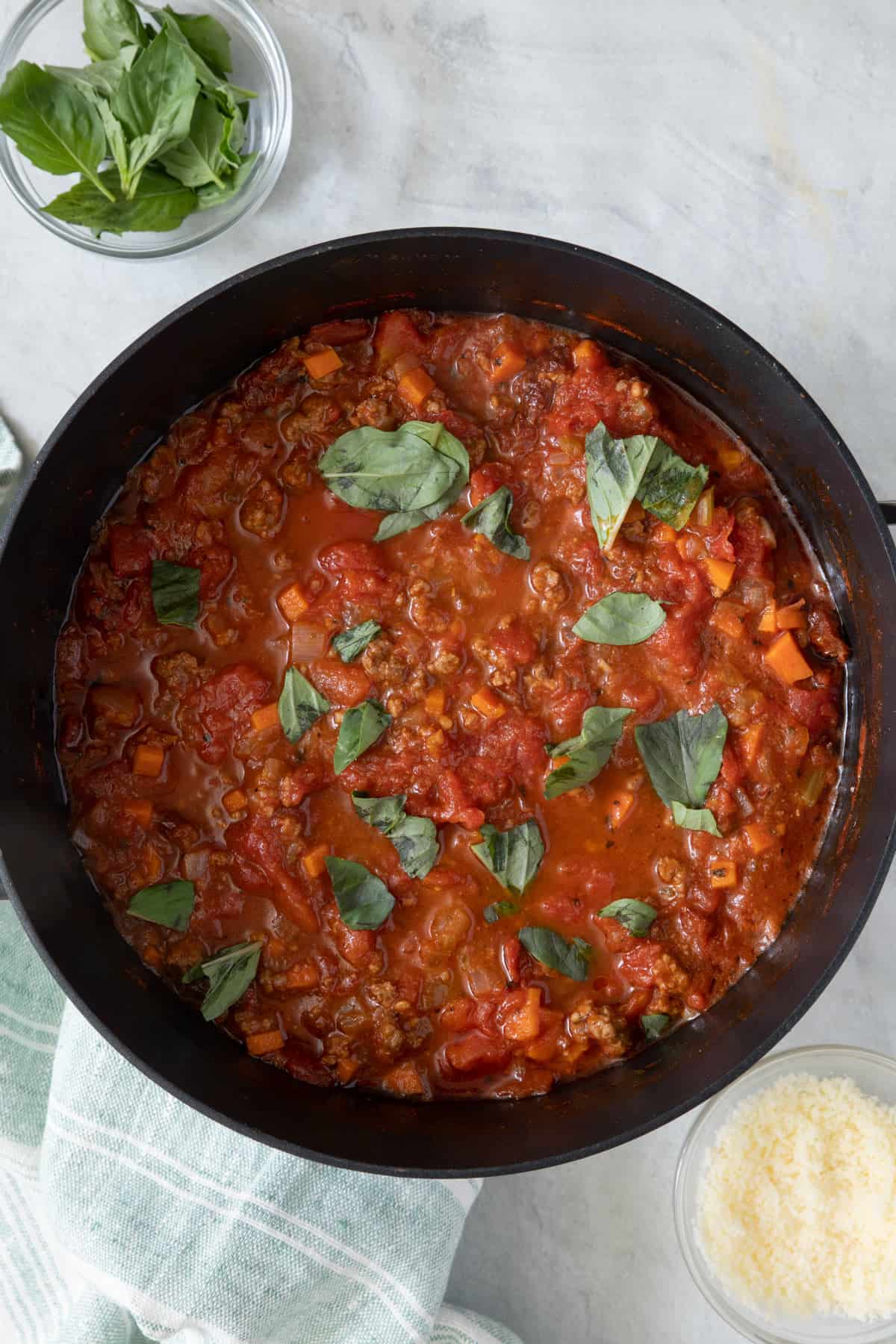
- Finish with fresh herbs: You could add a handful of chopped fresh parsley and chopped fresh basil in the final few minutes of cooking, before serving, for extra fresh flavor.
Recipe Tips
- Chop everything finely. This is a chunky spaghetti sauce, but we want the chunks to be diced into small, uniform pieces so they don’t overpower each bite. Plus, this way, picky eaters won’t notice all the vegetables you snuck into the sauce!
- Take your time and season as you go. Just like making soups, making this spaghetti sauce is all about the layers of flavors that build on top of each other. Don’t be tempted to throw everything in a pot and simmer. Instead, take the time to add the ingredients in the order they appear in the recipe. And taste, and adjust the seasoning as you go. It’s so worth the wait!
- Use fresh seasonings. While it’s true that dried herbs last a long time, they do start to lose their flavor. If you use spices and seasonings that are getting close to the “best by” date, your sauce won’t be as flavorful.
Serving Ideas
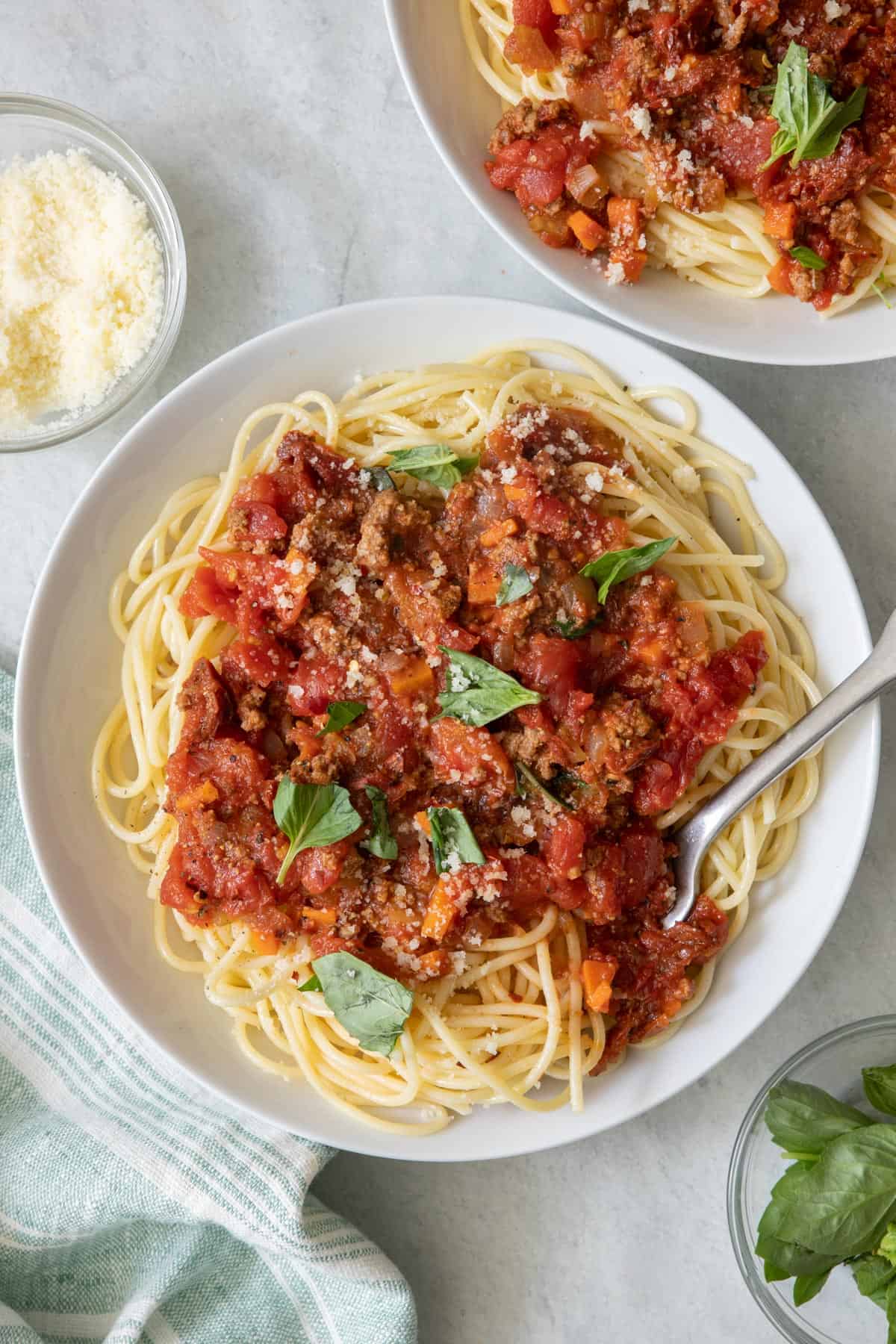
Pasta is the obvious choice to pair with spaghetti sauce. Grab my tips for how to cook pasta perfectly every time! And if you’re looking for more than just pasta, here are other ways to enjoy this classic sauce:
- Meatballs: Greek Meatballs, Air Fryer Meatballs, Baked Chicken Meatballs
- Lasagna: Classic Lasagna, Chicken Lasagna, Sheet Pan Lasagna
- Stuffed veggies: Stuffed Spaghetti Squash, Stuffed Peppers, Chicken Stuffed Zucchini Boats
FAQs
Yes, but you want to make sure you remove the skin and seeds from the fresh tomatoes before adding them to the sauce. I also recommend cooking the sauce a bit longer if you are using fresh tomatoes. To replace the canned tomatoes in this recipe, you’ll need about 4lbs of tomatoes (2 lbs per 28-oz can).






Comments
I would like to be able to print the recipe
Hi Patricia, here’s the link to the printable recipe: https://feelgoodfoodie.net/wprm_print/spaghetti-sauce Enjoy!!
We tried this out and now we eat it weekly. Thank you for this awesome recipe!
Awww, yay!! That’s awesome! Thank you!!
I can’t wait to try this. So glad it doesn’t call for sugar. I’ve given trying to find spaghetti sauce in the stores that isn’t full of sugar. It’s disgusting. Who wants sweet spaghetti sauce? It looks like basil leaves in the picture, but not listed in the recipe. No matter, I will definitely add basil and my personal cooking secret–bay leaves.
Hi Carl, I agree 100% about the sugar in spaghetti sauce and can’t wait for you to make it, either! The basil leaves used here are for garnish on top of the sauce if serving over pasta (vs. making a batch to freeze). Love the suggestion of adding bay leaves! You’ll have to come back after you make it and let me know what you think!