Homemade Oat Flour

Updated Sep 25, 2025
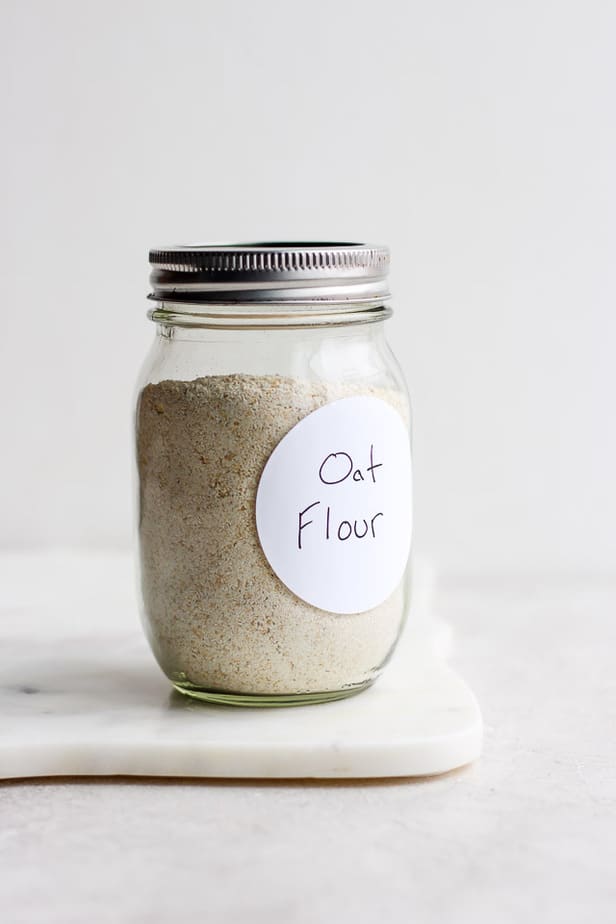
Learn how to make gluten-free Oat Flour at home. Follow my easy step-by-step tutorial that uses just rolled oats and a blender
This post may contain affiliate links. Please read our disclosure policy.

Jump to Section
Make Your Own Oat Flour!

Did you know you can make your own oat flour? It is so easy! Do you have a blender or food processor? Do you have rolled oats? Then, you are ready to go! With some restrictions, it serves as a full-sub for all-purpose flour or a partial swap to zhuzh up the nutritional profile of everything from banana bread to chocolate chip cookies or use it to make my no bake Chocolate Peanut Butter Granola Bars
Happy Cooking!
– Yumna
How to Make Oat Flour


Homemade Oat Flour
Ingredients
- 2 cups rolled oats
Instructions
- Place the rolled oats in a high-speed blender for 30-60 seconds. Blend until the oats reach a fine powder-like consistency. Don’t t over-blend or the oat flour may get clumpy.
- Stop and stir to ensure that all the oats are finely ground. Pulse for 15-30 more seconds if necessary.
- Use in a recipe or transfer to a mason jar with a tight-fitting lid. Store at room temperature for up to 1 month.
Equipment
Notes
Nutrition
Nutrition information provided is an estimate. It will vary based on cooking method and specific ingredients used.
Recipe Tips
- Double check what kind of oats you have. Rolled oats make a flour most similar to all-purpose. You can use steel cut oats but the flour will be denser with a damp consistency. Quick oats will work in a pinch, but if you bake with them, the final product might lack a little structure. Instant oats do not work for making oat flour since they are already cooked.
- Process in batches. If your blender or food processor is on the small side, work with the oats in batches so you get a consistent texture on the oats.
- Switch up the grind. If you are baking with the flour, make sure it is fine and powdery. If you are using the oat flour as breading, it’s okay for the flour to be a bit more coarse.
- For even more flavor, try toasting the oats. Place the rolled oats in a dry skillet and toast for about 3 to 4 minutes, or until the oats smell nutty. Then cool before blending.
Recipes With Homeade Oat Flour
- In a classic cookie recipe like my Gluten Free Peanut Butter Cookies
- In a fun no-bake recipe like these No-Bake Pumpkin Balls or No Bake Cookie Dough Bars
- In a hearty breakfast like these Chocolate Chip Muffins, Oat Flour Pancakes or Flourless Strawberry Pancakes
- Or in a cozy fall dessert like these Pecan Date Bars, Gluten Free Apple Crisp or Chocolate Peanut Butter Bars
FAQs
Oat flour is a gluten-free form of whole grain flour which is made from old fashioned oats or whole oats that have been ground into a powder-like consistency.
1. It has more fiber than white all-purpose flour to keep you full longer.
2. It is is gluten-free which is great for anyone who is gluten sensitive.
3. It gives baked goods more flavor than regular all purpose flour.
4. It can give baked goods a chewier and crumblier texture as compared to using all purpose flour n.
Alone it works best in recipes that don’t use yeast – think cookies, quick breads, pancakes, or waffles. You can also try using it in place of flour when breading chicken, thickening soups, or making a crumbly topping for cakes or crumbles.
Definitely. In a recipe that calls all-purpose flour, try replacing 25 percent of the flour with your homemade blend. This is especially delicious in recipes like oatmeal cookies, where the oat flavor is already present. Think about how the flavors of your recipe will pair with the nuttiness of oats.






Comments
Thank you for educating a reader about the oats, types, and substitutions. ❤️
You’re so welcome! Thank you for the kind words!
If blended correctly, how much “flour” should I get from blending 2 cups of oats?
It should be roughly two cups of oats, but slightly less.