Blackened Salmon

Updated Nov 14, 2026
Blackened salmon coated in a blackening seasoning and seared until a flavorful crust forms. An easy 10-minute weeknight dinner with salmon.
This post may contain affiliate links. Please read our disclosure policy.

I cook salmon a lot of different ways, but when I’m making blackened salmon, I really like doing it in a skillet. I want the blackening seasoning to get nice and brown on the outside, and I leave the skin on because I love how crispy it gets in the pan. I know not everyone likes salmon skin, but when it’s cooked like this and blackened, I think it’s one of the best parts! And the salmon itself is still nice and flaky inside.
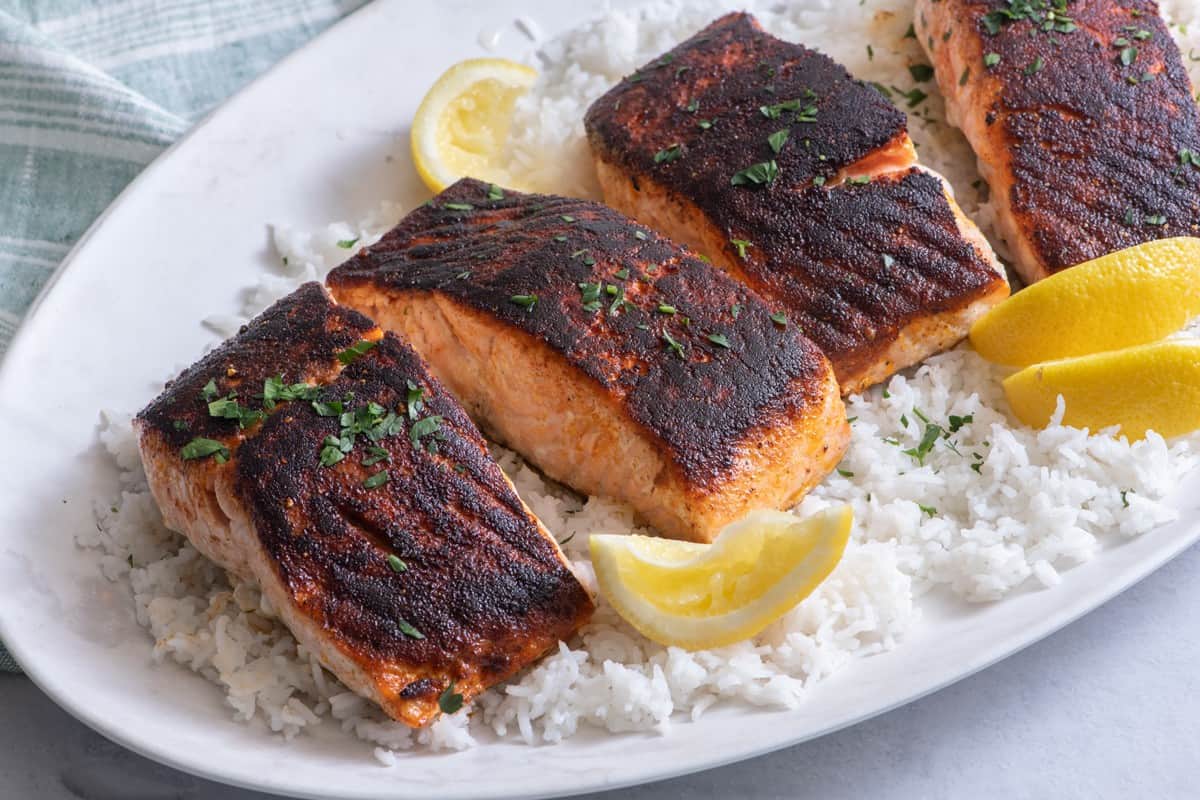
I make my own seasoning for this blackened salmon recipe, and I like having a little heat in there without making the fish too spicy. I want to taste all those spices, but I still want to taste the salmon, too. I’ve got my harissa spiced salmon when I want something a little different.
Recipe Testing Notes

For the past 10 years, I’ve tested every recipe before sharing it with you! These notes give you a peek into the process of developing this blackened salmon recipe.
I have a bad habit of wanting to check on the salmon while it’s cooking. And when I was testing this blackened salmon, I kept moving it around in the skillet to see how the crust was looking. Well, some of the seasoning came right off, and I wasn’t getting that nice dark crust I wanted. So now I press the spices onto the flesh side, put it in the hot pan, and leave it alone for a few minutes. Even when I really want to peek underneath!
I also found that I need to turn the heat down once I flip the salmon onto the skin side. The outside is already pretty dark at that point, and I don’t want to keep browning it while the middle finishes cooking. I usually like my salmon around 125°F for medium-rare, but I pay more attention to the thickness than the cooking time. Some fillets cook a lot faster than others, and I’ve definitely had salmon turn out drier than I wanted because I left it in the pan too long.
Happy Cooking!
– Yumna
Blackened Salmon Ingredients

- Salmon: Use boneless, skin-on salmon fillets. I recommend center-cut fillets of similar size and thickness so they cook evenly. Wild-caught salmon is the best quality and has the most flavor, but any kind of salmon will work. If you only have skinless fillets, just adjust the cooking time, since skin-on salmon takes longer to cook. You can also use frozen salmon; thaw it completely and pat it dry before seasoning.
- Blackened salmon seasoning: I like to make my own Cajun seasoning with paprika, garlic powder, onion powder, thyme, cayenne pepper, salt, and black pepper. But you can also use a store-bought blend.
- Oil: Avocado oil coats the salmon and helps the blackened salmon seasoning stick. It has a high smoke point and won’t burn at the high cooking temperature, but any neutral oil works.
How to Make Blackened Salmon
These step-by-step photos walk you through how to make Blackened Salmon. For the full ingredient list and detailed instructions, head to the recipe card below, or skip straight to the → Blackened Salmon recipe below
1. Make Blackening seasoning
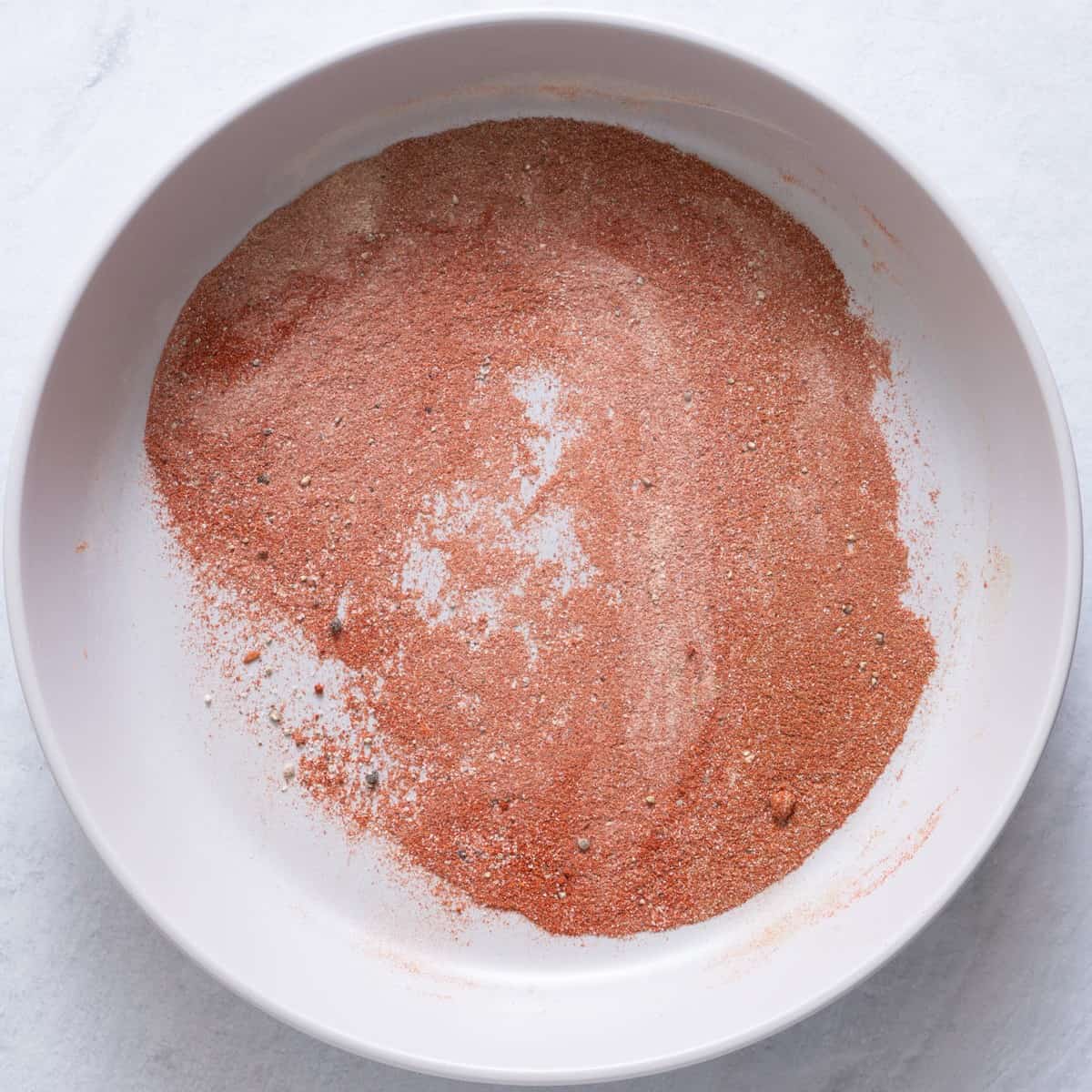
Stir the paprika, garlic powder, onion powder, salt, dried thyme, cayenne, and black pepper in a shallow dish wide enough to fit a fillet.
2. Brush the salmon with oil
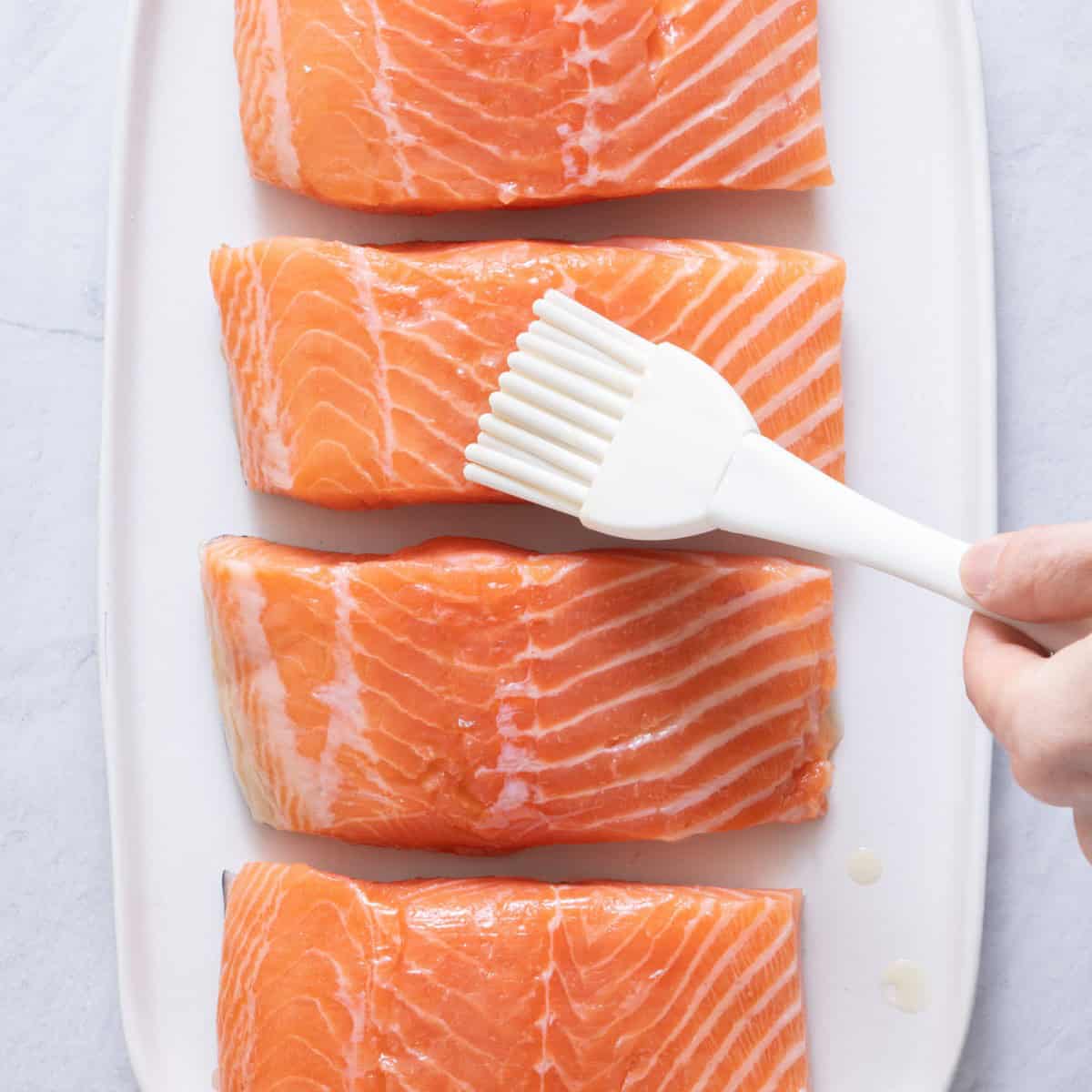
Spread a thin layer over the flesh of each fillet. Leave the skin uncoated.
3. Coat the salmon
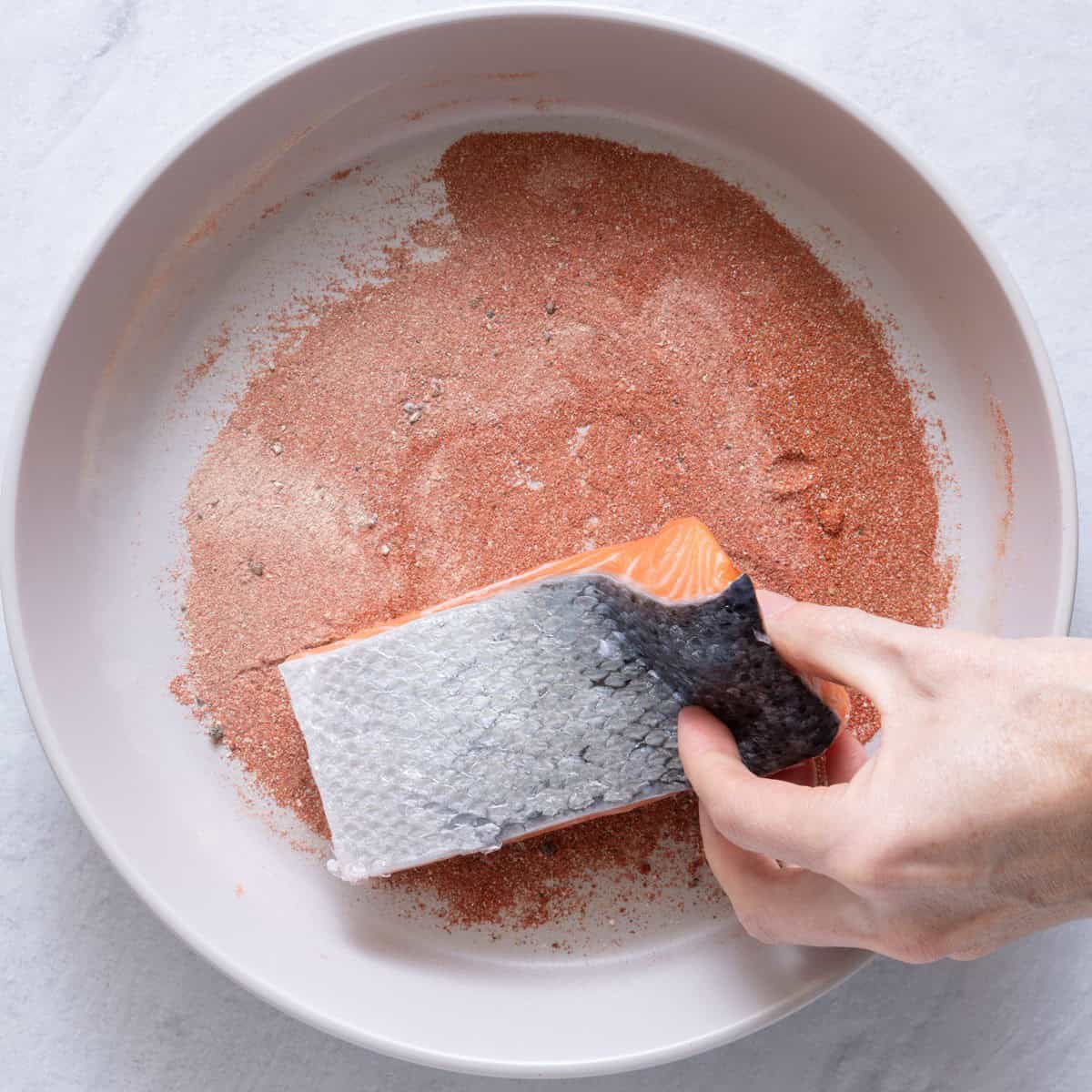
Set each fillet flesh side down in the dish and press gently so the seasoning sticks.
4. Check blackened coating
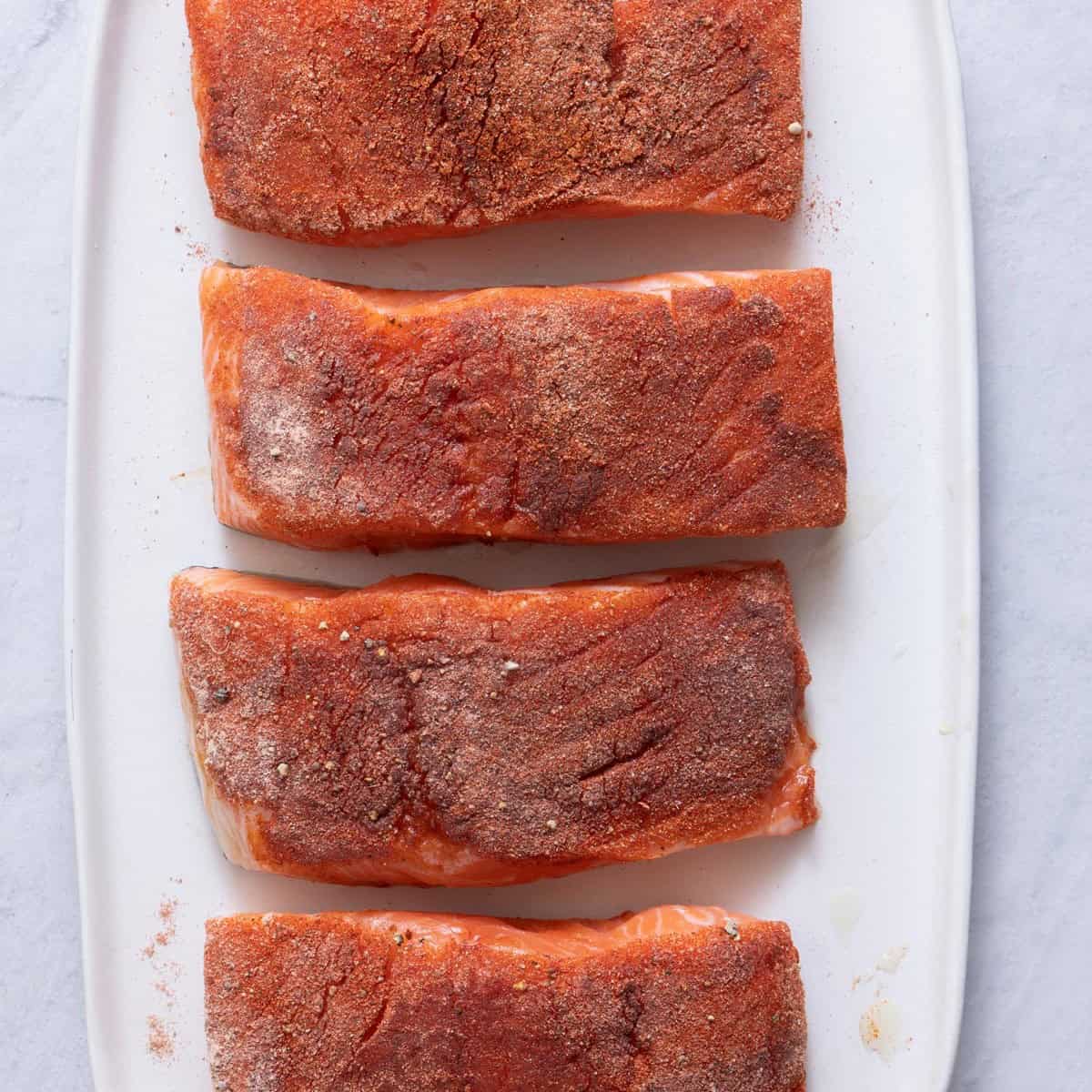
The tops should have an even layer of blackened salmon seasoning. Press a little more onto any bare spots before cooking.
5. Sear the salmon
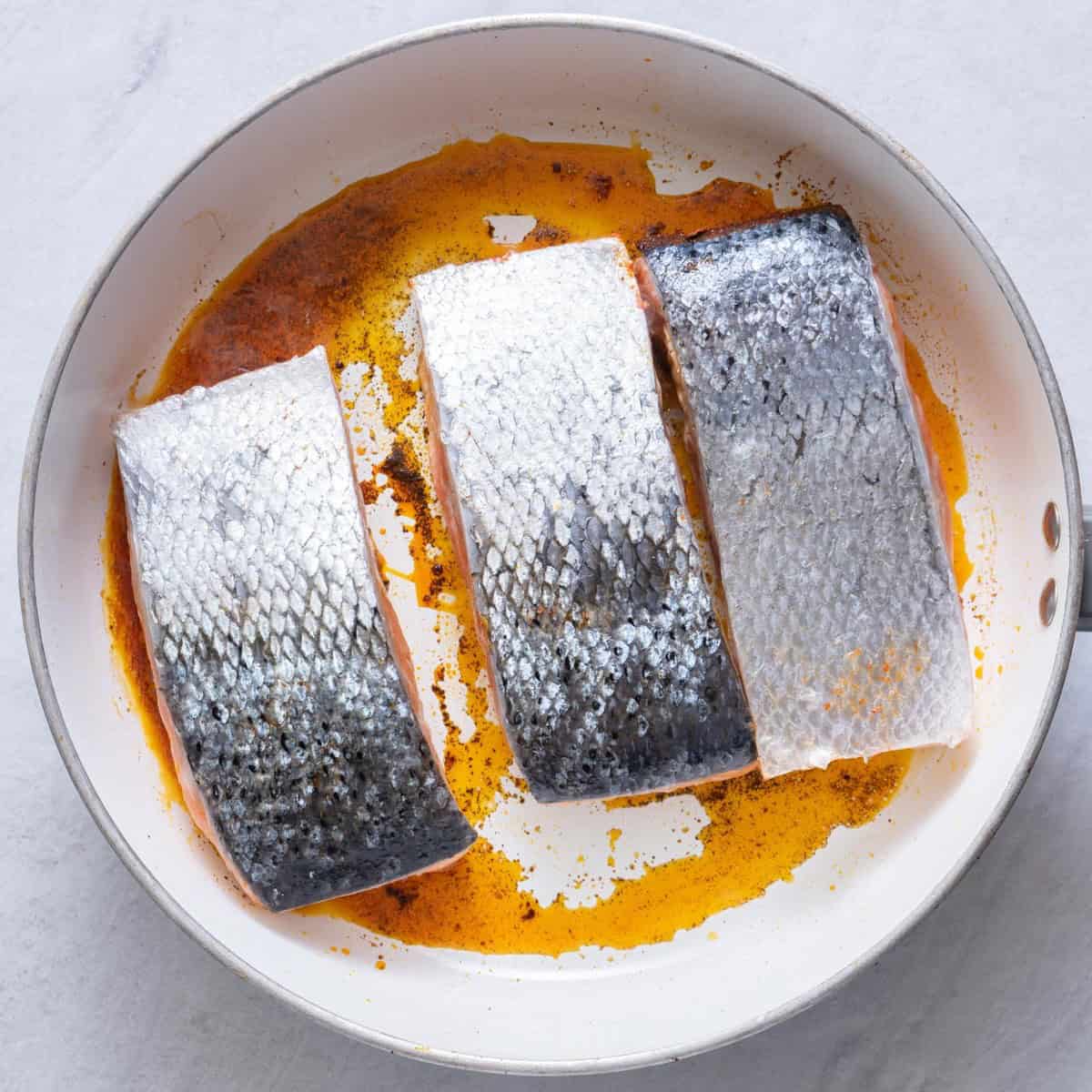
Carefully lower the fillets into the hot, oiled skillet with the skin facing up. Leave them undisturbed while the crust forms.
6. Flip and finish cooking
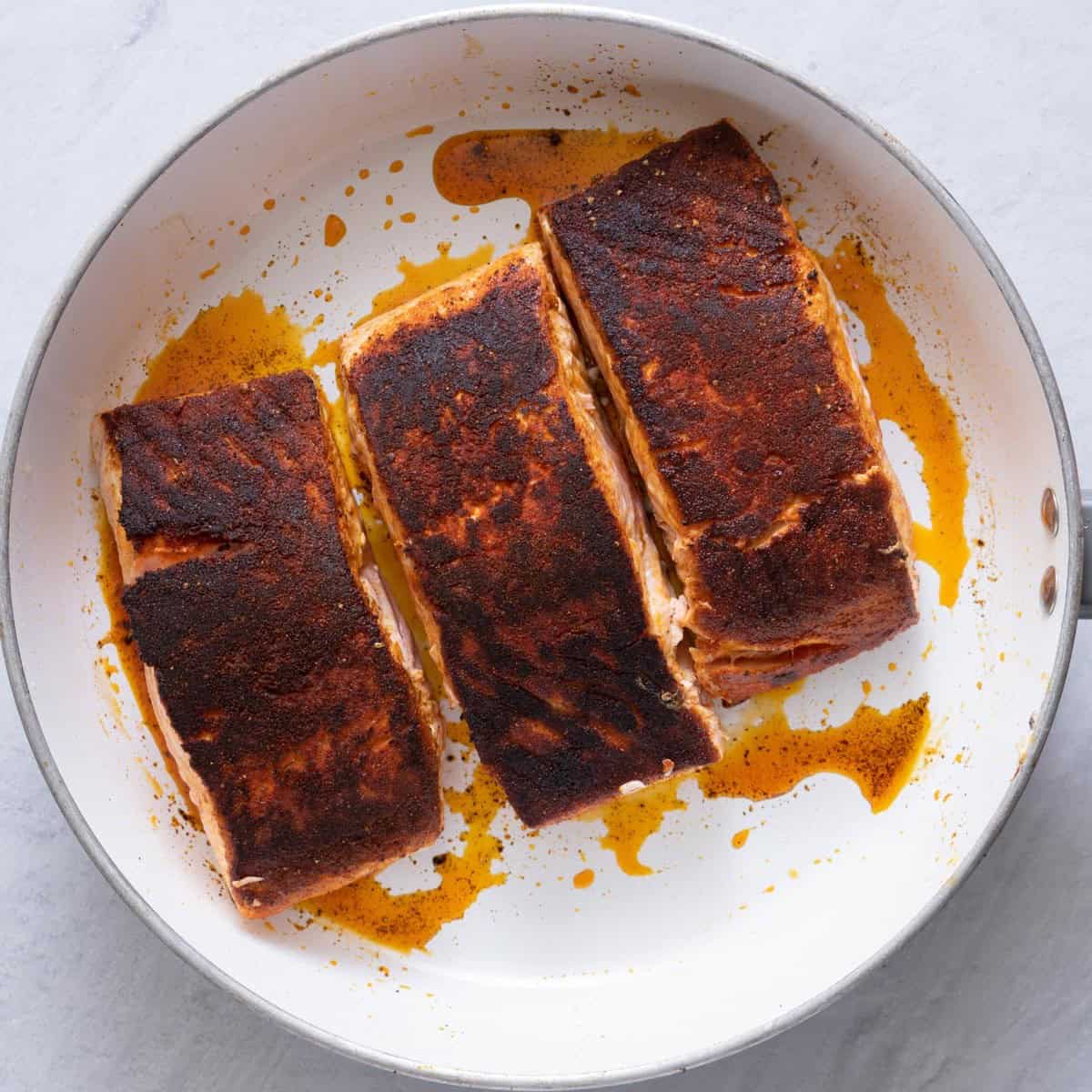
Turn the fillets onto their skin and reduce the heat. Continue cooking until the centers are done, then serve with lemon wedges.
Full Blackened Salmon Recipe
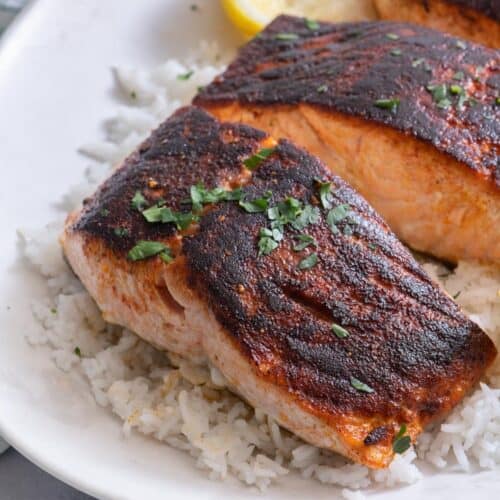
Blackened Salmon Recipe
Ingredients
- 1 tablespoon paprika
- 2 teaspoons garlic powder
- 1 teaspoon onion powder
- ½ teaspoon salt
- ½ teaspoon dried thyme
- ¼ teaspoon cayenne powder
- ¼ teaspoon black pepper
- 4 6-ounce salmon fillets skin-on, preferably center-cut
- 2 tablespoons neutral oil plus additional for rubbing on the fillets
- Lemon wedges for squeezing
Instructions
- In a shallow glass container, stir together the paprika, garlic powder, onion powder, salt, dried thyme, cayenne, and black pepper until evenly blended.
- Rub a little oil on the flesh side of the salmon fillets and place the fillets, flesh side down, into the spice mix. Press down gently to ensure the spice mixture sticks. Leave the skin uncoated.
- In a heavy pan, heat the neutral oil over medium-high heat. When the oil shimmers, add salmon fillets to pan, flesh (spice-rubbed) side down. Cook without disturbing until a dark “blackened” crust forms, 2 to 3 minutes.
- Flip the fillets to the skin side, reduce the heat level to medium-low, and continue to cook on the skin side until the thickest part of the fillet is cooked to desired doneness, 3 to 8 minutes depending on thickness or 125ºF for medium rare.
- Remove salmon from the pan, squeeze over lemon juice, and serve.
Equipment
Notes
Nutrition
Nutrition information provided is an estimate. It will vary based on cooking method and specific ingredients used.
Recipe Variations
- Smoky and spicy. Replace the 1 tablespoon regular paprika with smoked paprika, and swap the ¼ teaspoon cayenne for ¼ teaspoon chipotle powder.
- Lemon and herbs. Add ½ teaspoon dried oregano to the seasoning. After cooking, sprinkle the salmon with 1 teaspoon lemon zest and 2 tablespoons chopped parsley.
- Honey-lime finish. Mix 1 tablespoon honey with 1 tablespoon lime juice and drizzle over the cooked salmon. Add it after cooking so the honey doesn’t burn in the hot pan.
Recipe Tips
- Pat the salmon dry before adding oil. Extra moisture makes the seasoning harder to stick and can keep the surface from searing.
- Use a cast iron skillet. It can withstand high heat and will give you nice, even results. If you don’t have a cast iron skillet, you can use another heavy-duty skillet like stainless steel or enameled cast iron.
- Don’t overcrowd the pan. Leave some space between each fillet so they cook evenly on all sides. If you crowd the pan, the salmon will steam and won’t get that nice crispy skin.
Serving Ideas
- Rice: I like serving blackened salmon over rice with a squeeze of lemon. If there’s any seasoning left in the pan, I spoon a little of that over the rice, too! Try my basmati rice, lemon rice, or even creamy risotto.
- Vegetables: I usually keep the vegetables simple, like oven roasted asparagus or air fryer broccoli. Both can cook at the same time as the salmon!
- Potatoes: Garlic smashed potatoes or baked potato wedges are so good here, especially when you squeeze extra lemon juice on top of everything. I like to get them in the oven first so they have time to crisp up while I cook the salmon.

Troubleshooting
When a food is blackened, it means it’s been cooked in a very hot pan until the exterior is crispy and slightly charred. The high heat gives the salmon a nice sear on the outside while keeping the inside nice and juicy. Blackened spice blends are usually spicy.
The best way to tell if your salmon is cooked through is to use a digital cooking thermometer. The internal temperature of the salmon should be between 125°F (medium-rare) and 160°F (well-done). If you don’t have a thermometer, you can also tell if it’s done by doing the fork test. Gently insert a fork into the thickest part of the salmon and twist. If the fish flakes easily with a fork, it’s done!
The pan may be too hot, especially if the oil is smoking before the fish goes in. Start over medium-high heat, then lower it to medium-low as soon as you flip the fillets. The coating should be deeply browned.
The pan may not have preheated long enough, or the crust may need more time to form. Wait until the oil shimmers before adding the fish, then leave it alone for the initial sear. Use a thin spatula to loosen the edges gently before lifting.
Yes, but keeping it on helps the fillets hold together when you flip them. This skin-on salmon recipe starts flesh side down to brown the seasoning, then finishes on the skin side. You can leave the skin on the plate if you prefer.