Yogurt Flatbread

Updated Jul 09, 2026
Homemade yogurt flatbread made with only four ingredients. It comes out soft, light and airy- perfect for dipping, topping or rolling.
This post may contain affiliate links. Please read our disclosure policy.
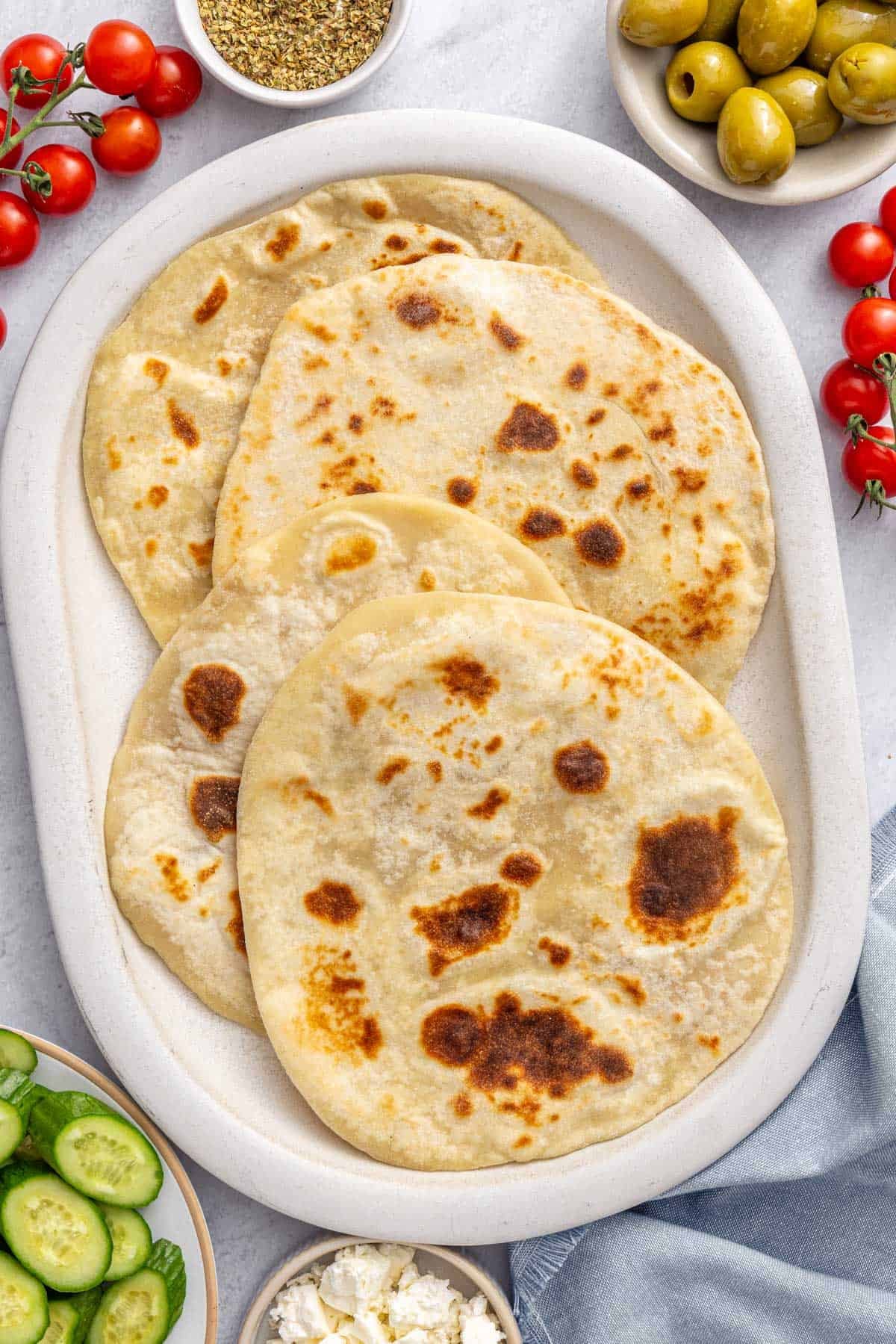
Growing up, flatbread was just always there. My mom made it, or it came from a Lebanese bakery, and I never really thought about making it myself. Then I tried this yogurt flatbread at home, and I kind of can’t believe I waited so long. Four ingredients, no yeast, and no proofing time! The Greek yogurt keeps it soft and adds a little tang that I really like in homemade flatbread. I’ll make this on weekends when we’re doing a big mezze spread, the kind I grew up eating. Labneh, olives, cucumbers, za’atar, all of it is better with fresh flatbread to scoop it up with.
Jump to Section
Recipe testing notes

For the past 10 years, I’ve tested every recipe before sharing it with you! These notes give you a peek into the process of developing this yogurt flatbread recipe.
The whole thing that makes or breaks this flatbread recipe is the yogurt, so that’s where most of my testing went. I use whole milk Greek yogurt on purpose. When I tried it with lower-fat or thinner yogurt, the dough was wetter, and I had to keep adding flour to save it; the more flour I added, the tougher and drier the bread turned out.
The heat on the skillet took a little dialing in too. Medium-low is what I landed on. Too hot and the outside browned before the inside puffed; too low and it dried out before I got any color. I wanted it hot enough that the bread puffs up and gets those golden spots in about 2 to 3 minutes. Cast iron holds the heat the most evenly, so that’s what I reach for.
Happy Cooking!
– Yumna
Yogurt Flatbread Ingredients
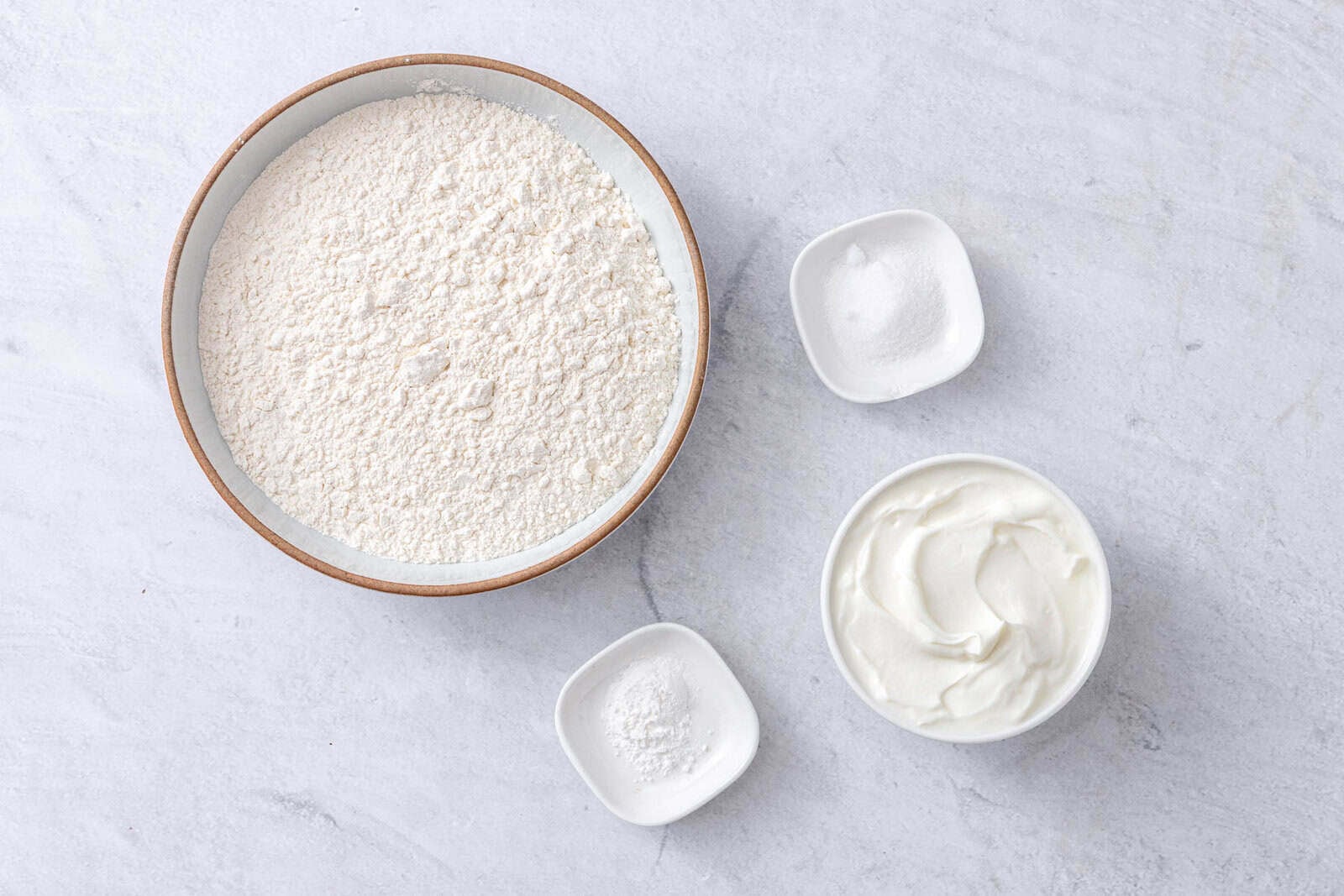
- Dry ingredients: All-purpose flour, salt, and baking powder. Spoon the flour into the measuring cup and level it off instead of scooping directly from the bag, or the dough can end up too stiff to knead. The baking powder is what gives the flatbread its slight lift, so make sure yours isn’t expired. Aluminum-free baking powder is best to avoid any aftertaste.
- Greek yogurt: Use whole milk Greek yogurt here. Lower-fat versions have more water in them and make the dough sticky and harder to manage. If it’s still sticking even with the full-fat version, add more flour a tablespoon at a time until it pulls away from your hands cleanly.
How to Make Yogurt Flatbread
These photos walk you through how the yogurt flatbread comes together from mixing to the skillet. For the full ingredient list and instructions, jump to the → Yogurt Flatbread Recipe
1. Mix Dry Ingredients & Yogurt
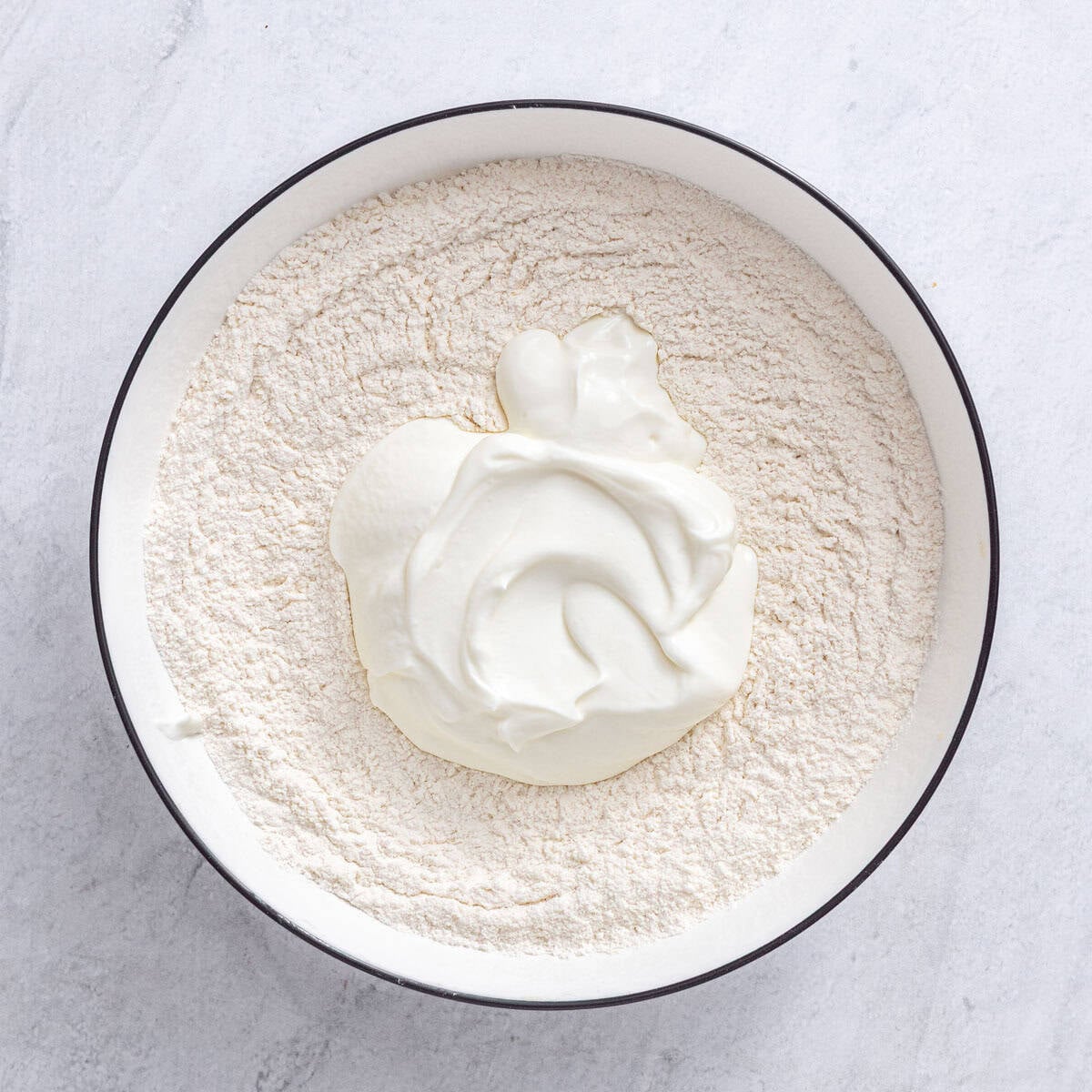
Whisk the flour, salt, and baking powder together in a large bowl first so everything is evenly distributed before the yogurt goes in. Add the yogurt and stir with a wooden spoon until a rough, shaggy dough starts to come together.
2. Work the Flatbread Dough by Hand
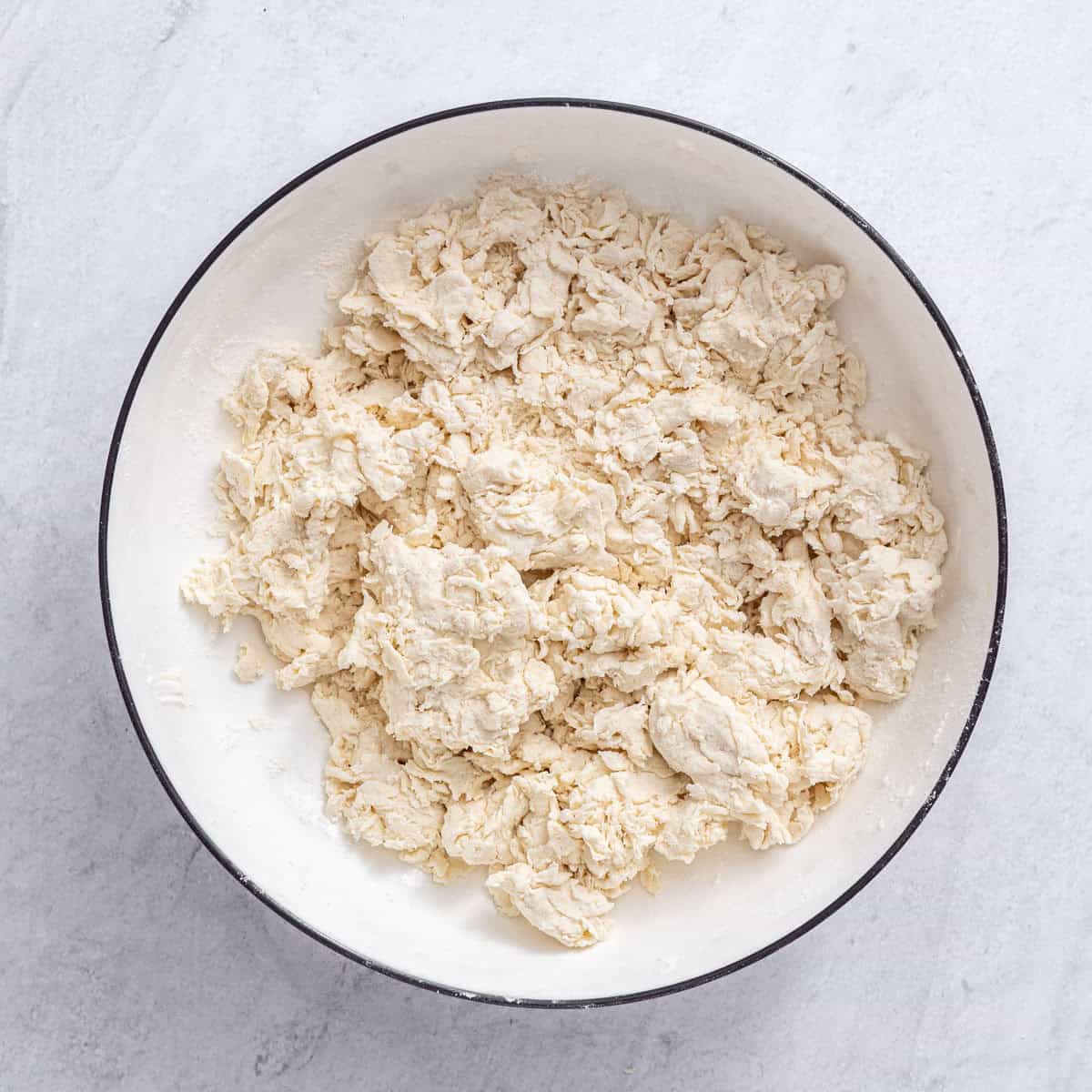
Switch from the spoon to your hands and keep working until everything comes together into one dense, sticky mass. It will feel gluey at this stage, which is completely normal.
3. Knead Until Smooth
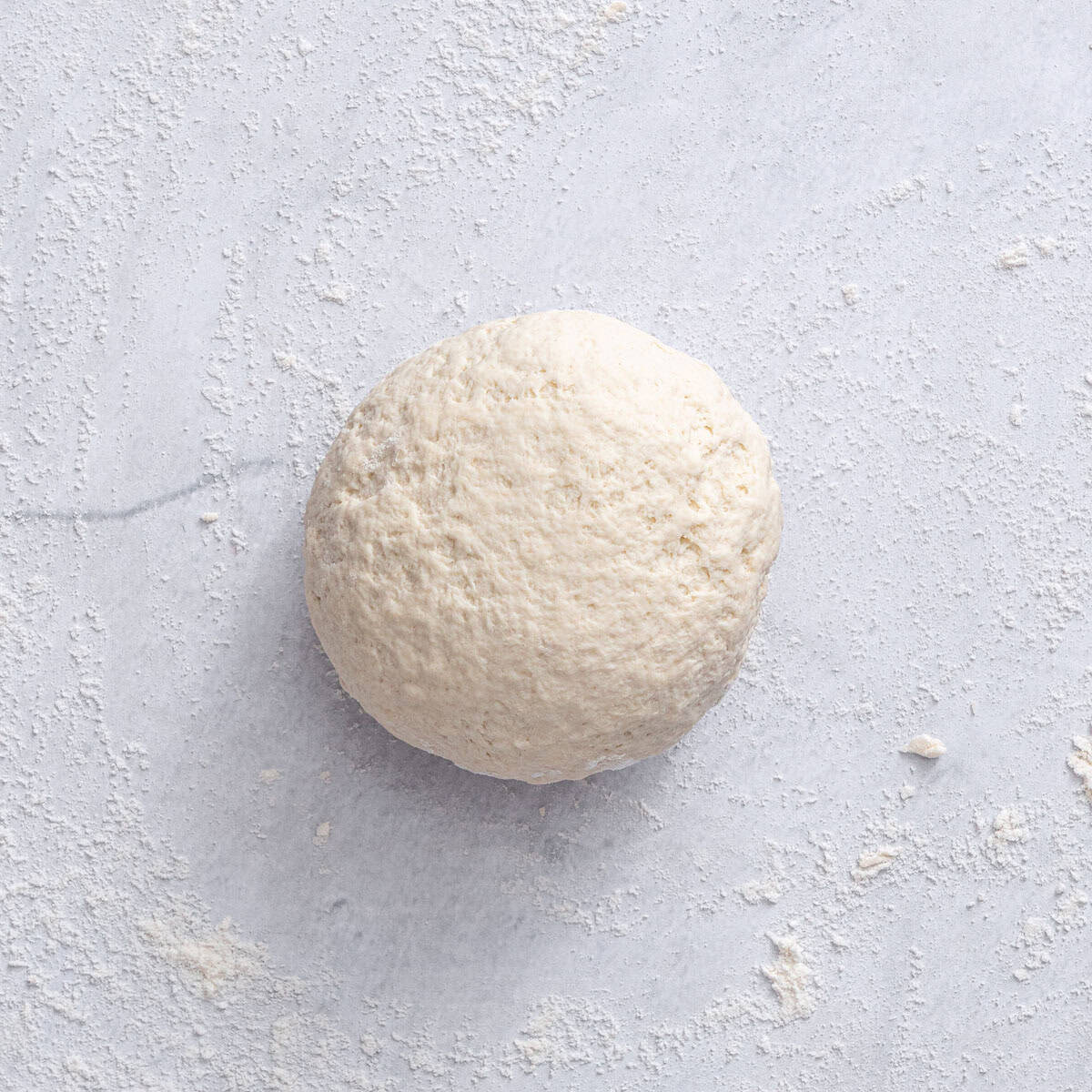
Transfer the dough to a lightly floured surface and knead, pushing and folding it back on itself until the texture evens out. It doesn’t need to be perfectly smooth; a few bumps are fine.
4. Divide and Rest the Dough
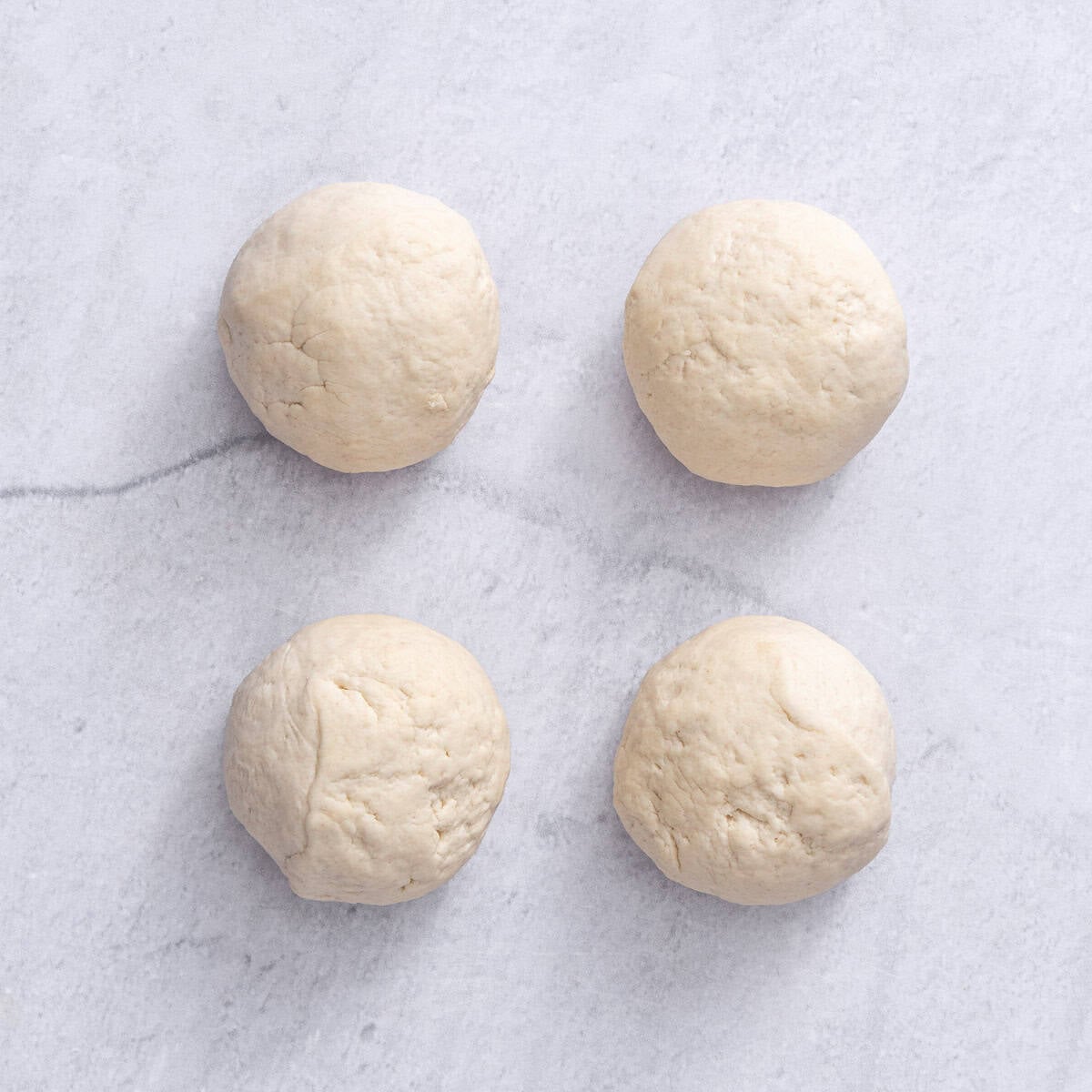
Cut the dough into 4 equal pieces, roll each into a ball, and wrap tightly. Let them rest at room temperature so the dough relaxes and becomes much easier to roll out flat.
5. Cook the Flatbread
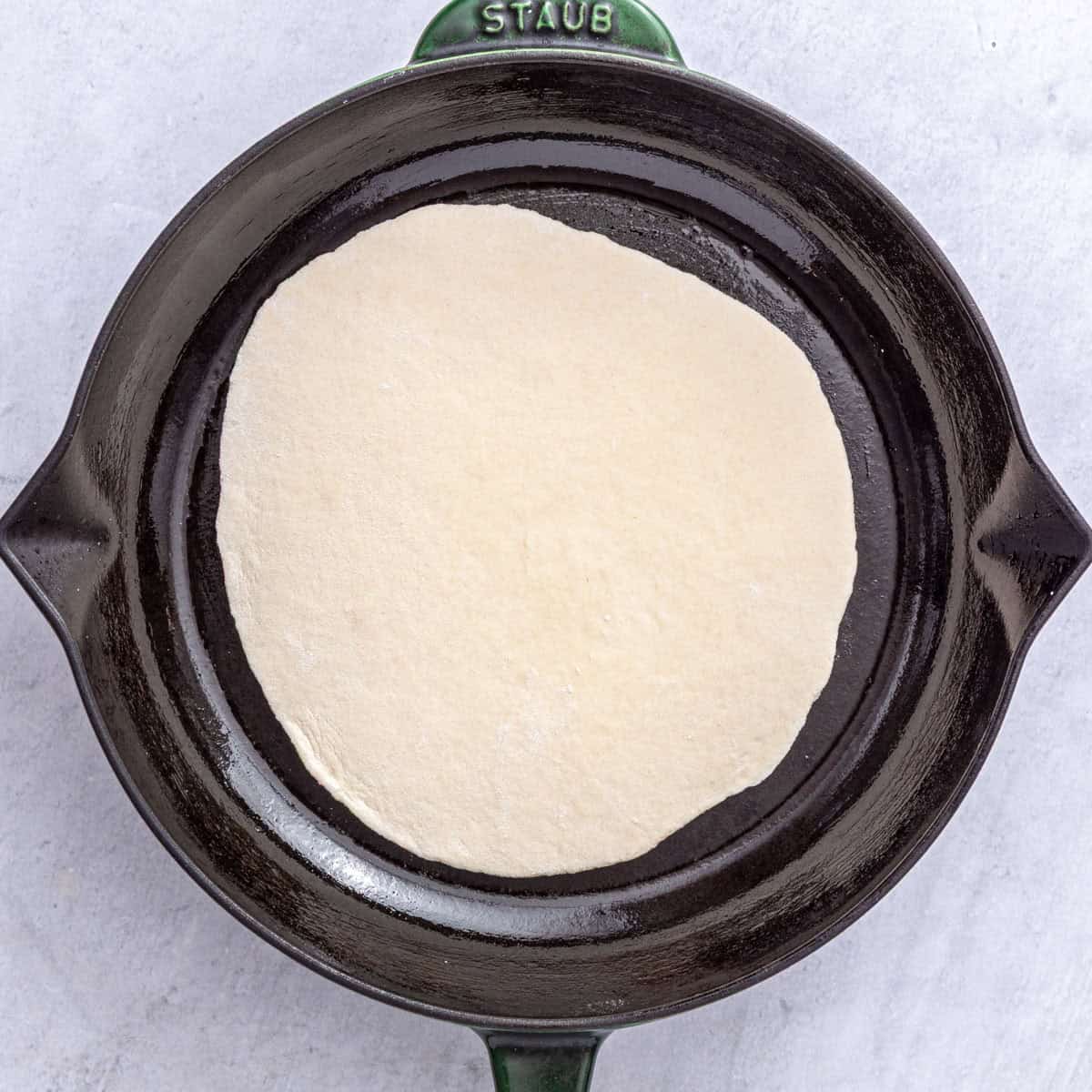
Use a rolling pin to flatten each ball, dusting with a little extra flour if it’s sticking to the surface or your hands. Spray a cast iron skillet with cooking spray, heat it over medium-low, and add one flatbread.
6. Flip When Golden
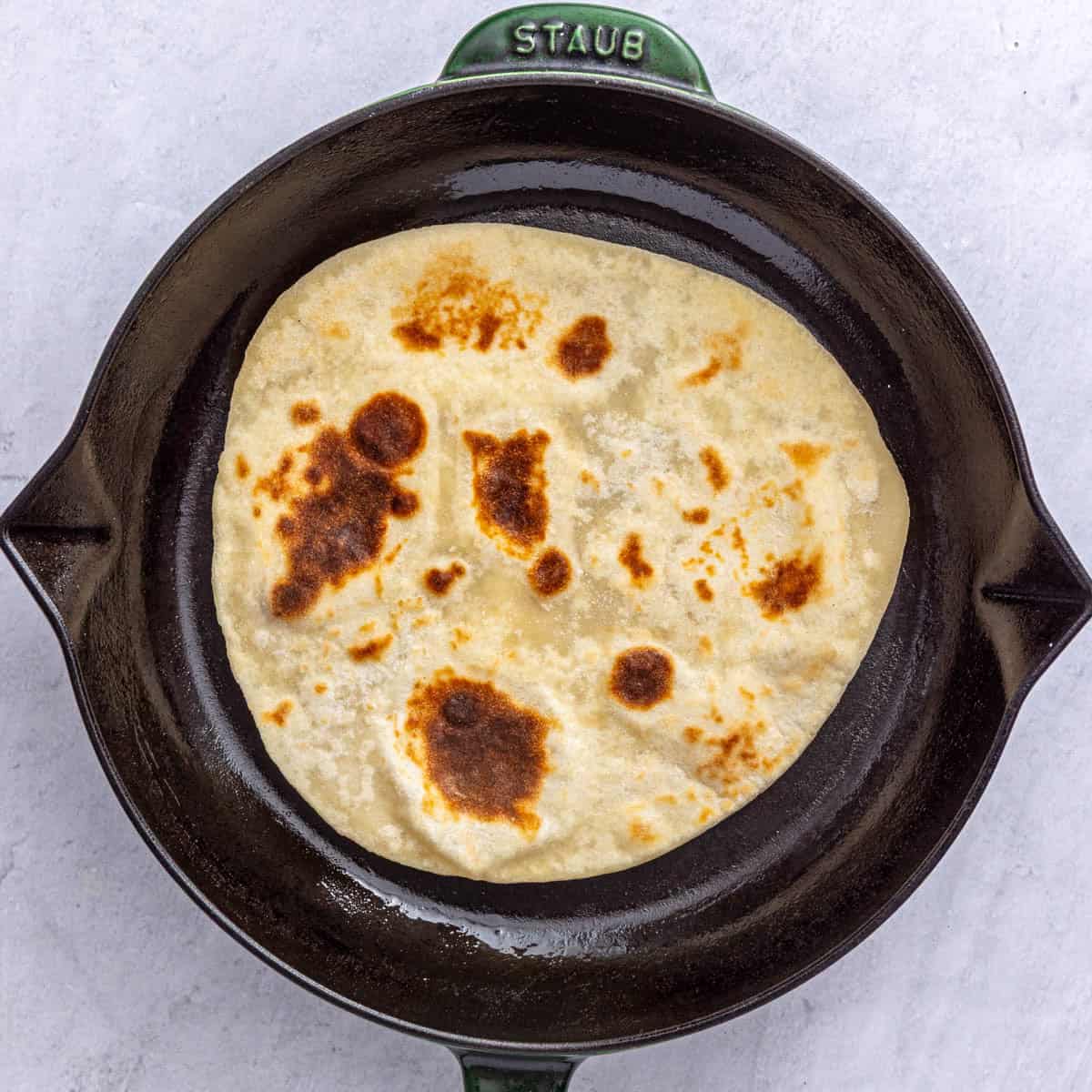
Let the flatbread cook until it puffs up and the bottom develops golden brown spots. Flip it and let the second side match. Those brown patches are your cue that it’s ready.
Recipe Video Tutorial
Full Homemade Yogurt Flatbread Recipe

Yogurt Flatbread Recipe
Video
Ingredients
- 2 cups all-purpose flour plus plus more if needed
- 1 teaspoon salt
- ½ teaspoon baking powder
- 1 cup Stonyfield Whole Milk Greek yogurt
- Cooking oil spray
Instructions
- In a large bowl, whisk together the flour, salt and baking powder. Add the yogurt and mix together with a wooden spoon until all the ingredients are well combined.
- Transfer the dough to a lightly floured surface and knead by hand for 5 minutes until the dough feels smooth, but some bumps are ok.
- Divide the dough into 4 equal pieces, roll into a ball. Press the plastic wrap on the smooth part of the dough, wrap tightly and press one more time. Keep at room temperature for 20 minutes to allow the dough to rest.
- Use a rolling pin to flatten out the dough, adding a little more flour if the dough is at all sticking to your fingers.
- Heat a cast iron skillet on medium-low heat. Spray the skillet with cooking spray, and add a flatbread. Allow it to cook for 2-3 minutes until the bread is puffed and parts of it become golden brown. Flip and cook for 2 more minutes on the other side. Repeat with the remaining flatbread.
- Serve with homemade labneh, olives, tomatoes and cucumbers, if desired.
Notes
Nutrition
Nutrition information provided is an estimate. It will vary based on cooking method and specific ingredients used.
RECIPE VARIATIONS
- Za’atar Flatbread. Mix 1 tablespoon of za’atar into the dough before kneading for an earthy, herby flavor all the way through. You can also brush the cooked flatbread with olive oil and sprinkle more za’atar on top.
- Garlic Butter Flatbread. Stir 1 tablespoon of melted butter with ½ teaspoon of garlic powder and brush it over each flatbread right when it comes off the skillet.
- Herb Flatbread. Fold 2 tablespoons of finely chopped fresh parsley or cilantro into the dough before kneading.
- Sesame Flatbread. Press 1 teaspoon of sesame seeds onto each side of the rolled-out flatbread before it goes into the skillet.
- Cheesy Flatbread. Sprinkle 2 tablespoons of shredded mozzarella on one side of the cooked flatbread, fold it over, and return it to the skillet for about a minute until the cheese melts. For a play on Cheese Manakeesh.
Recipe Tips
- Make it faster in a stand mixer. I just used my hands to knead the dough since it doesn’t have to be perfectly smooth. But you can make it faster with a paddle attachment on your stand mixer.
- Use a hot cast iron skillet. I found it to be the best outcome for getting golden brown color and the beautiful pockets of air. The skillet will get hotter for each one and cook faster, so keep lowering the temp slightly to maintain the same color.
- Roll the yogurt flatbread pretty thin. The thinner it is, the more quickly it will puff, which results in a light and airy texture. And that texture means it will remain soft and doughy even days after you make the flatbread.
- Allow the dough to rest. I recommend 20-30 minutes so the flour can absorb that moisture, but you can even leave it overnight wrapped in the fridge, which creates the best texture!
Serving Ideas
- Serve with dip: I love eating this yogurt flatbread when it’s spread with baba ganoush, hummus, tzatziki, or whipped feta dip.
- Make a pizza: This yogurt flatbread makes a great base for a flat-bread pizza. Try my shawarma pizza, my grilled pizza, or my pita pizza.
- Make a sandwich: These flatbreads make for such good wrap sandwiches! Try my cottage cheese flatbread sandwich, my smashed falafel pita, or my steak gyro.
Troubleshooting
Yes you can, I recommend treating it like pizza dough and baking at 475°F or 500°F for 8-10 minutes until golden brown. I prefer the texture of it on a cast iron skillet though because it’s golden on both sides.
The most likely reason is that the skillet wasn’t fully preheated when the flatbread went in. Make sure the pan is hot before you add the dough. If the flatbread was also rolled too thick, it may not puff as dramatically, but it will still cook through.
Overworking the dough or skipping the rest period are the two most common causes. Five minutes of kneading is enough. Going longer can tighten the gluten and make the texture chewy and hard. The rest period helps the dough relax, which keeps the final flatbread softer.







Comments
I make a lot of flat breads and am always eager to try new recipes. I made one variation of using half AP/half WW flour and slightly increased the baking powder since whole wheat is a bit denser. It’s a good thing I made are add a triple batch because my son and dad ate the majority as soon as they came off of the skillet! Thanks for sharing this simple, comfort food recipe.
So happy these were a hit with your son and dad! Sounds like making a triple batch was a good call if they were disappearing right off the skillet. Thanks for sharing how you made them your own!
These were a huge hit for dinner tonight. Followed the instructions exactly and they puffed up so beautifully. They were the perfect vehicle for our Greek meatball wraps. And love the extra boost of protein from the yogurt.
That’s awesome! Love that these turned out perfectly for your Greek meatball wraps. That sounds like the perfect way to serve them. So glad they were a huge hit!
So easy and so incredibly delicious. Will never, ever use store-bought again. Thank you!!
I’m so happy to hear that! Thank you for sharing your experience!
Super easy, really delicious! I cut it in half for a dinner for 2 and used my stand mixer so I could prep other parts of dinner. The flatbreads puffed way up and were so soft and pliable!
Love that they turned out soft and delicious! Thank you for sharing your experience!
I really like this recipe – I follow the directions but my flatbread never ‘puffs’ up like I thought it would. What could be wrong? Thank you.
Hi Carol, I’m so glad you like the recipe! I want you to LOVE it, so let’s troubleshoot. How thin are you rolling out the flatbread? It should be pretty thin. The thinner it is, the more quickly it will puff up. Also, make sure the skillet is HOT. You want it fully preheated over medium-high heat before the dough goes in, so the bread gets a quick burst of heat right away. Try those tips and let me know if they help!
Can you wrap the dough in plastic wrap before dividing and then divide and roll it right before cooking?
Yes that’s fine, but if you do that, make sure to let it rest for 5-10 minutes after you cut it.
They turned out better than any yogurt pan bread I made so far. Just great!
Quick tip: putting the lid on while it cooks results in soft texture inside and crunchy outside without drying them out. Thanks for the recipe
Love that tip! Thank you for sharing, Angie. So happy you liked the recipe!!
It was easy & delicious!!!
Yay, so glad you liked it!! Thanks!
Love this recipe I’ve done it with both natural yogurt and greek and comes out amazing with both. I also do them in the oven when I’m wanting them more for dipping rather than a soft bread. Today I decided to stuff them with cheese and give them a brush with garlic butter they were so nice. It’s my favourite go to recipe.
Oh yum, that sounds delicious!! So glad you love the recipe, Jodie! Thank you so much!!
Hi. Can you check your response regarding Greek yogurt please? If using Greek yogurt and you have to reduce the flour then I think you must mean use one and 3/4 cups flour instead of 2 cups? Your recipe using the whole milk yogurt calls for 2 cups flour so your advice to use 2 and 1/4 cups flour when using Greek yogurt actually increases not decreases the flour.
Thanks for pointing this out and so sorry for the confusion! I recently retested this recipe and decided to reduce the amount of flour from 2.5 cups to 2 cups, so the amount of flour will work with regular and Greek yogurt now. I’ve updated the recipe notes to provide clarity. Hope that helps!
See All Comments