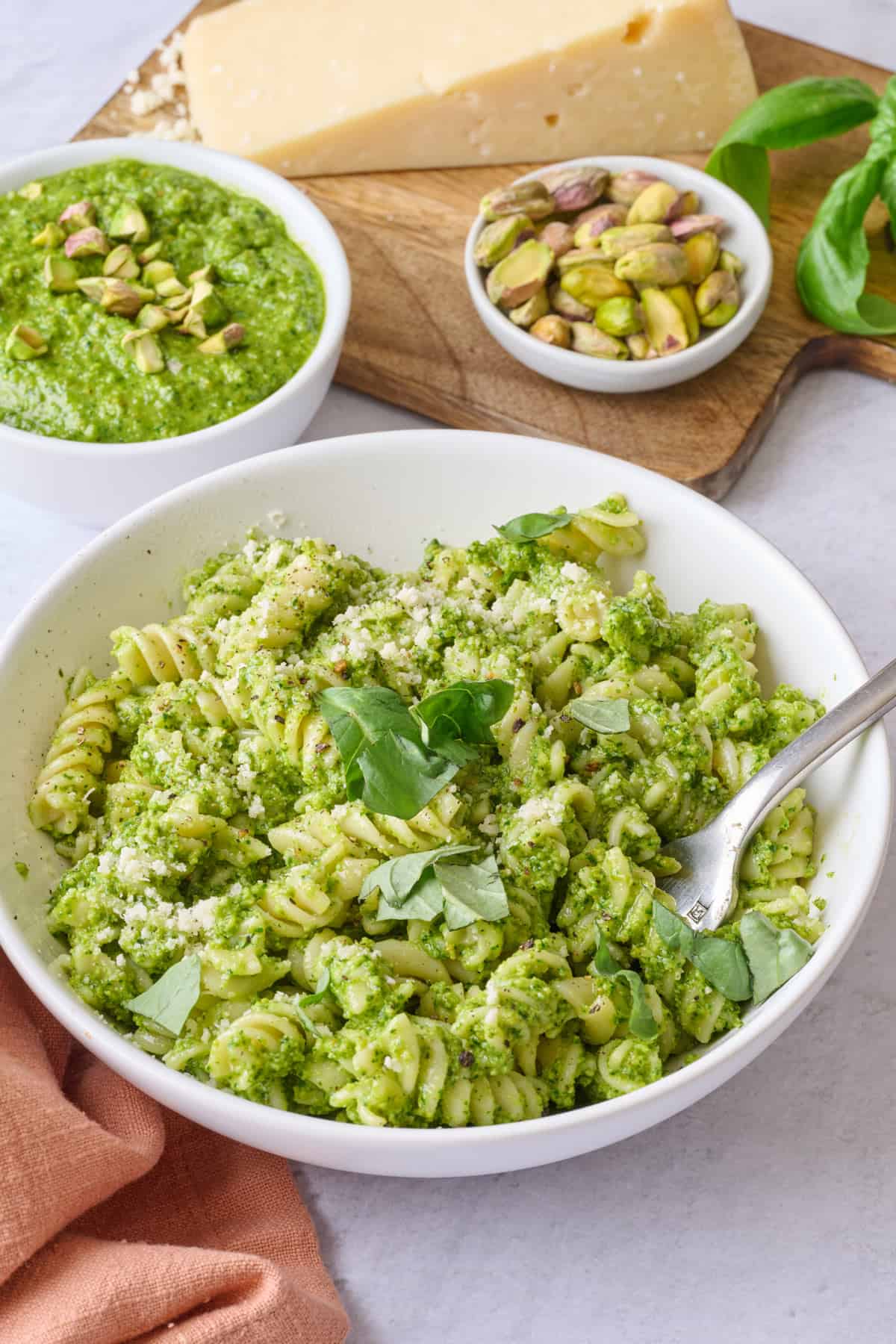
Pistachio Pesto

Published May 18, 2026
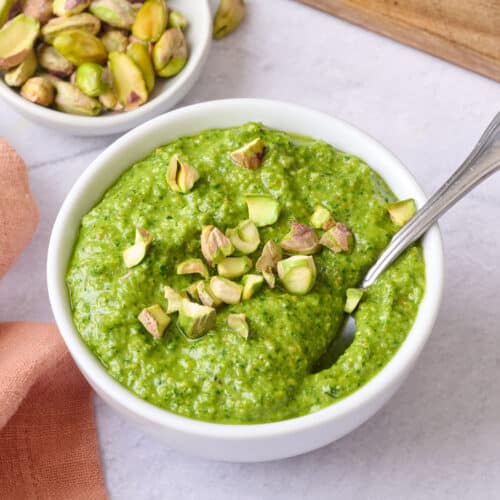
Easy basil pistachio pesto that blends up in a food processor in minutes. Use it on pasta, sandwiches, grilled chicken, or as a dip.
This post may contain affiliate links. Please read our disclosure policy.
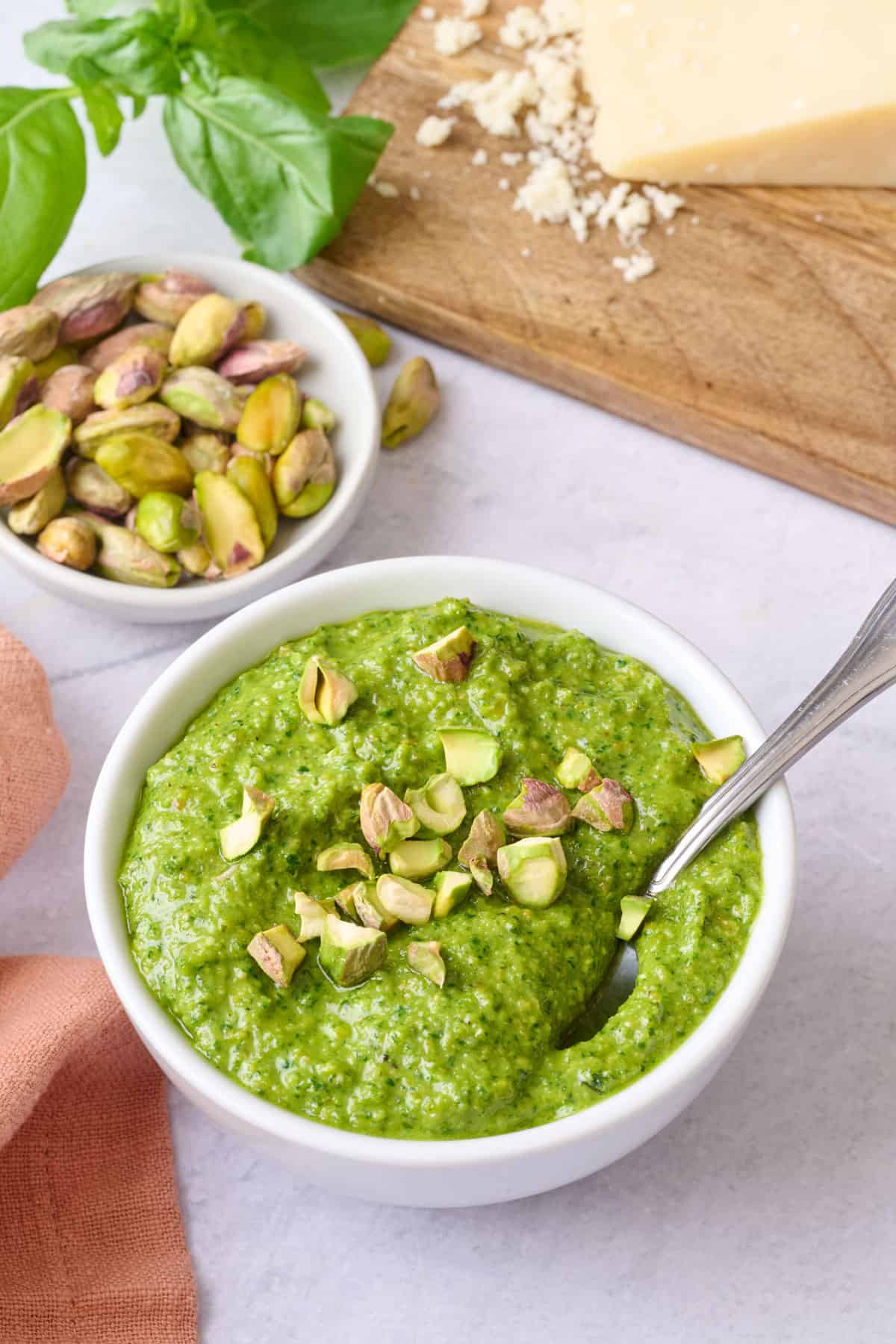
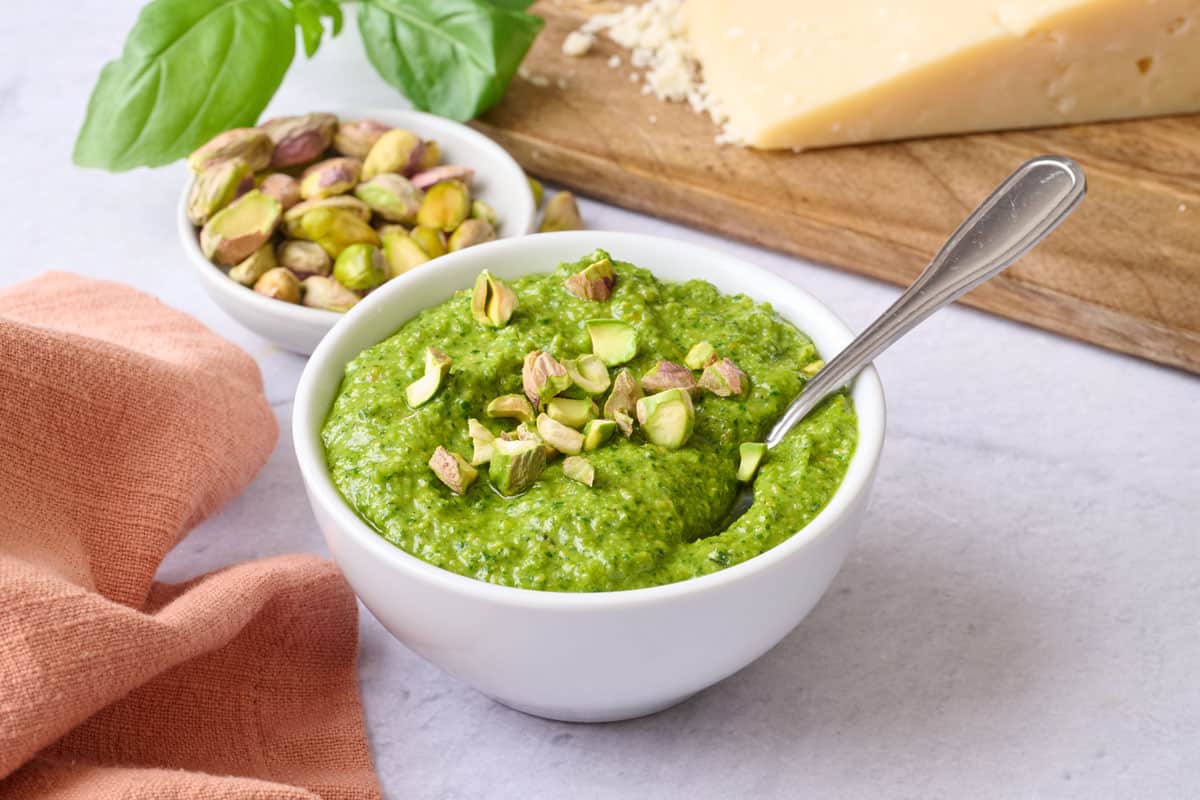
Love a pesto with fresh basil and pistachios!

Pistachios are one of those ingredients I always have around because I love them and they show up in so much Middle Eastern cooking. At some point, I started swapping them in for pine nuts when making pesto, and now I rarely make it the other way. This pistachio pesto has a slightly richer, earthier flavor than classic pesto, and the whole thing takes about five minutes in a food processor.
Once I have a batch of this basil pistachio pesto sitting in the fridge, it goes on everything. Pasta is the obvious one, but I also spread it on sandwiches, stir a spoonful into soup, or spoon it over grilled chicken tenders or Air Fryer salmon. It keeps well all week, so I make the full batch every time. Seriously soo good!
Happy Cooking!
– Yumna
Jump to Section
Pistachio Pesto Ingredients
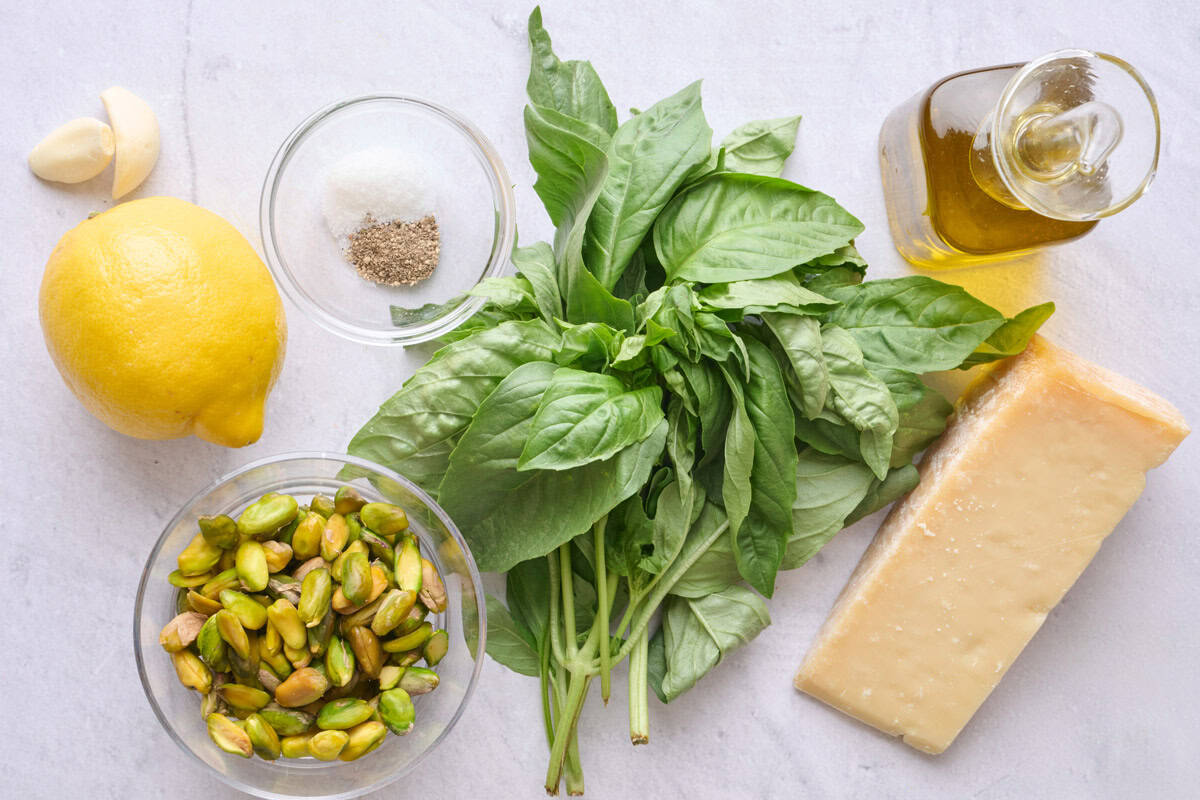
- Pistachios: I use shelled, unsalted roasted pistachios. If you only have salted pistachios, just skip the salt when you add the lemon juice and black pepper.
- Basil: Fresh basil is so good here! If you rinse it, pat it really dry before using. Extra water can make the pesto thinner and dull the flavor. Pack the measuring cup tightly. Wilted or slightly older basil will still work, but the pesto won’t be as vibrant. If some leaves are bruised, use them anyway since they blend right in. Do not use dried basil, just don’t.
- Garlic and Parmesan: Grate the Parmesan fresh from a block. Pre-grated Parmesan has added starches that can make the texture slightly grainy instead of smooth. The garlic goes in raw, so the flavor will be sharp. If you want something milder, start with one clove and taste before adding more. Pecorino is a good substitute for the parm. So is nutritional yeast, if you want to make the pesto vegetarian, use ¼ cup. Make sure you pulse until everything is finely chopped, scraping the bowl often.
- Finishing the basil pistachio pesto sauce: Lemon juice, salt, and black pepper. Fresh lemon juice only. Add the salt and pepper along with the lemon juice, then taste and adjust at the end. Extra-virgin olive oil is the right call for this pistachio pesto since there’s no cooking involved and the flavor comes through directly. Stream it in slowly while the processor is running so it emulsifies into the pesto rather than pooling on top.
How to Make Pistachio Pesto
Here’s a step-by-step look at how to make pistachio pesto. For the full ingredient list and detailed instructions, jump straight to the → Pistachio Pesto Recipe
1. Add the Basil, Pistachios, Garlic, and Parmesan
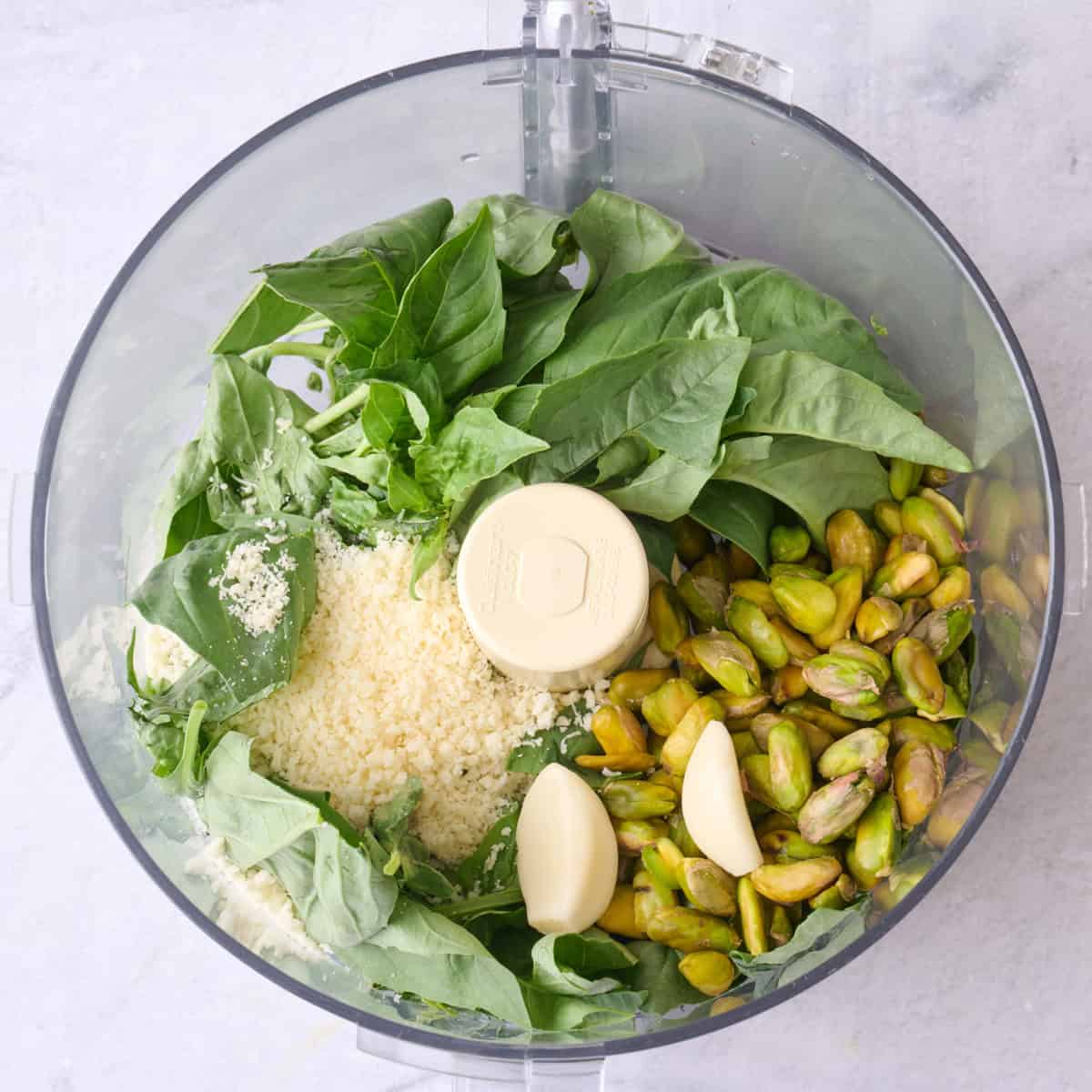
Load everything into the food processor bowl and pulse until the mixture looks finely and roughly evenly chopped throughout. A few uneven pieces at this stage are fine.
2. Add the Lemon Juice and Seasonings
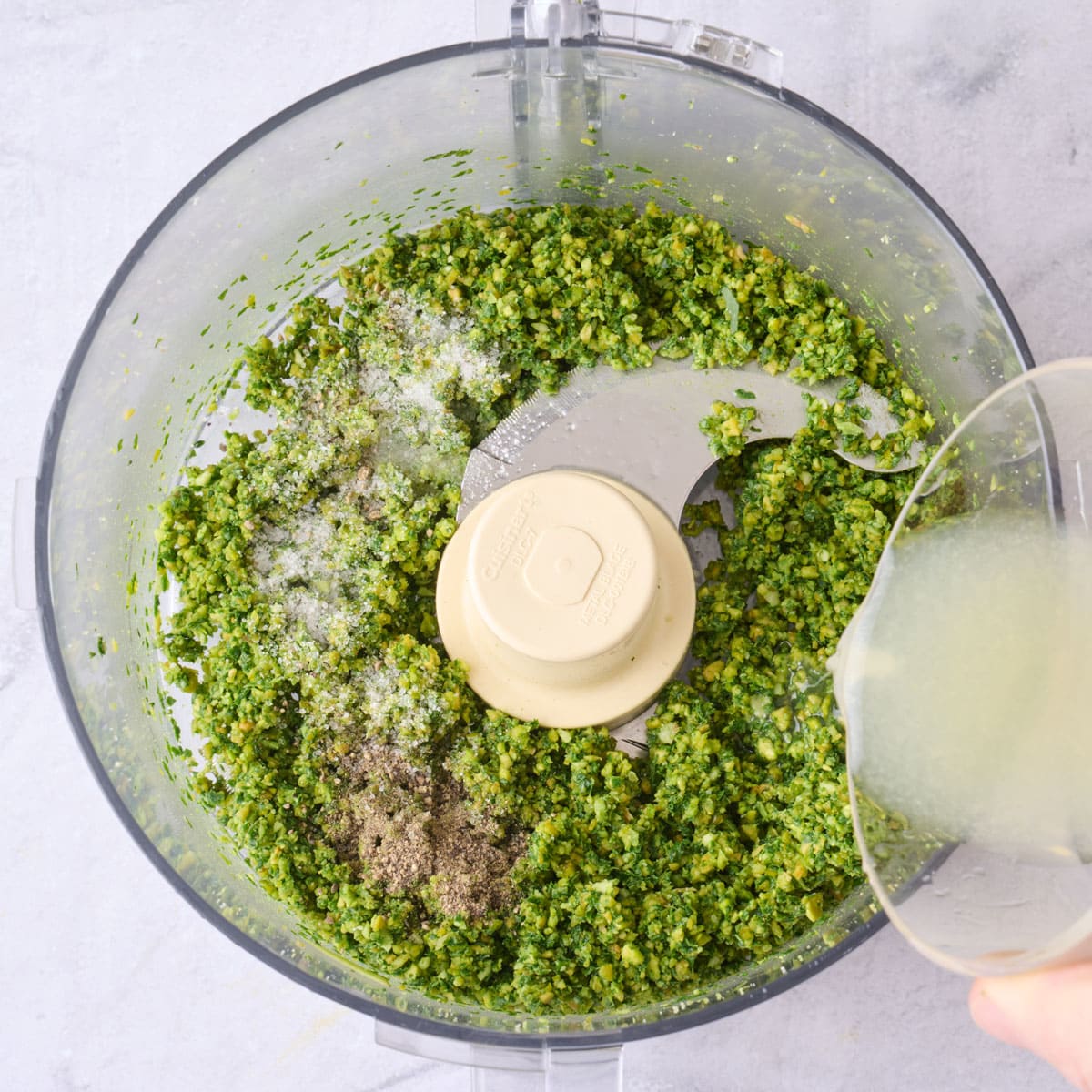
Scrape down the sides of the bowl so nothing gets left behind, then pulse a few more times until the lemon juice, salt, and pepper are fully worked in and the mixture looks evenly combined.
3. Stream in the Olive Oil
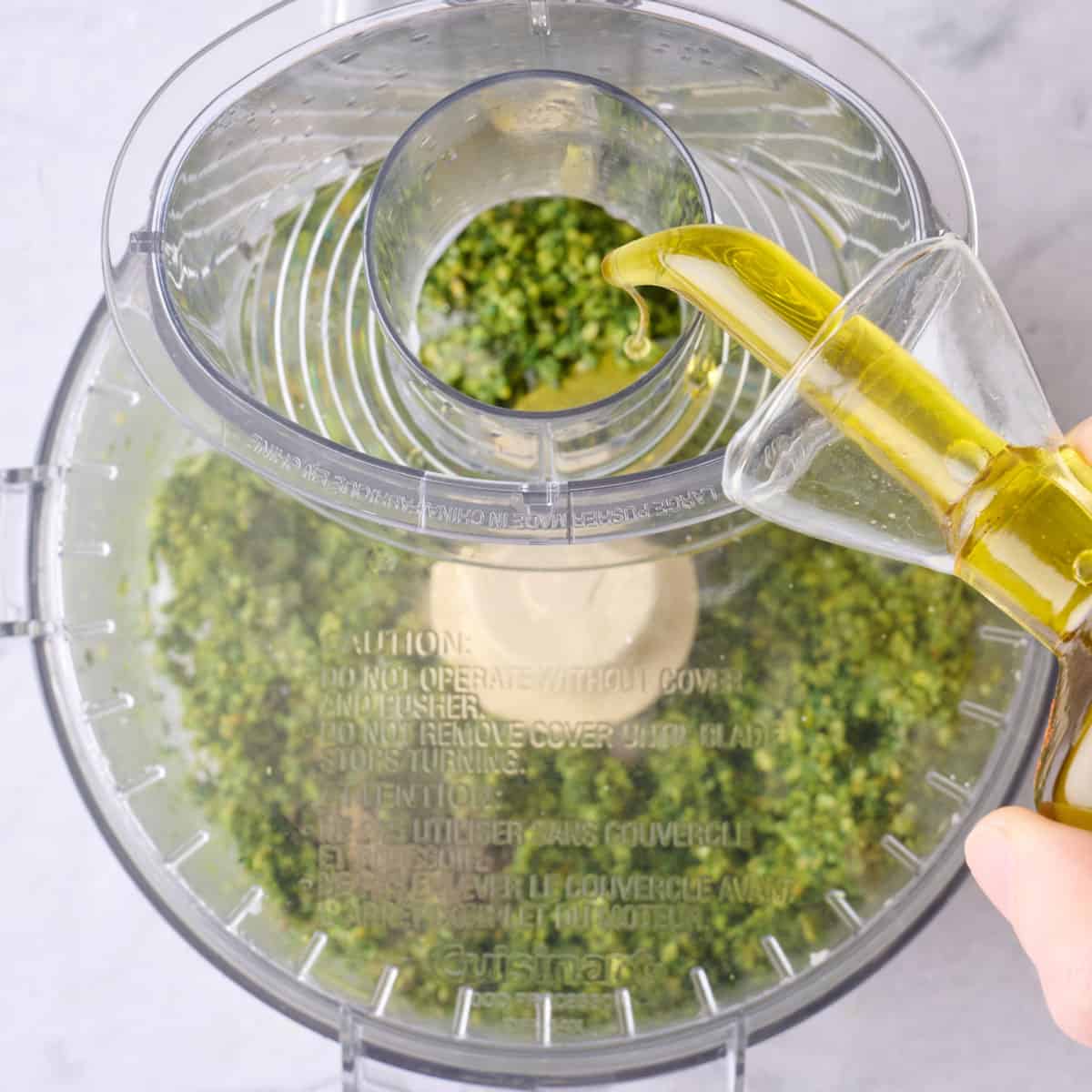
Go slowly here. Pouring all the oil in at once means it won’t emulsify as well. The mixture will start looking smoother and more cohesive as the oil incorporates.
4. Taste and Adjust
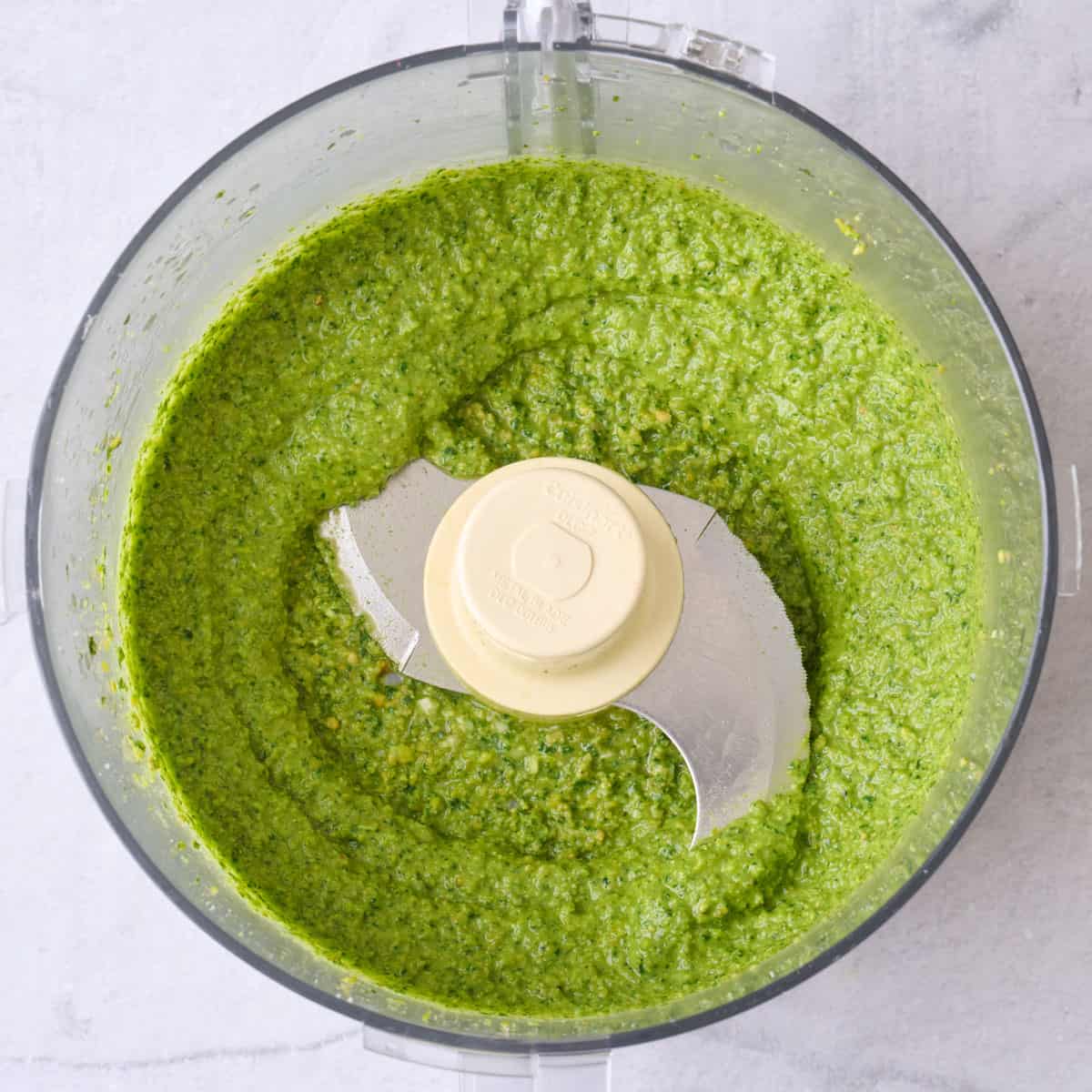
Once it looks smooth and evenly blended, stop processing and give it a taste. Add more lemon juice for brightness or a pinch more salt if needed before serving or storing.
Full Basil Pistachio Pesto Recipe
Pistachio Pesto Recipe
Ingredients
- 2 cups fresh basil leaves packed
- ½ cup shelled roasted pistachios unsalted
- 2 garlic cloves
- ¼ cup freshly grated Parmesan cheese
- ¼ cup fresh lemon juice
- ½ teaspoon salt
- ¼ teaspoon black pepper
- ½ cup extra-virgin olive oil
Instructions
- Add the basil, pistachios, garlic, and Parmesan cheese to a food processor. Pulse until finely chopped.
- Add the lemon juice, salt, and black pepper. Pulse again until combined.
- With the food processor running, slowly stream in the olive oil until smooth and creamy.
- Taste and adjust seasoning as needed. Use immediately or store in an airtight container in the refrigerator. Makes about 1 cup of pesto.
Notes
Nutrition
Nutrition information provided is an estimate. It will vary based on cooking method and specific ingredients used.
Recipe Variations
- Make it creamier: Add ½ cup Greek yogurt, cottage cheese, or ricotta to the food processor for an even creamier spread.
- Try a mint variation. Replace ½ cup of the basil with fresh mint. It changes the flavor noticeably but pairs really well with grilled lamb or fish.
- Add more greens. Swap half the basil for baby spinach to extend the batch and mellow the flavor slightly, or use arugula for a peppery bite. Keep the total greens at 2 cups.
- Add lemon zest. Stir in 1 teaspoon of lemon zest along with the juice for a more forward citrus flavor. Works especially well if you’re using this as a spread.
Recipe Tips
- Stop processing once it looks smooth. Overprocessing the basil can make the pesto bitter. Once the oil is in and the texture looks even, stop and taste before running the processor any longer.
- Taste for salt at the end. Both the Parmesan and pistachios bring saltiness, so it’s easy to oversalt early. Add what the recipe calls for, taste, and adjust from there.
- Use a blender if you don’t have a food processor. You may just need to stop and scrape down the sides a few times since pesto is thick. Pulse or blend on low until combined, adding a small extra drizzle of olive oil if needed to get it moving.
Serving Ideas
- Serve it as a dip: Pistachio pesto is a great dip for pita chips, pasta chips, or baked sweet potato chips.
- Spread it on a sandwich: Try it on an egg sandwich for breakfast, mozzarella sandwich for lunch, or grilled chicken sandwich for dinner.
- Add it to pasta: I love making pesto gnocchi, pesto zoodles, and shrimp pesto pasta.
FAQs
Pesto oxidizes quickly once blended. Press a layer of plastic wrap directly onto the surface before sealing the container to slow this down. A thin layer of olive oil poured over the top also works as a barrier. Brown pistachio pesto is still safe to eat; it just won’t look as vibrant.
he two most common causes are overprocessing the basil or using garlic that has started to sprout. Overprocessing breaks down the basil more aggressively and releases bitter compounds. Pulse rather than running the processor continuously, and stop as soon as the texture looks even. If the garlic has a green shoot running through the center, remove it before adding it to the processor.