Pasta Primavera

Updated May 12, 2026
Easy penne pasta primavera with fresh vegetables, Parmesan, and lemon. Ready in about 25 minutes and good for leftovers.
This post may contain affiliate links. Please read our disclosure policy.
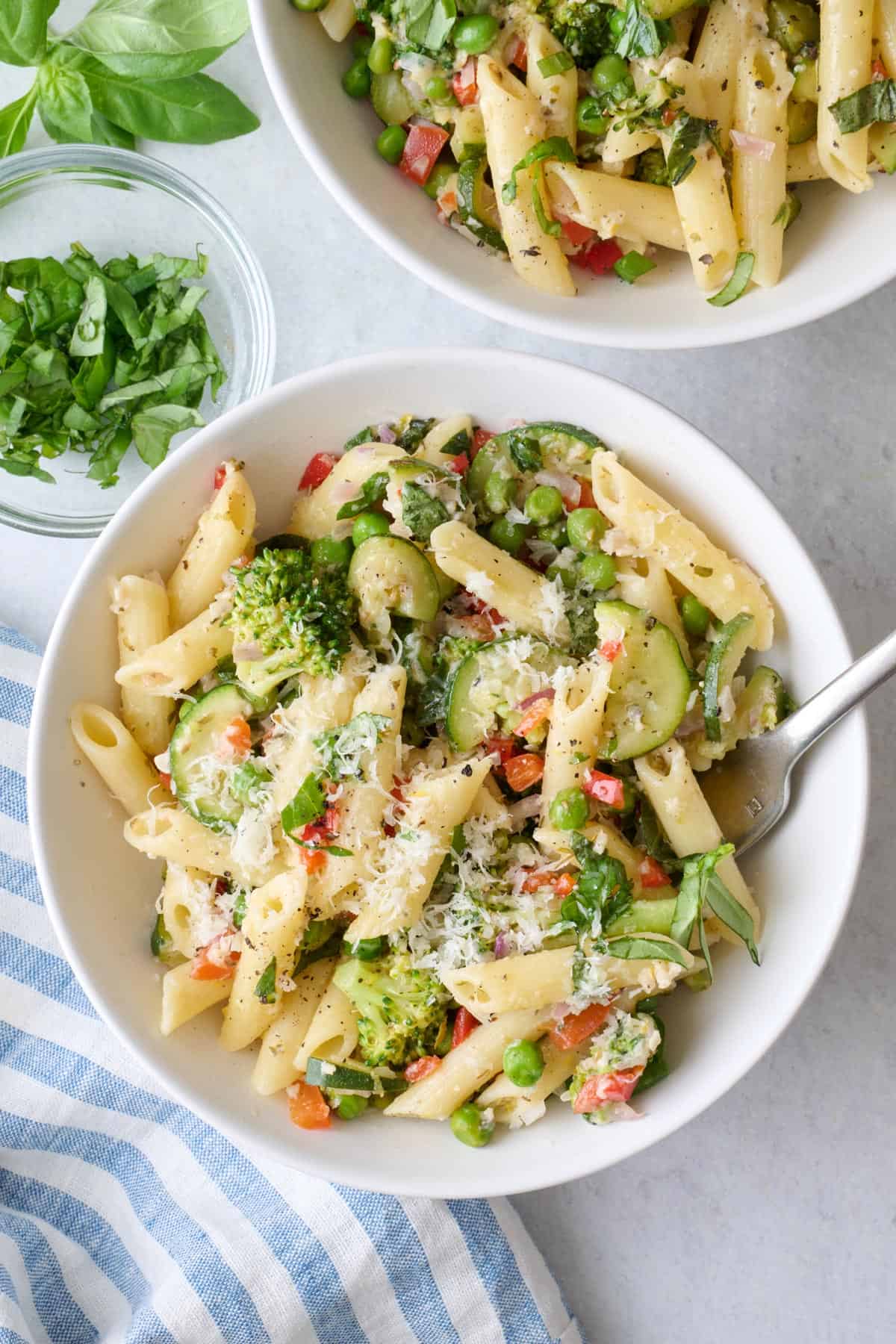
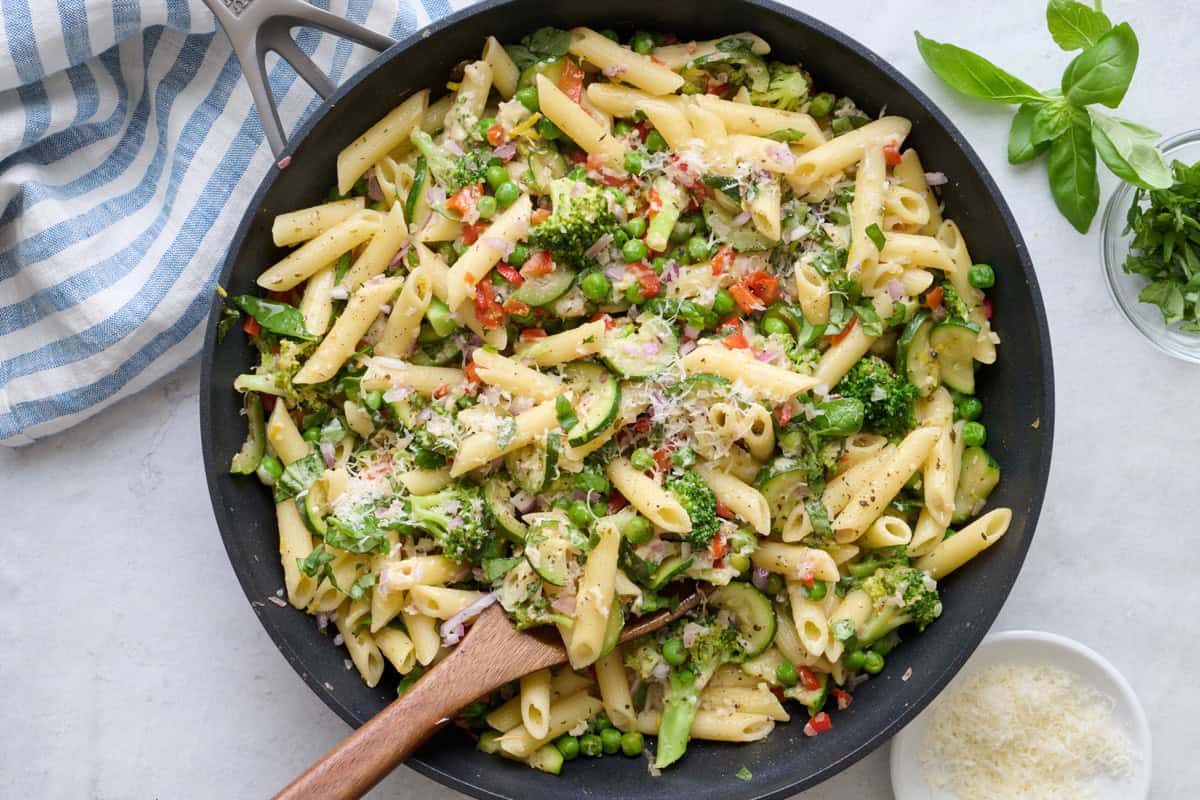
Pasta Primavera is soo good!

Pasta primavera was not something I grew up eating, but I started making it when I needed a weeknight dinner that did not require much. One skillet, about 25 minutes, whole vegetables, and the starchy pasta water does the sauce work, so there is no need for heavy cream or anything complicated. This penne pasta primavera has been in the rotation ever since.
The name means “spring pasta” in Italian, and I love the idea of welcoming spring with a pasta dish that’s full of colorful vegetables. This is a great way to load up your pasta with fiber-rich vegetables, and I’m here for it! You can check out my tips for how to blanch vegetables, which is the authentic way of making pasta primavera, but I prefer to just heat the vegetables in a large skillet and then toss them with the pasta and the sauce without getting one more pot dirty.

Jump to Section
Pasta Primavera Ingredients

- Pasta: For pasta primavera, I stick with penne because the ridges and hollow shape hold the sauce well. Rigatoni or fusilli would also work. Cook it just to al dente since it will keep absorbing liquid once it goes into the skillet.
- Olive oil: Avocado oil works fine as a swap.
- Vegetables: Broccoli florets, red onion, red pepper, zucchini, frozen peas, and minced garlic. Cut everything to a similar size so it all softens at the same rate. Mince the garlic finely so it blends in rather than burning. The peas go in thawed and later than the rest, but they can sit with the other vegetables while you prep. The mix is flexible; asparagus, cherry tomatoes, or yellow squash can stand in for whatever you do not have. Season everything with Italian seasoning, salt, and pepper as it cooks.
- Sauce: Whole milk and reserved pasta water. Set a cup of the cooking water aside before draining the pasta. The starch is what helps the milk and Parmesan cling instead of pooling at the bottom of the pan. Two percent works if that is what you have, but whole milk gives a slightly thicker result. Lemon, Parmesan, and basil all go in off the heat. Zest the lemon before juicing and stop when you see the white pith underneath, or the sauce will turn bitter. Grate the Parmesan fresh; if you can, pre-shredded Parmesan does not melt as smoothly and can make the sauce grainy.
How to Make Pasta Primavera
These step-by-step photos walk through the process of making pasta primavera. For the full ingredient list and instructions, head to the recipe card below, or jump straight to the → Pasta Primavera Recipe
1. Sauté the Pasta Primavera Vegetables

Heat the olive oil in a large deep skillet. Add the broccoli, red onion, red pepper, zucchini, and garlic, then season with Italian seasoning, salt, and pepper. Toss so the seasoning coats the vegetables before they start cooking.
2. Cook Until the Vegetables Soften

Stir occasionally and watch for the onions to turn translucent and the zucchini to soften at the edges. The broccoli should be tender but still have some bite. It will keep cooking once the pasta goes in.
3. Add the Pasta, Peas, and Milk

Pour in the whole milk and reserved pasta water, then add the cooked pasta and thawed peas. Toss everything together so the liquid distributes evenly through the pan.
4. Stir Until the Sauce Clings to the Pasta
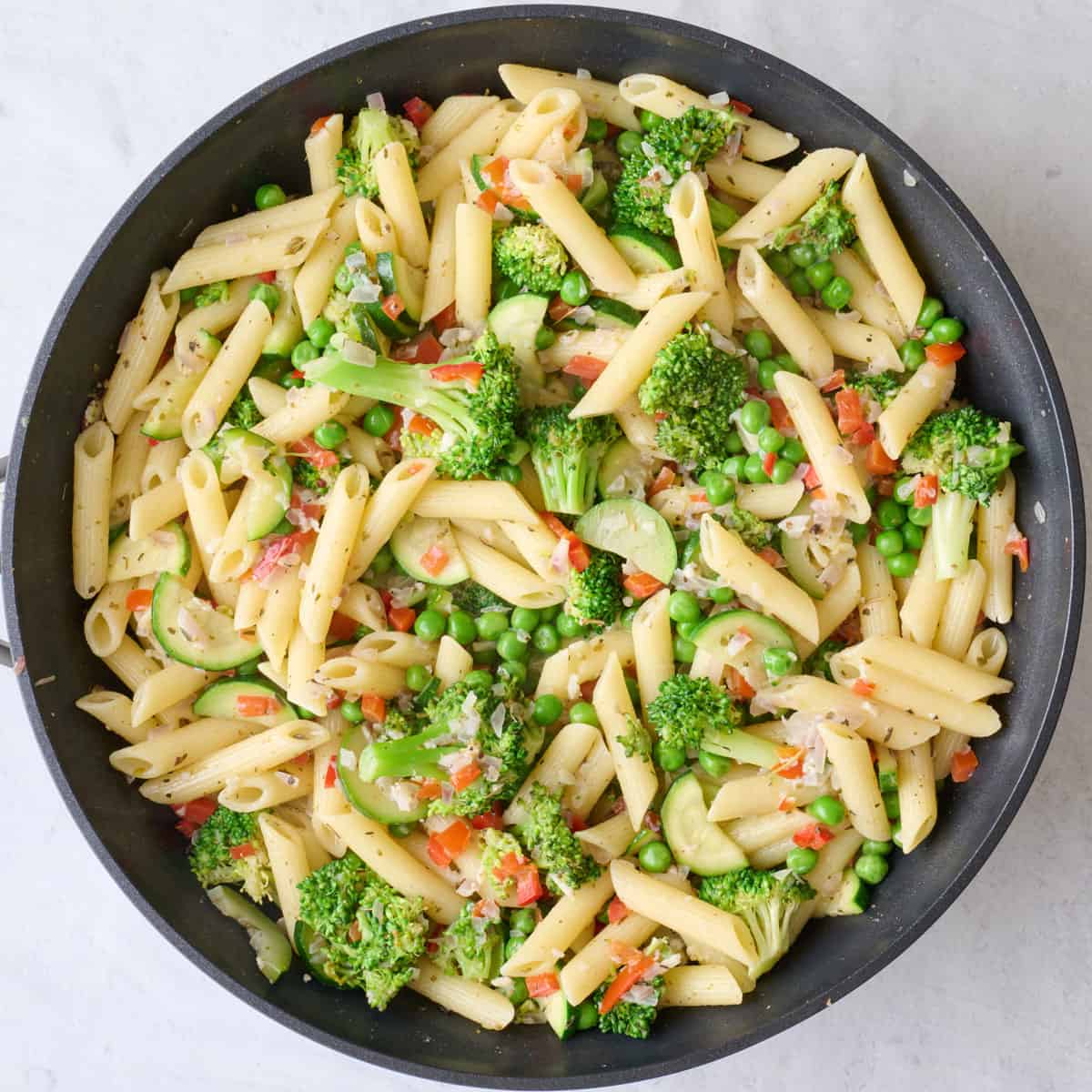
The sauce should start to thicken as it heats through. It is ready when it coats the pasta instead of sitting at the bottom of the pan.
5. Finish with Lemon and Parm
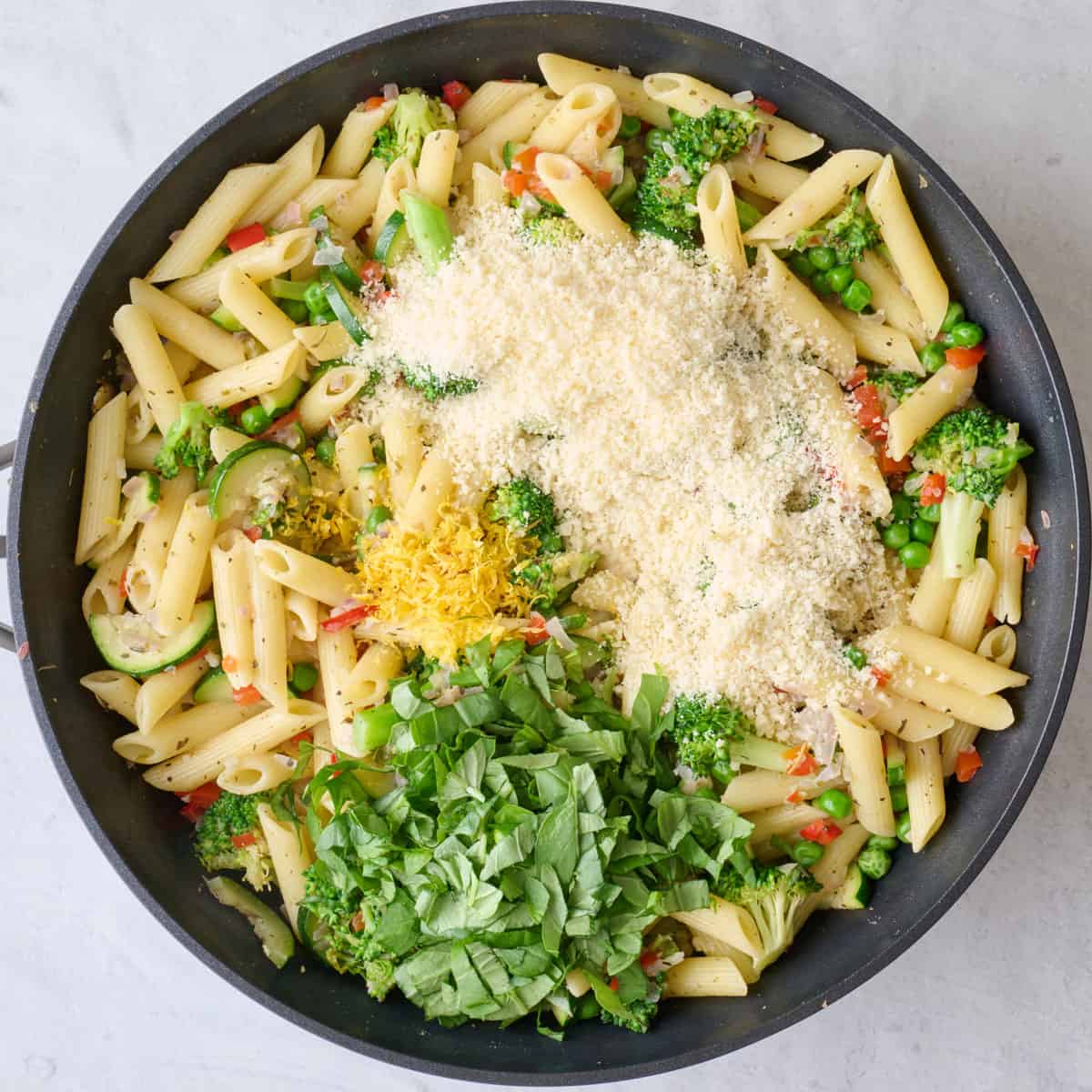
Pull the pan off the heat before adding the lemon zest, lemon juice, Parmesan, and basil. Adding everything off the heat keeps the lemon bright and prevents the basil from wilting down into the sauce.
6. Toss and Serve

One final stir until the cheese melts through and the basil is distributed. Plate into bowls with extra Parmesan and fresh basil on top.
Full Pasta Primavera Recipe
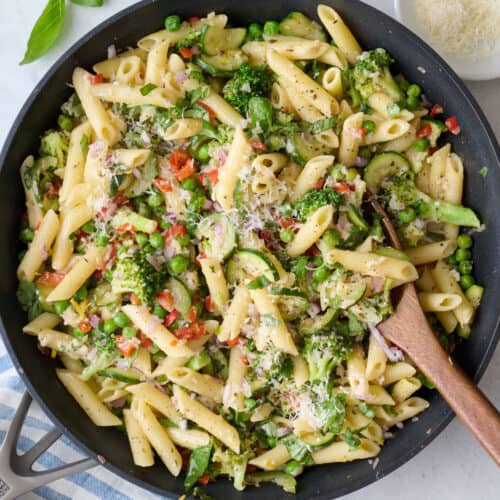
Pasta Primavera Recipe
Ingredients
- 1 pound penne pasta or pasta of choice
- 2 tablespoons olive oil
- 2 cups small broccoli florets
- 1 small red onion sliced
- 1 red pepper sliced
- 1 zucchini halved and sliced
- 3 garlic cloves minced
- 1 tablespoon Italian seasoning
- 1 teaspoon salt plus more for salting the pasta
- ½ teaspoon black pepper
- 1 cup frozen peas thawed
- ½ cup whole milk
- 1 small lemon zest and juice
- ½ cup grated Parmesan cheese plus more for serving
- ¼ cup chopped basil plus more for serving
Instructions
- In a large pot of boiling salted water, cook the pasta according to package instructions; drain well and reserve 1 cup of pasta water and return to the pot to keep warm.
- Meanwhile, in a large deep skillet, heat the olive oil over medium heat. Add the broccoli, red onions, red pepper, zucchini, and garlic. Season with Italian seasoning, salt, and pepper. Cook for about 4 minutes, or until the vegetables start to soften.
- Add the cooked pasta, peas, milk, and the reserved pasta water and stir to combine until the sauce thickens and clings to the pasta, about 1-2 minutes.
- Remove from heat and stir in lemon zest, lemon juice, Parmesan cheese, and basil.
- Serve in bowls garnished with extra parmesan cheese and basil, if desired.
Notes
Storage: Kept in an airtight container in the fridge, the pasta will last for up to 3 days. I recommend heating up individual portions in the microwave for a few minutes! If you want to heat it up on the stovetop, you might want to add a little water to help loosen the sauce.
Nutrition
Nutrition information provided is an estimate. It will vary based on cooking method and specific ingredients used.
Recipe Tips
- Make sure to salt the pasta water. I’ve heard that pasta water should be as salty as the sea! Because pasta absorbs water as it cooks, the salted water adds a lot of flavor.
- Don’t toss the pasta water. Before you drain the pasta, set some of the cooking liquid aside. This water is starchy from the pasta and will help thicken the pasta sauce!
- Taste the pasta early. For al dente pasta that’s chewy yet soft, I start tasting it a minute or two before the package instructions say it’ll be done.
- Cook the vegetables as much as you’d like. I like when the vegetables still have some bite to them, so I only cook them until they just start to soften in this recipe! That said, you can absolutely cook them longer if you want them softer.
Serving Ideas
- Add protein. I usually keep mt pasta primavera vegetarian, but it works well with something on top when I want it more filling. Try it with grilled chicken tenders, air fryer shrimp, or air fryer salmon.
- Pair with a salad. If I’m serving this as the main and want something lighter on the side, a simple green salad, Greek salad, or mixed greens salad are all good options here.
- Serve with bread. Something to dip into the pan is never a bad idea. My garlic cheese bread or garlic knots both work well here.
FAQs
I would just add a little water or more milk as needed to help the sauce coat the pasta!







Comments
Healthy, tasty, easy! My husband and I both enjoyed this one. I will say all the veggies did not fit in what I thought was a decently sized pan so just keep that in mind
Thank you so much! I’m so glad you and your husband both enjoyed it. And yes, that’s a great note. The veggies can take up a lot of space before they cook down, so using a large pan or adding them in batches can definitely help. So happy you found it healthy, tasty, and easy!
My whole family enjoyed this dish! It is very flavorful, light, and delicious! The only change I made was using cut up baby asparagus instead of zucchini. I think I will try doubling the sauce next time since I went heavy on the amount of veggies, and both the pasta and veggies soaked it up. Thanks for another great recipe Yumna!
Asparagus sounds delicious in this! Agreed, since you added extra veggies, some extra sauce next time is probably a good idea. So happy your whole family enjoyed it together! Thank you for sharing with me!
This dish needed more sauce. It was pretty much non-existent & did not really coat the pasta. Not sure if heavier cream or more parm would help. Also the lemon notes didn’t seem to come through in the flavour profile. Any suggestions?
Hi Donna, sorry to hear this didn’t turn out as you expected. Did you use the 1 cup of reserved pasta water? It’s supposed to be a lighter sauce, but 1/2 cup milk plus 1 cup of reserved pasta water should give it plenty of sauce. Happy to help you troubleshoot more if you want to try again.