How To Boil Chicken Breast

Updated Oct 04, 2026
Boiled chicken doesn't have to be bland. Boil chicken breast in seasoned broth so it actually tastes good and stays tender enough to shred or slice.
I may earn commissions on purchases through links in this post. As an Amazon Associate I earn from qualifying purchases. Please read our disclosure policy.
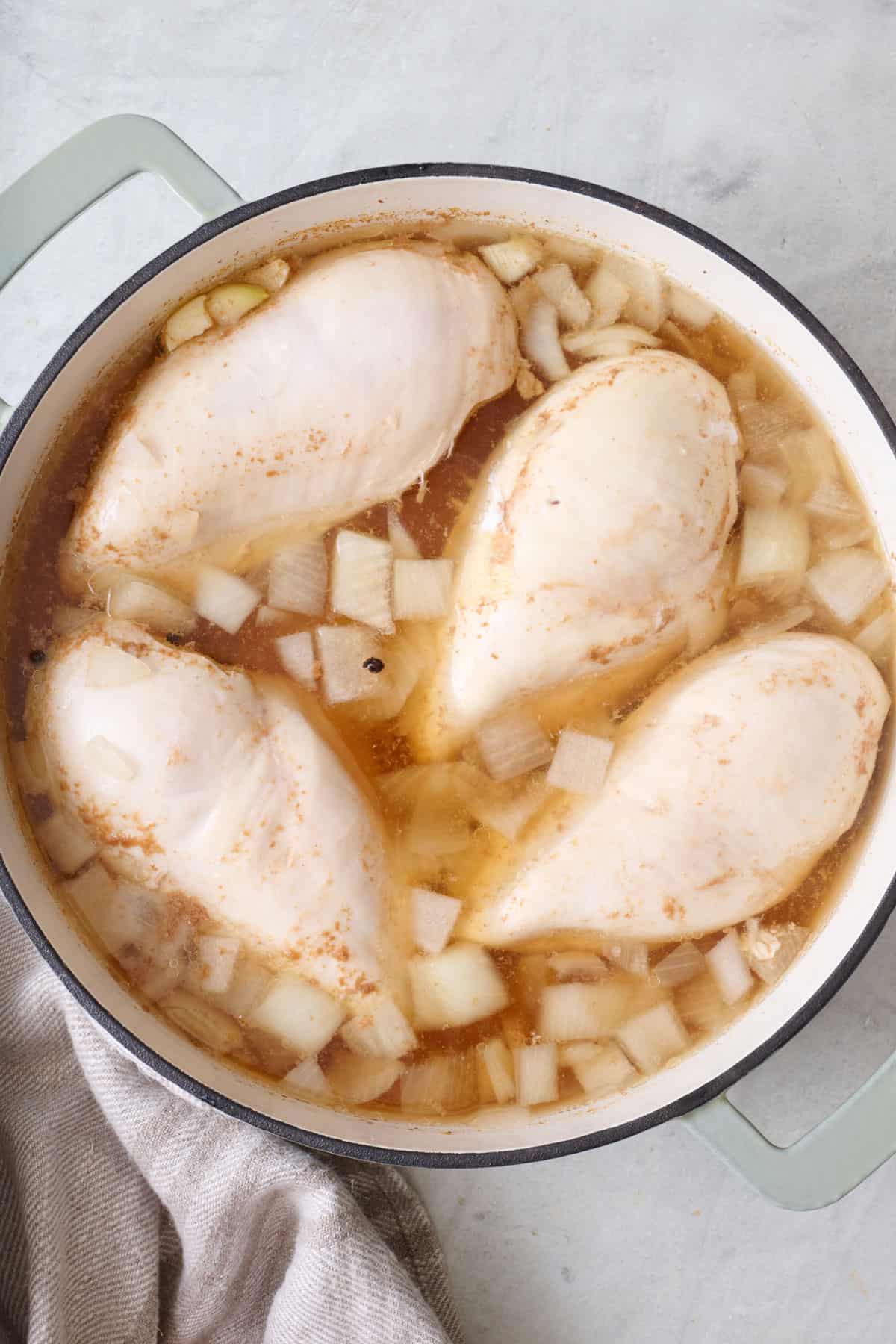
I was one of those people who would hear “boiled chicken breast” and picture pale, rubbery chicken with no flavor. I really didn’t get the appeal. Then I started making it when I needed chicken for meal prep during my cookbook launch and realized I had been blaming the method when the problem was how I was boiling it. I learned how to boil chicken at a gentle simmer instead of letting it bubble away and it changed my mind pretty quickly.
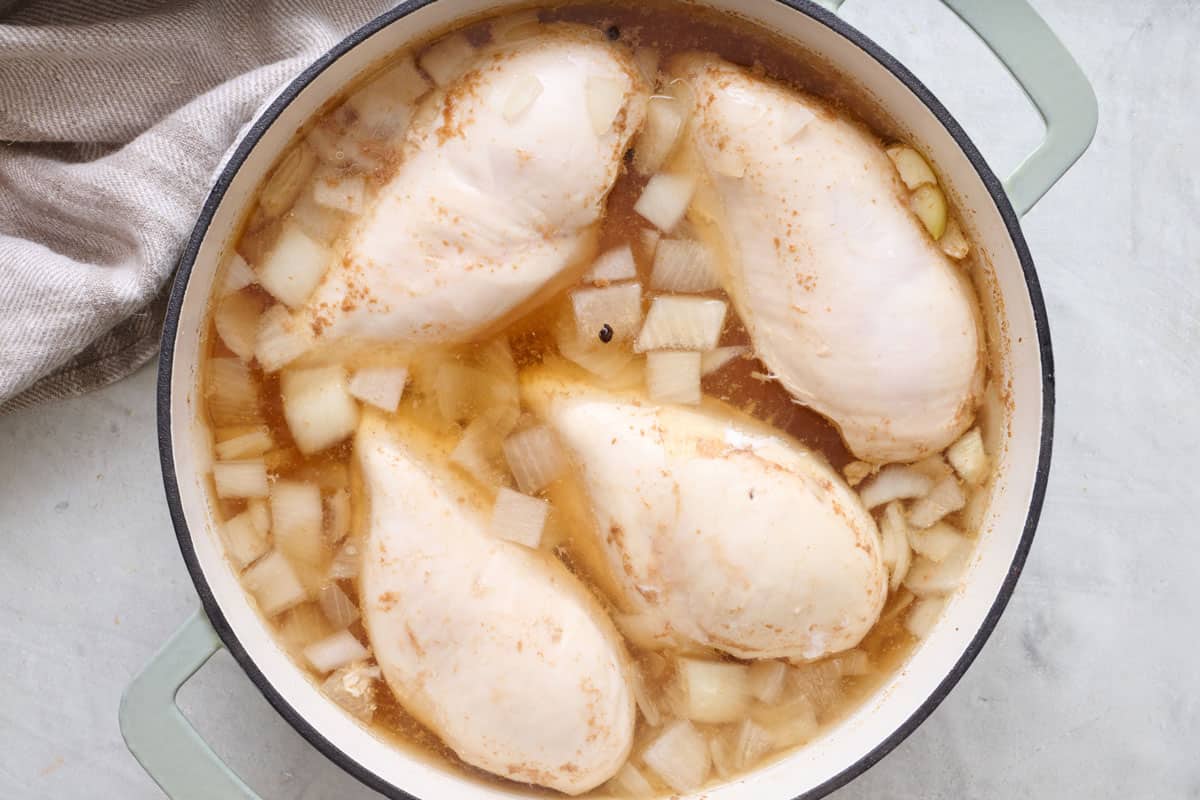
Now I boil chicken breasts pretty regularly! I add onion, garlic, and a few seasonings to the water, and I always save the broth. Sometimes I’ll purposely leave one chicken breast in there because I already know I’m turning the whole thing into chicken noodle soup later. That might actually be my favorite part of making it this way
Recipe Testing Notes

For the past 10 years, I’ve tested every recipe before sharing it with you! These notes give you a peek into the process of developing this boiled chicken breast recipe.
I used plain water the first few times I boiled chicken because I figured I could season it later. I could, but the chicken itself was pretty boring. Once I switched to broth and started adding onion, garlic, and peppercorns, I noticed the difference right away. I’d actually eat a piece straight off the cutting board, which was definitely not happening with the plain-water version.
I was also boiling it way too hard at first. I basically treated it like pasta and let the pot bubble away, and the outside of the chicken would get stringy before the middle was done. Now I keep it at a really gentle simmer. That one change probably did more than anything else to convince me boiled chicken didn’t have to be dry.
And I stopped getting too attached to a certain number of minutes. I’ve had two chicken breasts from the same package finish at different times just because one was thicker. I check each one and pull it at 165°F, then let it sit in the broth for a few minutes before I slice or shred it. That’s been much more dependable than the clock
Happy Cooking!
– Yumna
Jump to Section
Boiled Chicken Ingredients
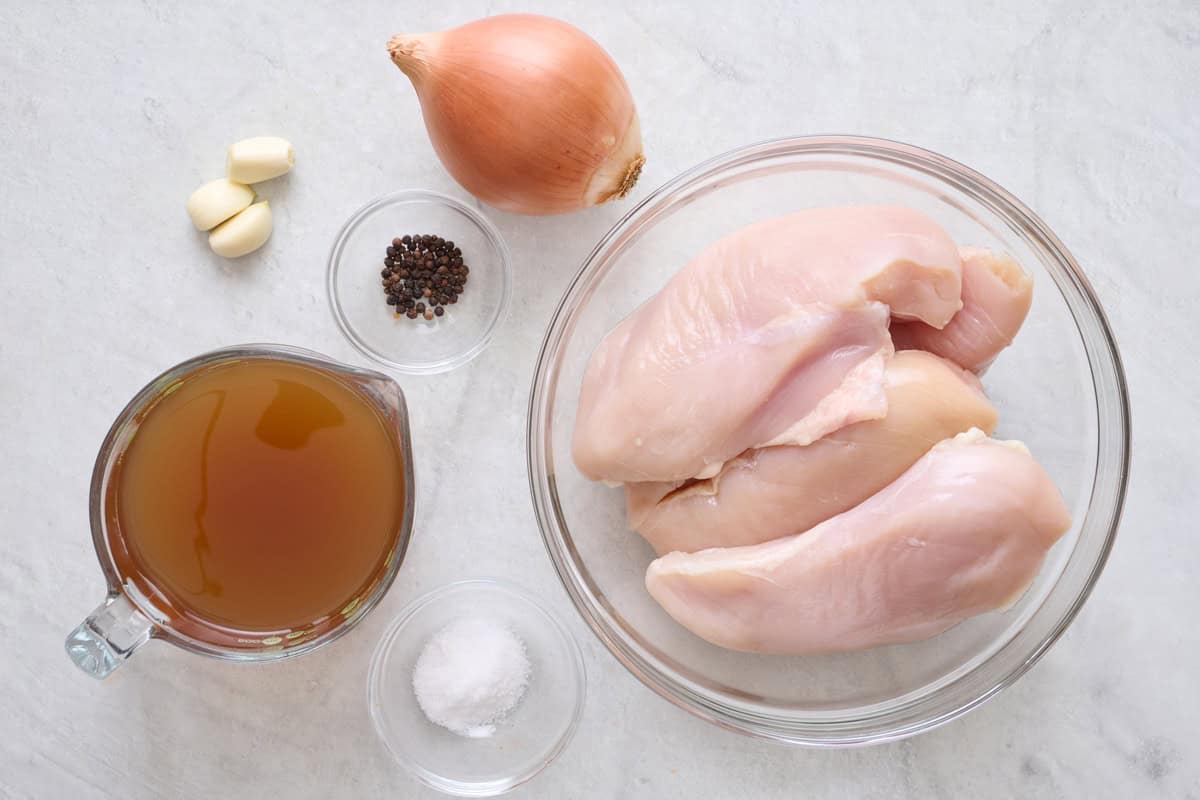
- Chicken: I use boneless, skinless chicken breasts. You can use the same technique for chicken thighs or even bone-in, skin-on chicken. Just remember that bone-in chicken will need to cook for a little longer.
- Vegetable broth: Homemade vegetable stock is ideal because you can control the amount of salt, but storebought low-sodium vegetable broth works, too. You can also use low-sodium chicken broth. If you don’t have any broth, water works, but the chicken won’t be as flavorful. If you use water, consider adding extra seasonings or aromatics to enhance the flavor.
- Aromatics: Yellow or white onion and garlic. You can also use shallots or green onions if that’s what you have. Roughly chop the onion and smash the garlic cloves to season the cooking liquid, so there’s no need to finely chop either one.
- Seasonings: Just peppercorns and salt. I use whole black peppercorns because they’re easy to leave behind when I remove the chicken.
How to Boil Chicken Breast
These photos show you how to boil chicken. The full ingredient amounts and instructions are in the recipe card below, or you can jump straight to the → Boiled Chicken Recipe
1. Add chicken & aromatics
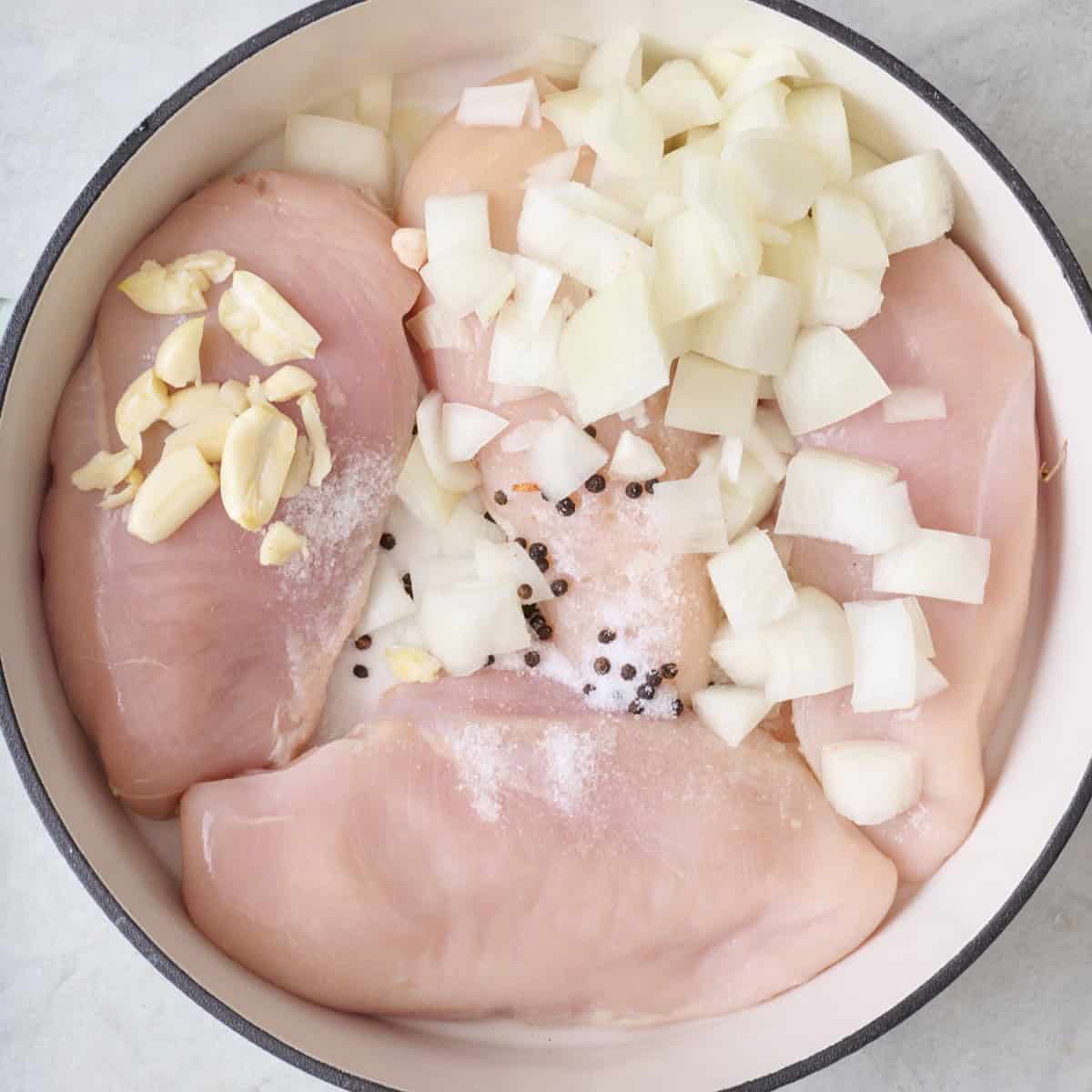
Place the chicken breasts in a large stockpot with the chopped onion, smashed garlic, whole peppercorns, and salt.
2. Pour in Vegetable broth
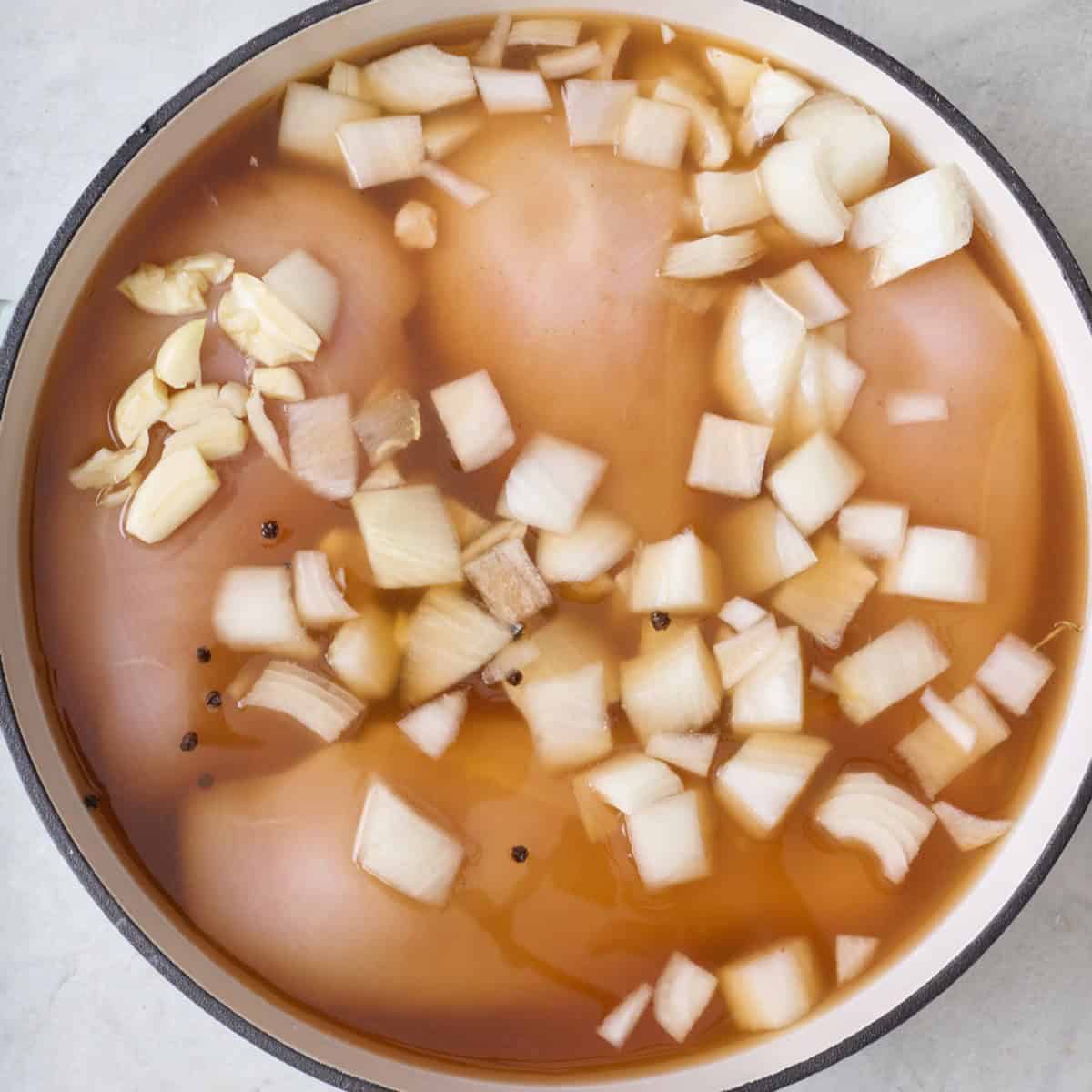
Add the vegetable broth to the pot, making sure the liquid covers the chicken.
3. Boil the chicken
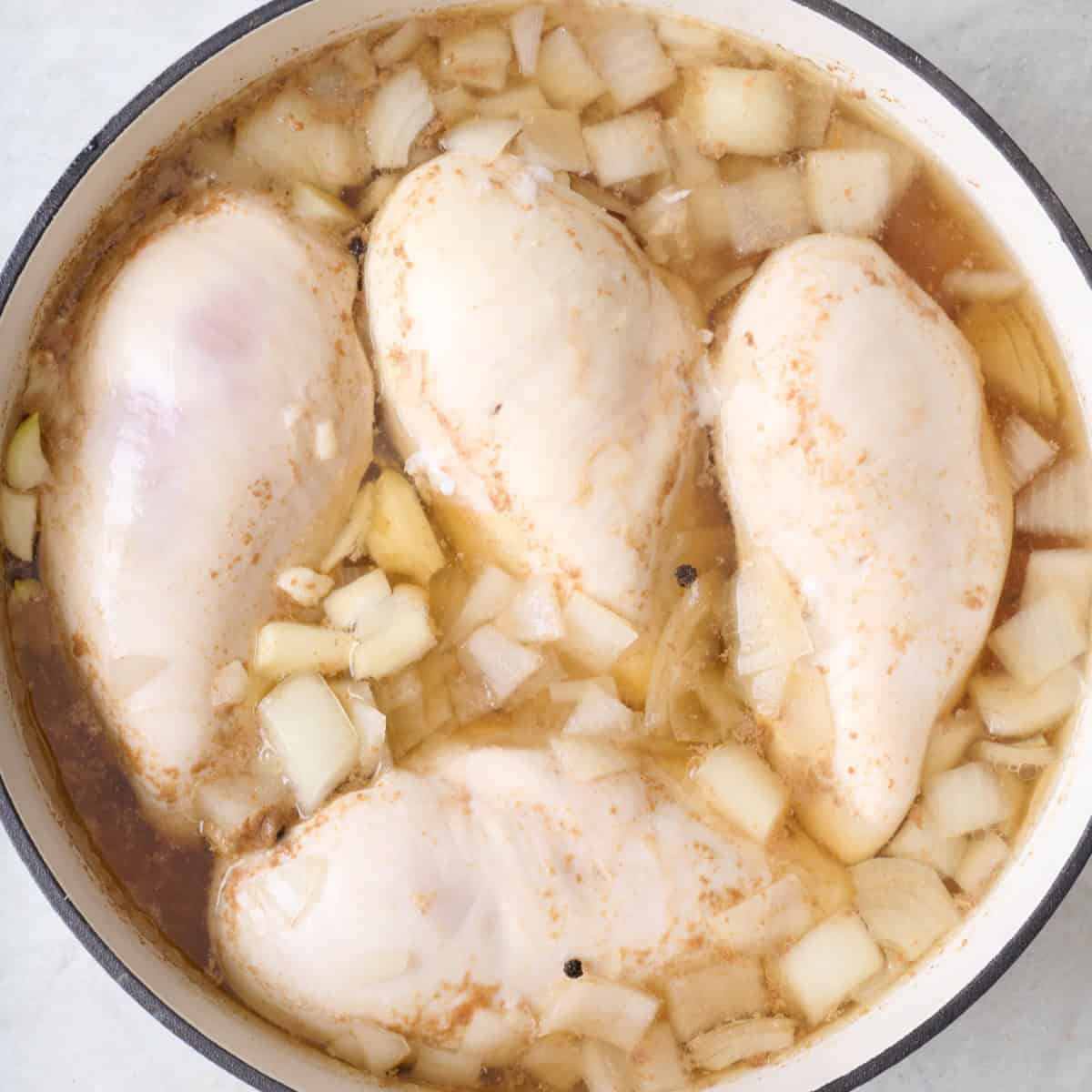
Bring everything to a boil, then cover the pot and reduce the heat. Let the chicken gently simmer until the centers are completely cooked through.
4. Remove the chicken

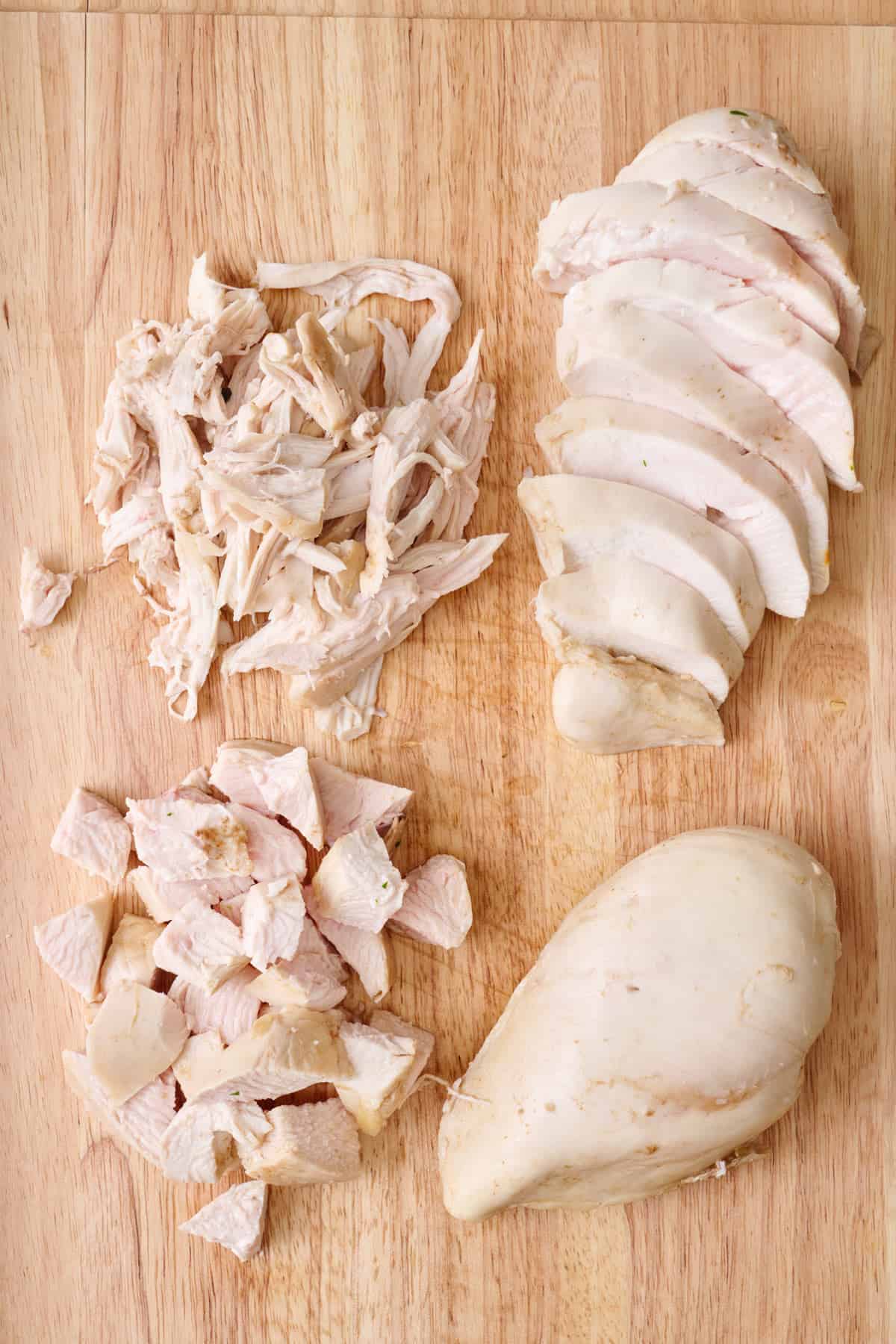
Lift the chicken breasts out of the pot. Shred, slice, or dice the chicken depending on how you want to use it.
Full Boiled Chicken Recipe

Boiled Chicken Breast Recipe
Video
Ingredients
- 4 large chicken breast
- 3 cups low sodium vegetable broth
- 1 onion roughly chopped
- 1 teaspoon whole black peppercorns
- 3 garlic cloves smashed
- 2 teaspoons salt
Instructions
- In a large stockpot over medium-high heat, place the chicken, vegetable broth, onion, peppercorns, garlic, and salt.
- Bring to a boil, then cover and reduce heat to medium. Let simmer until the chicken is cooked through and a meat thermometer inserted into the thickest part of the chicken breast reaches 165°F, about 15 minutes.
- Shred, slice, or dice the chicken or use as desired.
Notes
Nutrition
Nutrition information provided is an estimate. It will vary based on cooking method and specific ingredients used.
Recipe Variations
- Fresh herbs: Add a few sprigs of parsley or thyme to the pot with the onion and garlic. Leave them whole so it’s easy to strain them out after cooking.
- Lemon: I sometimes add a few strips of lemon peel to the cooking liquid when I know I’m using the chicken in a salad or grain bowl. Avoid too much of the white pith, since it can make the broth bitter.
- Dried spices: If I’m planning to use the boiled chicken in a specific recipe, I’ll add 1 teaspoon of cumin, paprika, or another seasoning that works with the final dish.
Recipe Tips
- Check each chicken breast with a meat thermometer separately. Chicken breasts can go from undercooked to dry in minutes, so I like to use a meat thermometer to check for doneness. And they aren’t always the same thickness, so you can’t assume they’re all done at the same time. Check the thickest part of each breast and remove it once it reaches 165°F.
- Cool the chicken in the cooking liquid. This lets the chicken retain moisture and stay juicy.
- Reuse the broth. It would be a shame to dump the broth down the sink! Instead, strain it and use it anywhere you’d normally use broth, like in soups, sauces, and cooking grains like quinoa or brown rice.
Serving Ideas
- Make chicken salad: I like boiled chicken for chicken salad because I can dice or shred it depending on the texture I want. Try my Greek yogurt chicken salad, buffalo chicken salad, or Chinese chicken salad.
- Add it to a soup: Shredded boiled chicken is easy to stir into soup toward the end of cooking. Use it in my Lebanese freekeh soup, lemon chicken orzo soup, or chicken barley soup.
- Make wraps: I love making boiled chicken for easy lunch wraps. Try my buffalo chicken wrap, chicken avocado wrap, or chicken broccoli wraps.
Troubleshooting
You may have cooked the chicken at too strong of a boil, or left it in the pot for too long. Once the liquid boils, reduce the heat so it cooks at a gentle simmer and start checking the internal temperature rather than relying only on the clock. The chicken is done when the thickest part reaches 165°F.
You most likely overcooked it. Larger breasts may need more time than smaller ones, which is why I check them individually and remove each one as soon as it’s cooked through. If the chicken is already dry and tough, you can try using it in recipes where the texture will be less noticeable, like soups or casseroles.
If your chicken is underdone, return it to the pot and continue to simmer it for a few more minutes. Check the temperature again after a few minutes to ensure it reaches 165°F. It’s important to keep the heat at a simmer, not a boil, to avoid drying out the chicken.
The biggest differences between the two methods of cooking chicken are the heat and the amount of liquid used. Poaching chicken is a gentler cooking method that results in tender, juicy chicken, while boiling chicken involves higher heat and more cooking liquid.






Comments
Excellent recipes. Easy to follow!!!
So happy you thought so, Nana! Thank you!
I looked at the nutritional information at the end, and it states the SODIUM is at 1427mg. Is that correct? That is ¾ of the daily recommended allowance for adults. Where is the sodium coming from? Vegetable broth, 2 teaspoons of salt or a combo? Being on a sodium-restricted diet, all I could have in a day is a chicken breast, pretty much!
Hi Ricky! Yes, those nutrition facts are correct. The vegetable broth used in the calculation is low sodium, so it does contribute some sodium but most of the calculation is coming from the salt. One teaspoon of salt is about 2,325 milligrams of sodium and the recipe calls for 2, which is 4,650 milligrams total. Divided by 4 servings, you are getting approximately 1,162 milligrams of sodium from the salt alone. You can omit or reduce the amount of salt you add to the recipe if you’d like to help adhere to your sodium-restricted diet. Using a salt-free vegetable broth will also help!
What is the ice for?
Sorry! I think this was a typo because I can’t remember why I added that there. I just deleted it from the ingredient list!