Vegetarian Pad Thai

Updated Nov 15, 2025
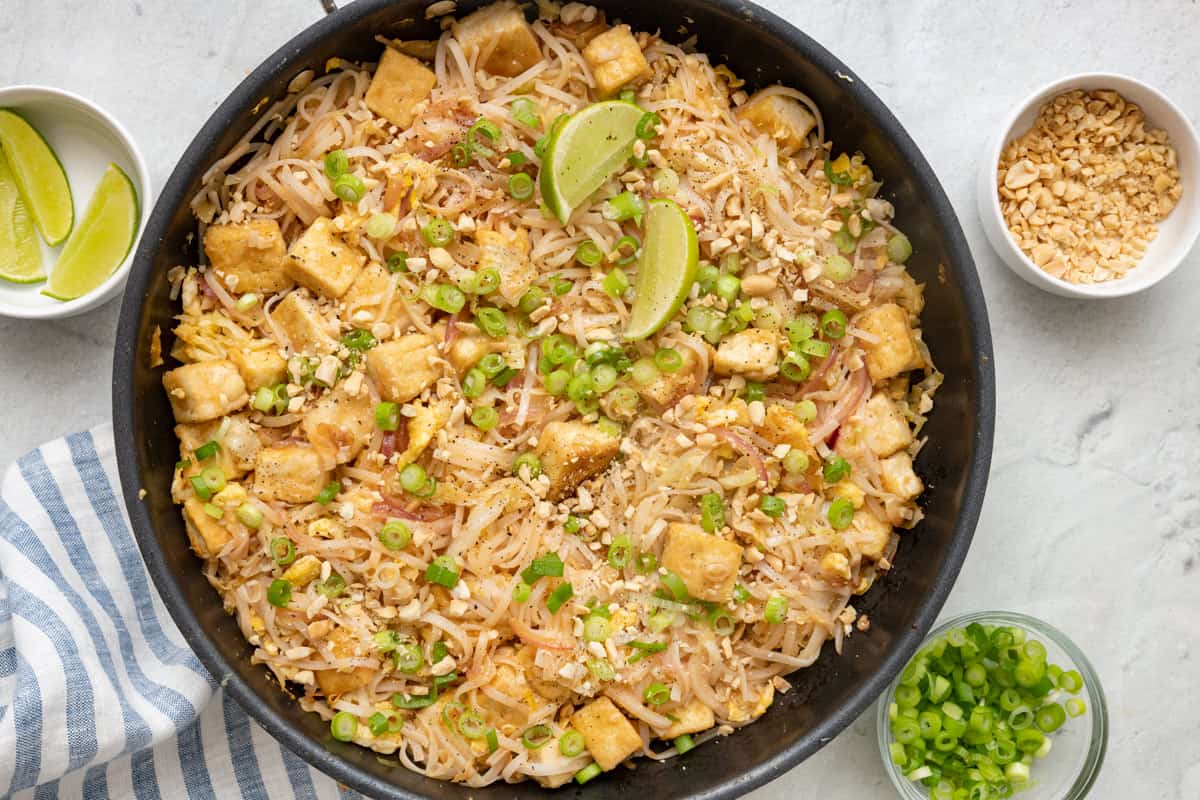
Vegetarian Pad Thai recipe with crispy tofu, and fresh vegetables tossed with pad Thai noodles in a savory sauce and topped with peanuts.
This post may contain affiliate links. Please read our disclosure policy.
Jump to Section
Vegetarian Pad Thai is soo good!

I learned how to make this Vegetarian Pad Thai recipe from a Thai chef who worked at a Sandals resort in Barbados. It was one of the best Pad Thai recipes I had, so I asked him if he would share the recipe, and this is my attempt at recreating it. It was hard to keep my version of his Vegetarian Pad Thai 100% authentic due to ingredient availability, but I did my best. Mine has chewy pad Thai rice noodles tossed with crunchy veggies and crispy tofu cubes; with a sauce that is the right balance of sweet, tangy, and spicy.
Happy Cooking!
– Yumna
Vegetarian Pad Thai Ingredients
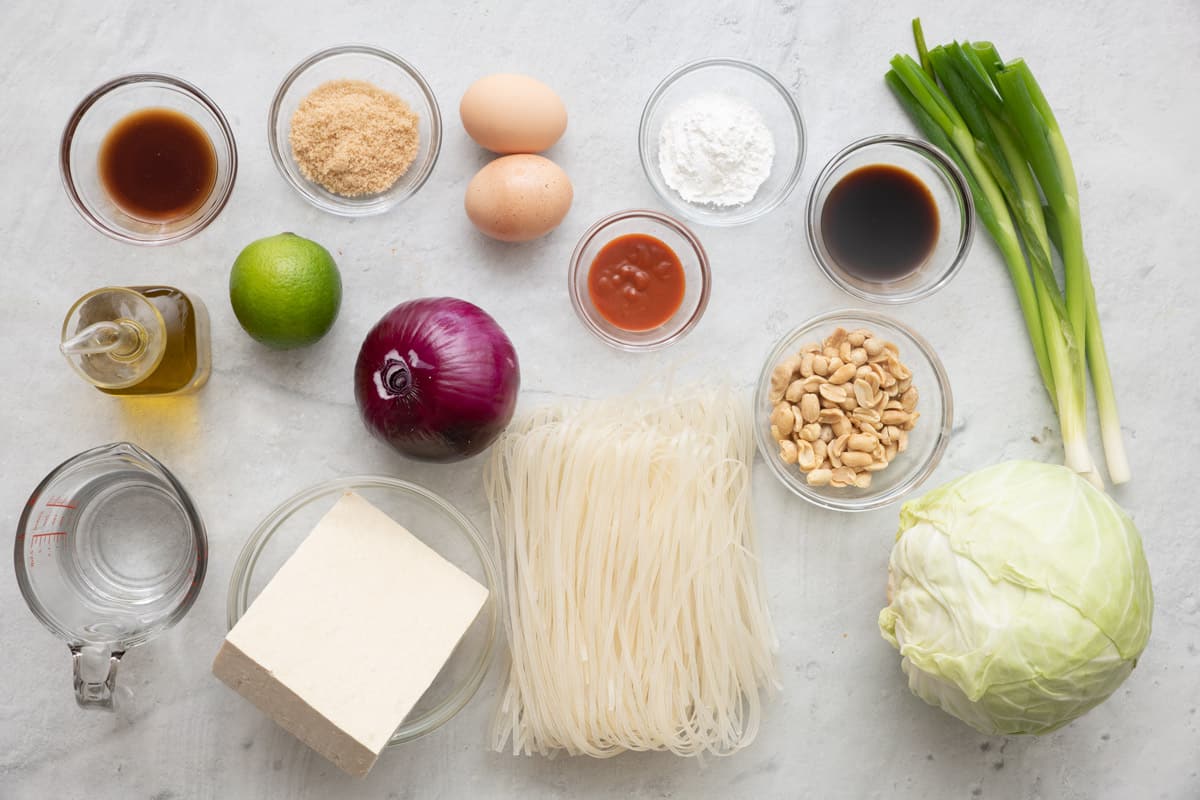
- Sugar: I always use brown sugar in this pad thai recipe!
- Soy Sauce: Feel free to swap in tamari to make this noodle dish gluten free.
- Lime Juice: Use fresh lime juice rather than bottled, if you can!
- Sriracha: I love the flavor of sriracha, but you can also sub in some red pepper flakes or sliced Thai chilies. Adjust the quantity to your spice preferences!
- Hoisin Sauce: Hoisin sauce works really well in this recipe, but if you’re not vegan, fish sauce will also taste great.
- Pad Thai Rice Noodles: You should be able to find these in any standard grocery store! But you can also use udon noodles, spaghetti, or even zucchini noodles (zoodles).
- Tofu: Look for extra firm tofu (it’ll have better texture than standard tofu). Tempeh will also work! Read my tips on how to press tofu.
- Cornstarch: For crisping up your tofu!
- Avocado Oil: I prefer using avocado oil for stir-frying, but any cooking oil will do.
- Veggies: My go-to pad thai veggies are red onion, scallions, and green cabbage, but bell peppers, snow peas, bean sprouts, and shredded carrots will also taste great.
- Eggs: Feel free to skip the eggs or swap in a vegan alternative, if you like!
- Peanuts: I love the way peanuts taste with this dish, but you can also try using cashews or almonds.
How to make Vegetarian Pad Thai


Cook the Pad Thai


Vegetarian Pad Thai Recipe
Ingredients
- 2 tablespoons brown sugar
- 2 tablespoons soy sauce
- 2 tablespoons fresh lime juice plus more for serving
- 1 tablespoon sriracha
- 1 tablespoon hoisin sauce
- ½ cup water
- 1 (8-ounce) package pad thai rice noodles
- 1 (14-ounce) block extra firm tofu pressed and cut into ½-inch cubes
- 2 tablespoons cornstarch
- 2 tablespoons avocado oil divided
- 1 small red onion thinly sliced
- 4 scallions sliced, whites and greens divided
- 2 cups green cabbage shredded
- 2 eggs beaten
- ½ cup peanuts crushed, for serving
Instructions
- Mix together brown sugar, soy sauce, lime juice, sriracha, hoisin sauce, and water. Set aside.
- Bring a large pot of water to a boil. When the water reaches a boil, add rice noodles and cook until al dente, about 5 minutes. Drain, rinse under cold water and set aside.
- Toss the tofu cubes and cornstarch in a medium bowl until well-coated. In a large skillet or wok, heat 1 tablespoon oil over medium-high heat. Add tofu and stir-fry for 5 to 7 minutes, or until the tofu is lightly golden brown on all sides. Remove from the pan with a slotted spoon and set aside.
- In the same pan over medium-high heat, add red onion, the whites of the scallions and shredded cabbage and stir-fry for 2 to 3 minutes or until the onion starts to char slightly and the cabbage has wilted.
- Add in blanched noodles and fried tofu and cook for 1 to 2 minutes.
- Push the noodles to one side of the pan and add eggs to the empty space. Cook the eggs until lightly scrambled, then stir to combine with the noodles.
- Add sauce to pan and stir fry until the noodles absorb most of the liquid, about 2 minutes.
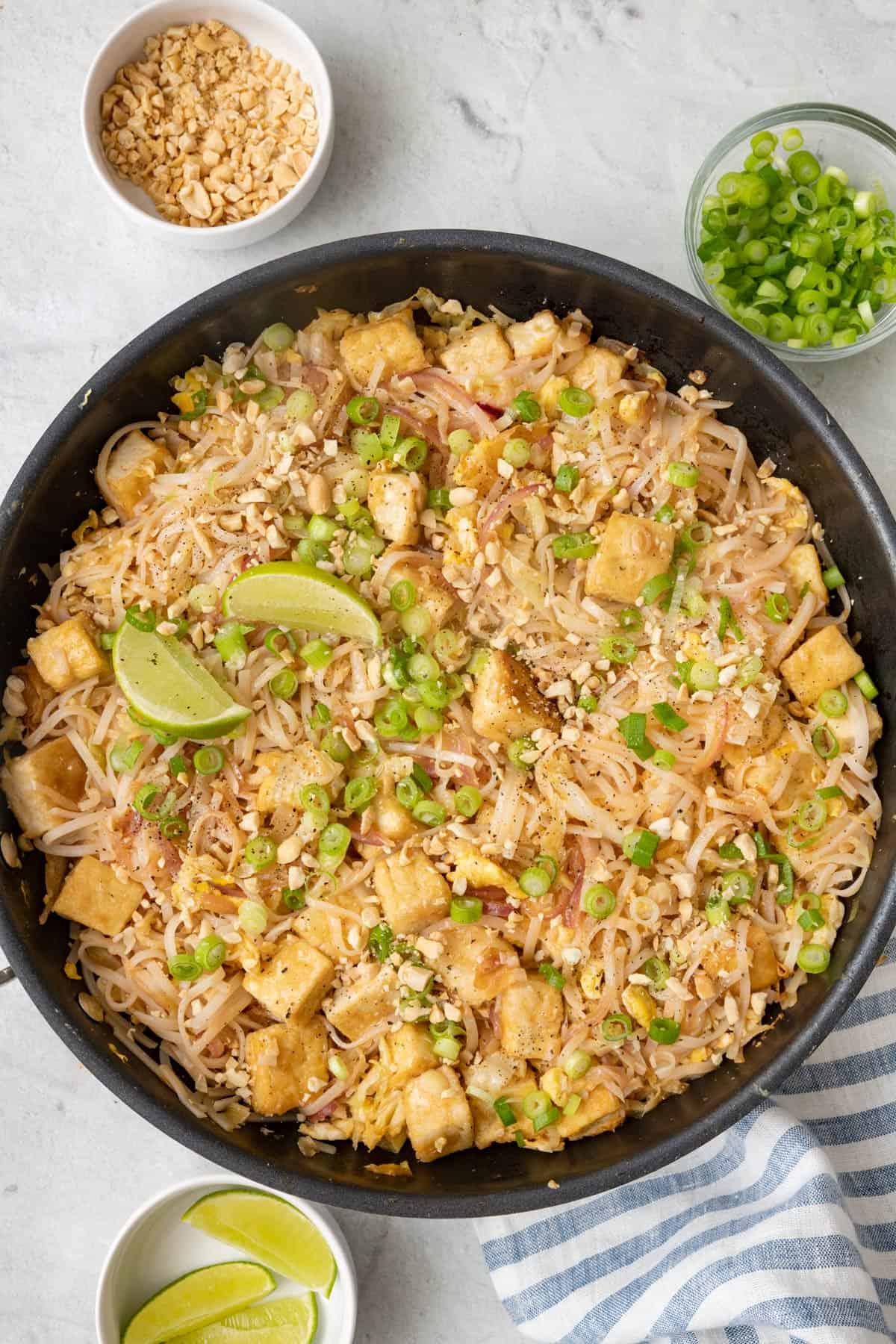
- Serve topped with lime wedges, crushed peanuts, and green scallion tops.
Notes
Nutrition
Nutrition information provided is an estimate. It will vary based on cooking method and specific ingredients used.
Recipe Tips
- Use a wok if you have one. Since a wok is high on all sides, you can add lots of ingredients without worrying about everything cooking at the same speed!
- Don’t be afraid of cooking with high heat. When I learned this recipe in a restaurant kitchen, the food was literally on fire! The chef told me that fast, super high heat was what added all the flavor, so make sure you’re turning up the heat on your own kitchen stove.
- Prepare your ingredients beforehand. Because the cooking process is quick and involves stir-frying with high heat, it really helps to have all your ingredients prepped and ready to go.
- Don’t overcook your noodles. They should be al dente! They’ll continue to cook when you add them back into the pan later, so try not to to overdo it with the cooking time.
- Press your tofu. Pressing your tofu properly is super important for texture! Use a tofu press or place it between kitchen towels and put a heavy object on top to get rid of any extra moisture before cooking.
Serving Ideas
- Add an Asian-inspired veggie side. For some extra nutrients with this noodle dish, I like to make vegetable spring rolls, air fryer vegetables, or creamy cucumber salad.
FAQs
If you don’t have a wok, you can use a large, deep skillet or a non-stick frying pan as an alternative. These pans should give you enough space to easily stir and toss the ingredients without spilling.
If your sauce feels too thin, you can thicken it by creating a cornstarch slurry. Mix a teaspoon of cornstarch with a couple of teaspoons of cold water, and stir it into the sauce. Allow it to simmer for a minute or two until it thickens up to your liking.






Comments
I like the taste, but the noodles I made were hard and chewy. Do you have any tips for that?
Hi Anu, it sounds like your rice noodles were undercooked. I recommend following the preparation instructions on the package—some rice noodle brands need to be soaked in room temperature water instead of being boiled. Hope that helps!