Bechamel Sauce

Updated Aug 10, 2026
Homemade bechamel sauce is a simple white sauce for lasagna and pasta. Learn how to make bechamel sauce with just pantry staples.
This post may contain affiliate links. Please read our disclosure policy.
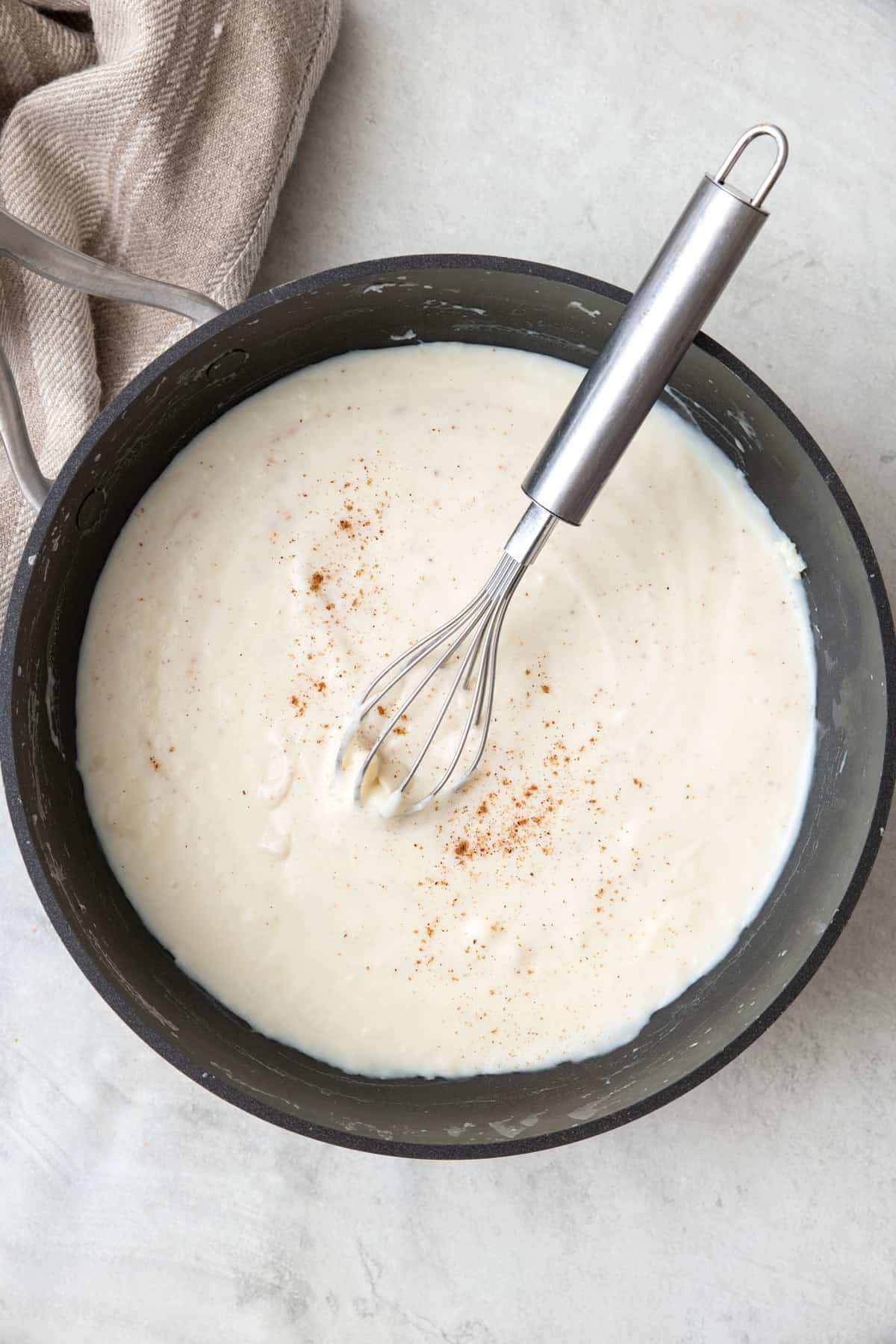
This béchamel sauce actually earned its own spot on the site by accident. I kept using it in other recipes, specifically my eggplant moussaka and my macarona bechamel, and enough of you asked to see it start to finish on its own that I finally pulled it out and gave it the full treatment. It started as more of a how-to than a recipe, because a béchamel can be a little temperamental if you don’t know what to watch for, and I wanted somewhere to put all the tips in one place.
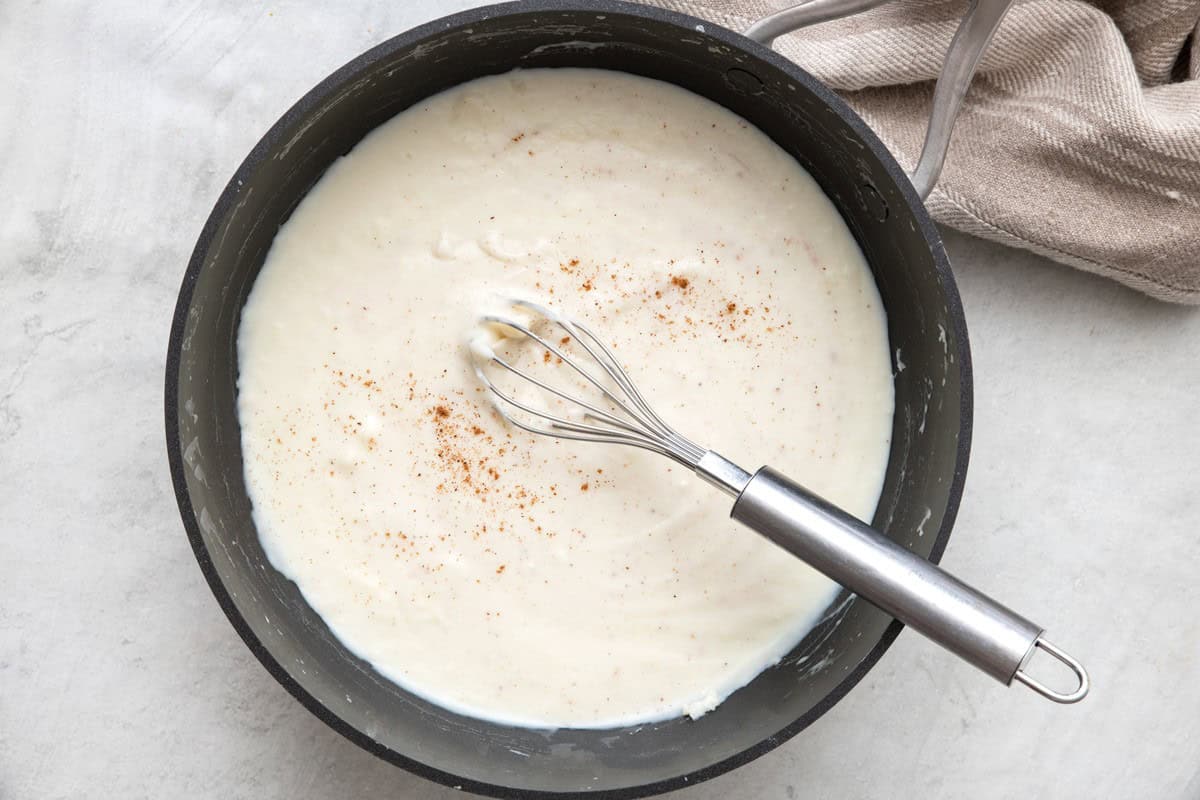
At its core, this béchamel sauce is just butter, flour, and milk cooked until smooth and creamy, but those few steps are where people tend to run into trouble. Once you get the feel for it, it comes together quickly, and you’ll find all kinds of uses for it. It’s one of those building-block recipes that quietly makes a bunch of other dishes better.
Recipe Testing Notes

For the past 10 years, I’ve tested every recipe before sharing it with you! These notes give you a peek into the process of developing this béchamel sauce recipe.
When I first started making it years ago, my early attempts turned out grainy because I dumped the milk in too fast and the flour seized before it could smooth out. I sorted that out a long time ago, and now it’s second nature. I warm the milk first so it doesn’t shock the roux, and I add it gradually while whisking the whole time. Warm milk into a cooked roux, whisking constantly, is the trick to a silky sauce with no lumps, and it’s the thing I most want to pass along since I make this all the time for my moussaka and macarona bechamel.
Cooking the flour long enough is the other thing I always tell people. If you add the milk the second the butter and flour come together, the sauce keeps that raw, floury taste that no amount of salt will cover. I let the roux cook and lightly bubble for a minute or two first to cook that raw edge out, and it makes a real difference in the final flavor.
The heat is the last thing to stay on top of, and it’s where a béchamel can turn on you. Too high and the milk scorches on the bottom of the pan, so I keep it at a steady medium and whisk frequently to keep it from catching. The other thing to know is that a béchamel thickens as it cools, so I pull it off the heat once it just coats the back of a spoon rather than waiting for it to get really thick in the pot. If it does firm up too much, a splash more warm milk brings it right back.
Happy Cooking!
– Yumna
Jump to Section
Bechamel Sauce Ingredients
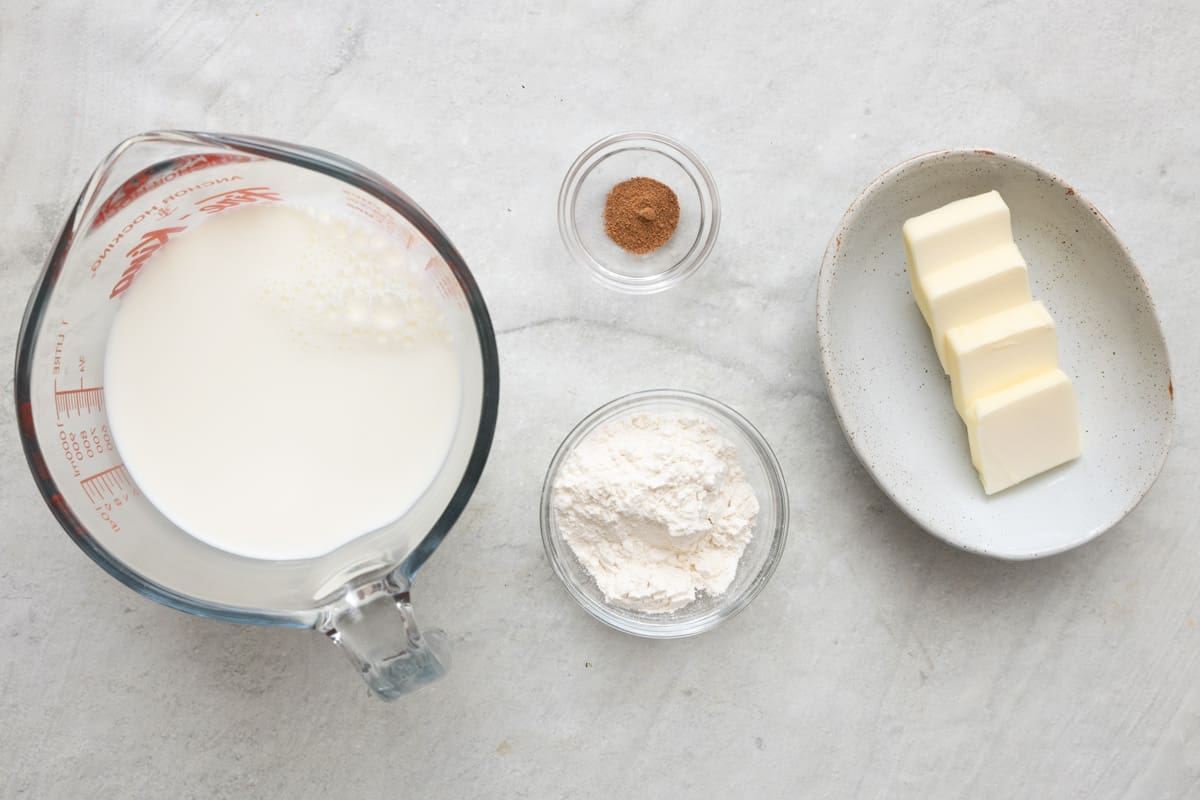
- Butter: Unsalted butter gives you better control over the salt. You can use salted butter, though. Let it melt completely before adding the flour so the roux cooks evenly.
- Flour: All-purpose flour. If my flour looks clumpy in the container, I sift it first. It is a small extra step, but it makes it easier to whisk smoothly into the butter without chasing little flour lumps around the saucepan.
- Milk: Whole milk creates the creamiest sauce, but 2% also works. Warm the milk before pouring it into the pan. It blends into the roux more smoothly and helps prevent lumps from forming.
- Seasoning: A little salt and freshly grated nutmeg are traditional in bechamel sauce. Freshly grated nutmeg has a stronger flavor, but pre-ground works fine if that’s what you have.
How to Make Bechamel Sauce
These step-by-step photos show exactly how I make this basic bechamel sauce from start to finish. The full ingredient amounts and instructions are in the recipe card below, or you can jump straight to the → Bechamel Sauce Recipe
1. Melt the butter
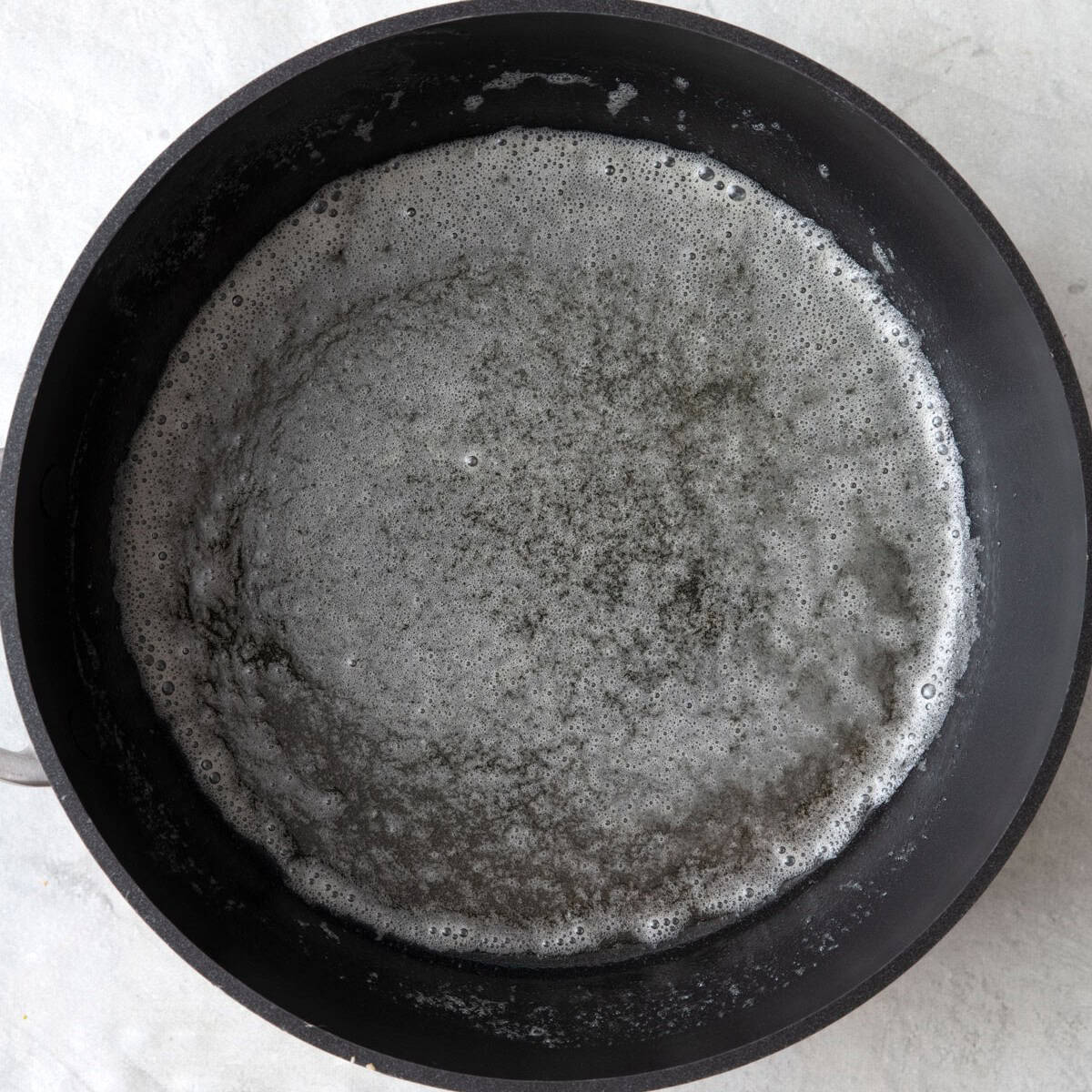
Melt the butter over medium heat until completely liquid but not browned.
2. Add the flour
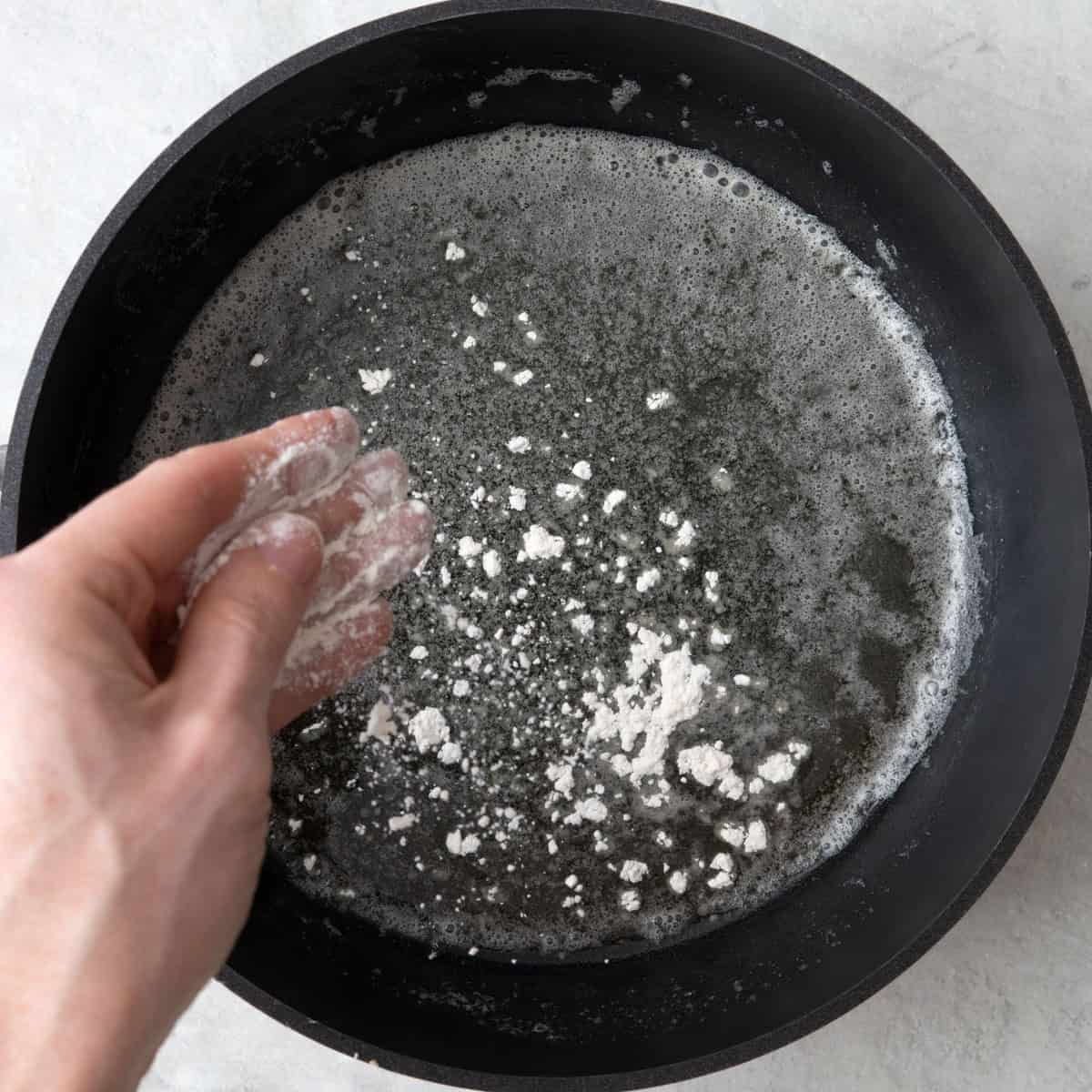
Sprinkle in the flour and immediately begin whisking so it combines evenly with the butter.
3. Whisk the roux sauce
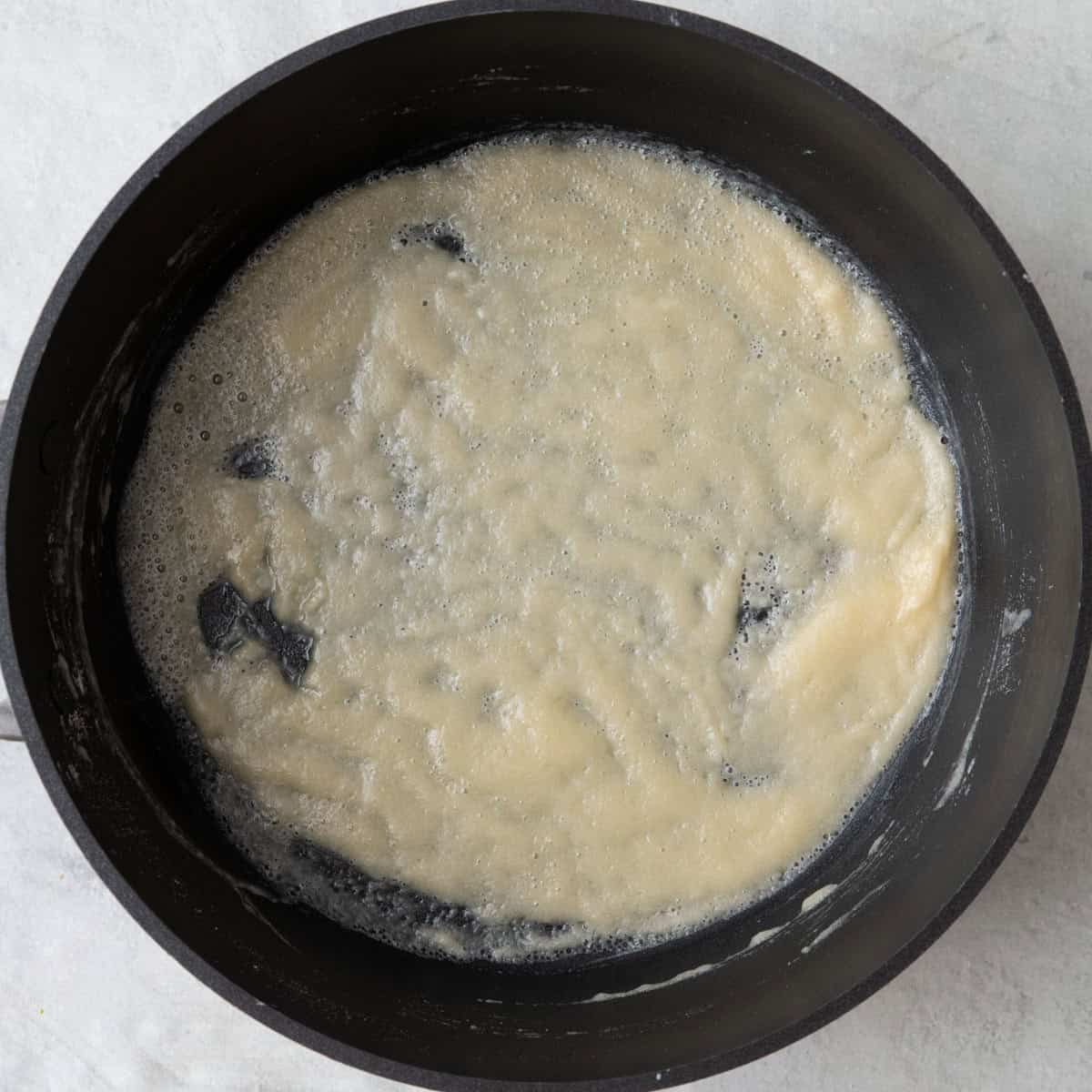
Keep whisking until the mixture is smooth and lightly bubbling. Whisk continuously so there aren’t any dry pockets of flour left. The flour should lose its raw appearance without browning.
4. Whisk in the milk
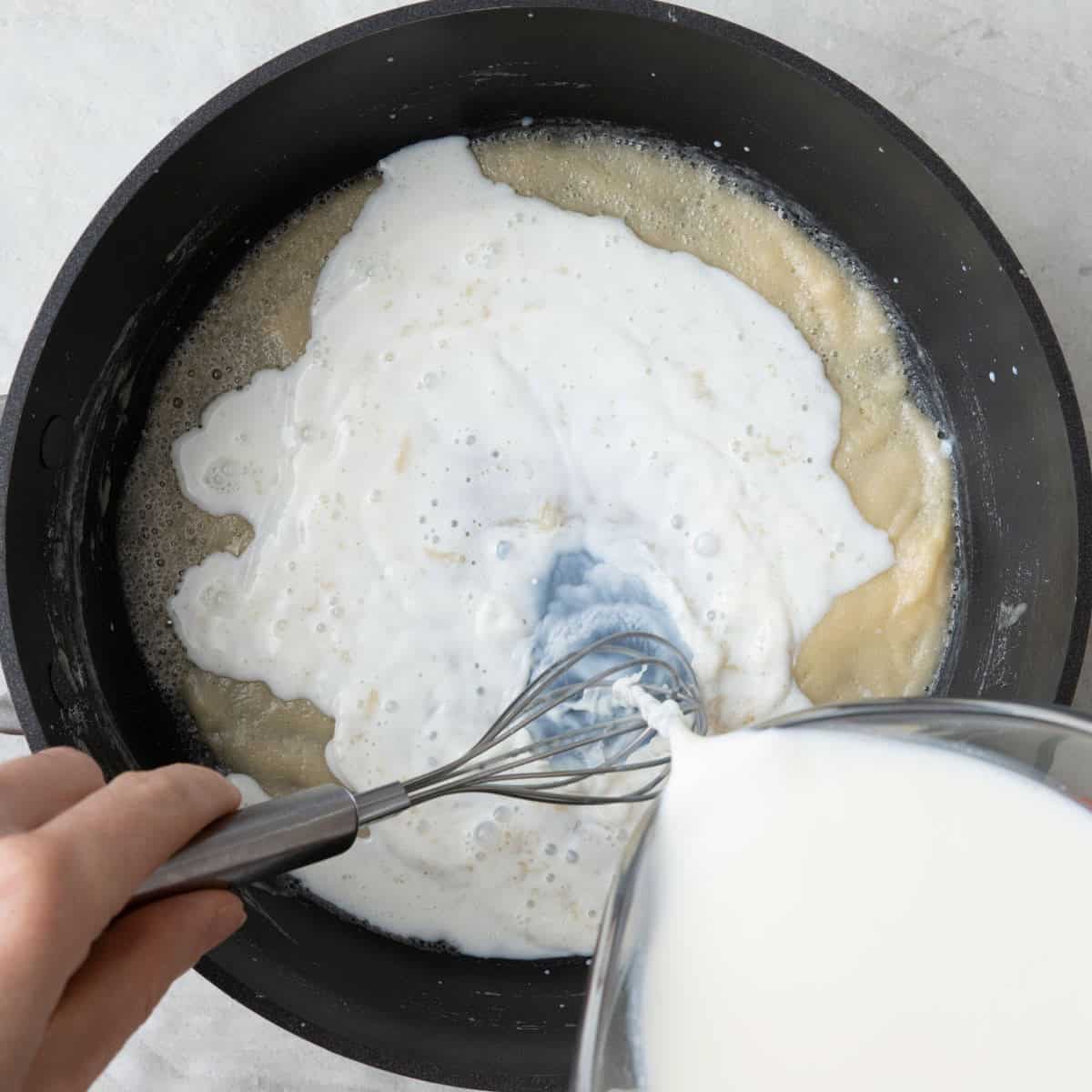
Slowly pour in the warm milk while whisking constantly. Continue stirring as the sauce comes to a gentle simmer and thickens.
5. Season the bechamel sauce
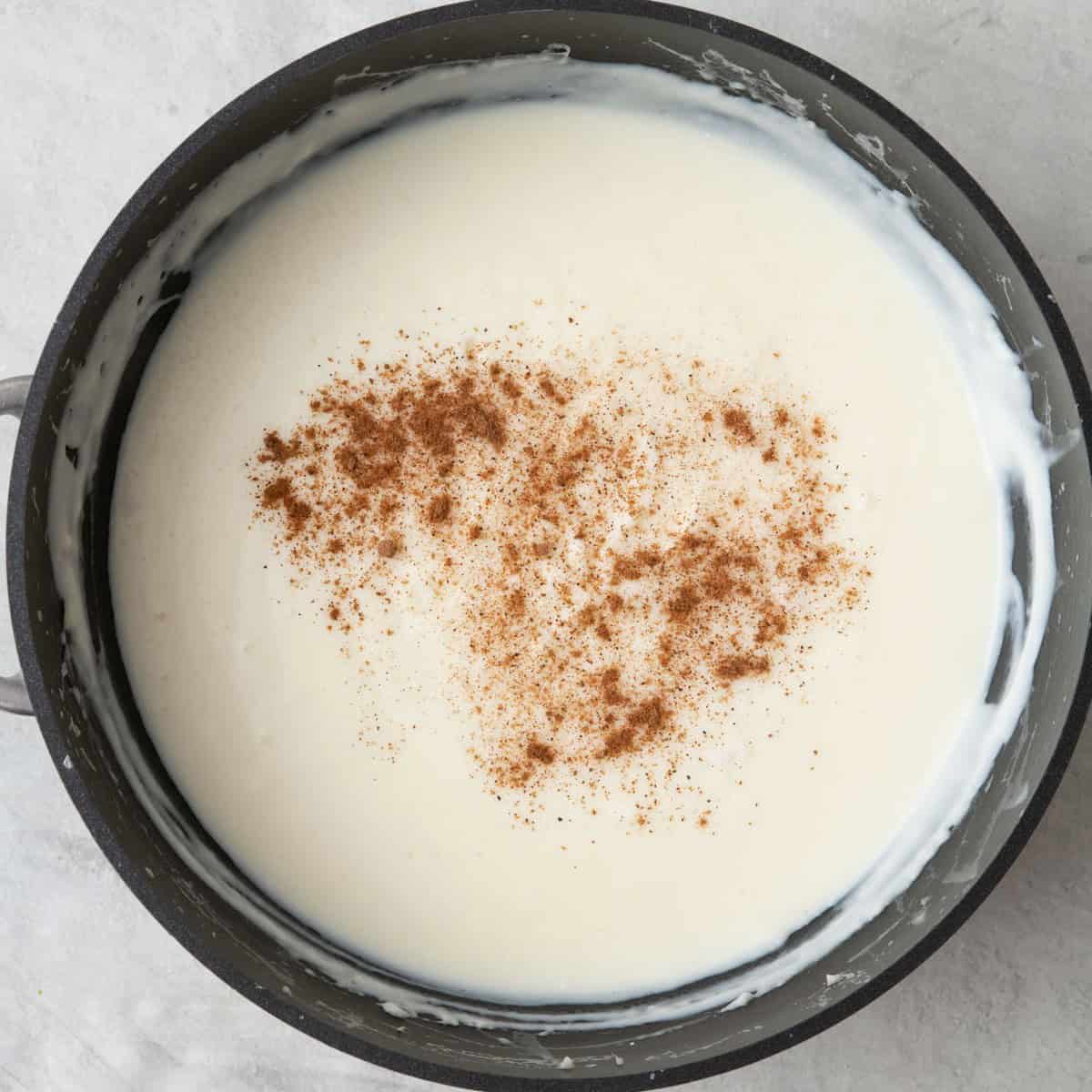
Take the pan off the heat and whisk in the salt and nutmeg.
6. Stir until smooth
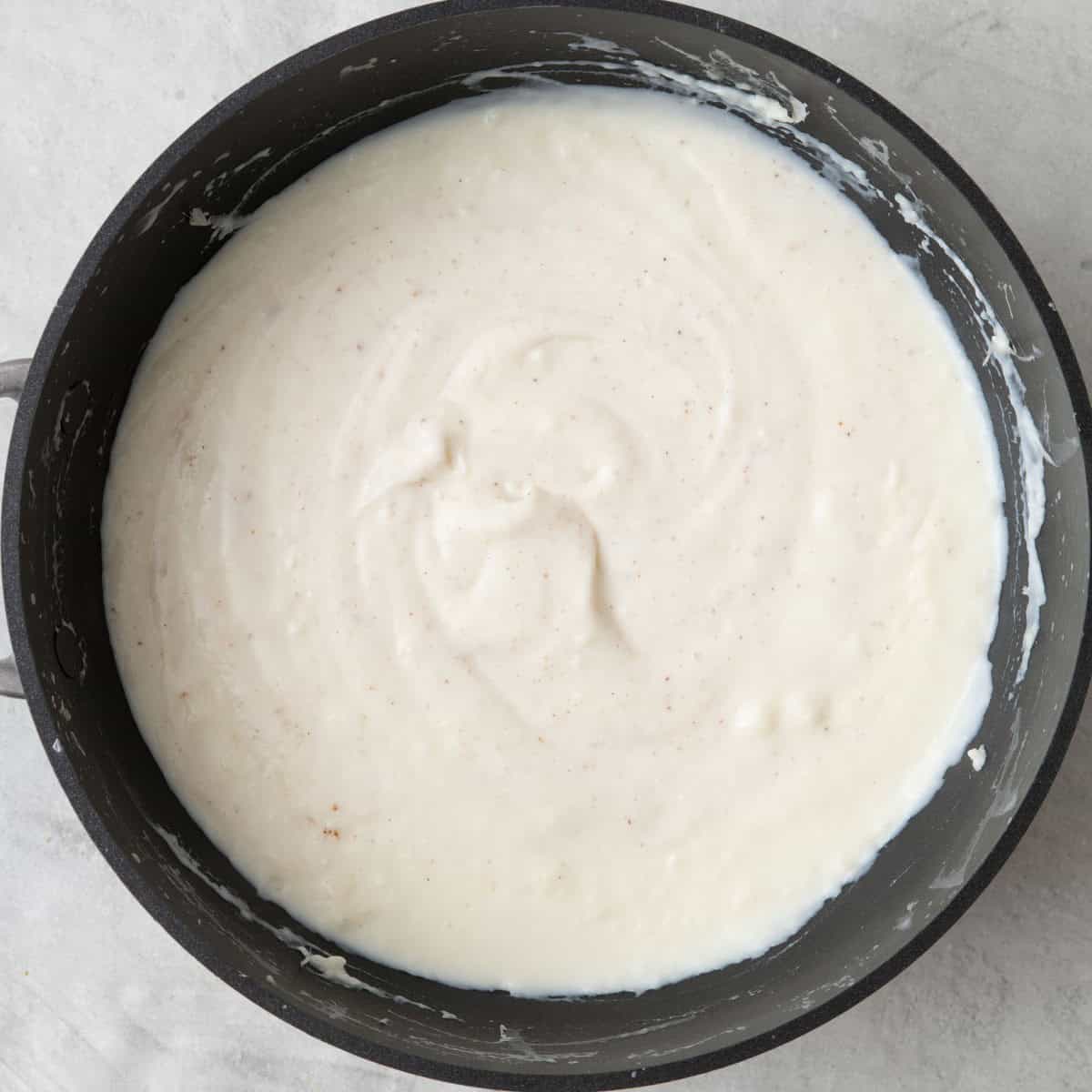
Give everything one final whisk until the sauce is silky smooth and ready to use.
Full Bechamel Sauce Recipe
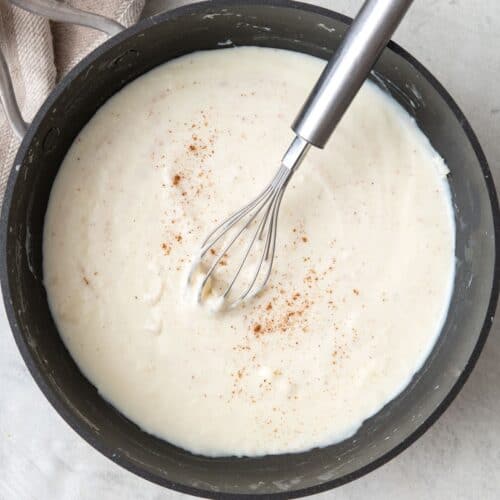
Bechamel Sauce Recipe
Video
Ingredients
- 4 tablespoons butter
- 4 tablespoons all-purpose flour
- 2 ½ cups milk warmed
- ¼ teaspoon nutmeg
- Salt to taste
Instructions
- Melt the butter in a medium saucepan over medium heat. Whisk in flour until fully incorporated and cook, stirring occasionally, until it lightly bubbles.
- Gradually pour in the warm milk. Bring mixture to a boil, then decrease heat to medium. Continue to simmer, whisking frequently, for about 2 more minutes or until the sauce is smooth and thickened.
- Remove from heat and whisk in the salt and nutmeg. At this point, you can also thicken with a tempered egg or whisk in some Parmesan cheese. Use as desired.
Notes
Nutrition
Nutrition information provided is an estimate. It will vary based on cooking method and specific ingredients used.
Variations
- Add garlic: Cook 1 minced garlic clove in the butter before adding the flour.
- Make a cheese sauce: Whisk in 1 cup freshly grated Parmesan, Gruyère, or white cheddar after removing the pan from the heat.
- Season with white pepper: Add ¼ teaspoon white pepper for a more traditional French-style white bechamel sauce.
Recipe Tips
- Whisk frequently. This helps distribute heat evenly and prevents the sauce from burning and sticking to the bottom of the pan.
- Don’t brown the roux sauce. Cook it just until it lightly bubbles. Browning it will darken the sauce and change its flavor.
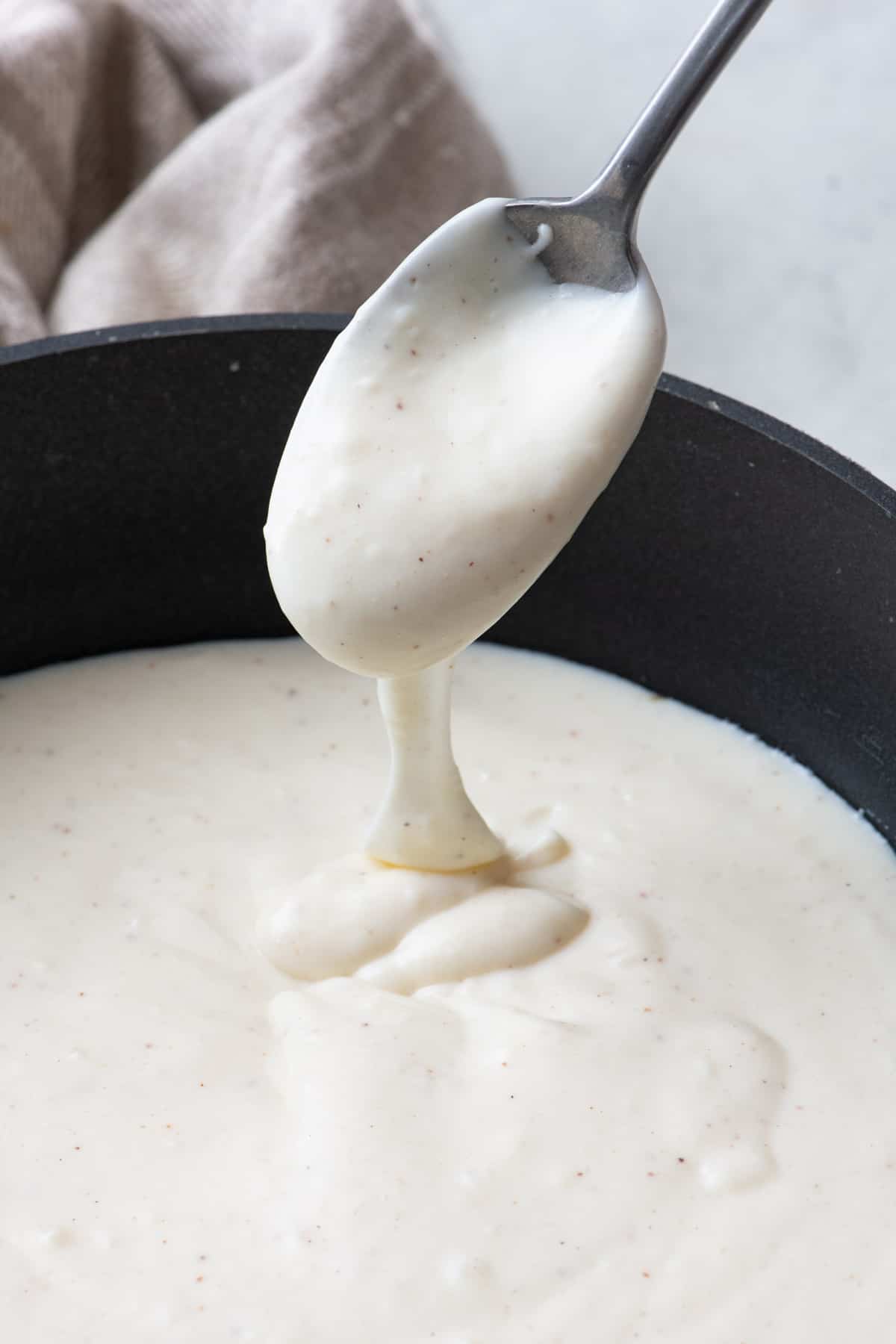
- Simmer until thickened. Simmer until the sauce coats the back of a spoon and has a smooth consistency. But avoid vigorous boiling as that may cause the sauce to break down and become grainy in texture.
Serving Ideas
- Use it for pasta: I love turning this into a simple pasta dinner by tossing it with cooked fettuccine or penne. It also works as the base for my homemade mac and cheese, pumpkin mac and cheese, or pesto gnocchi.
- Layer it into lasagna: This white sauce for lasagna is one of its most classic uses. Try it in lasagna with cottage cheese, tomato lasagna, zucchini lasagna, or any baked pasta that calls for a creamy layer.
- Drizzle it over veggies: I like spooning warm bechamel sauce over roasted or steamed vegetables to make them feel a little more special. It goes especially well with roasted broccoli, roasted cauliflower, or roasted zucchini.
Troubleshooting
This usually happens if you added the milk too quickly or didn’t whisk the sauce constantly. Pour the milk in gradually while whisking, or blend the finished sauce with an immersion blender if needed.
You may not have cooked the roux for cooked long enough, or the sauce may just need a little more simmering time. Continue whisking over medium heat until it coats the back of a spoon.
Bechamel naturally thickens as it cools. Whisk in warm milk a little at a time until it reaches the consistency you’re looking for.
You can make a gluten-free roux using a gluten-free flour blend or a thickening agent like cornstarch or arrowroot powder. Keep in mind that different flours may affect the overall texture and flavor of the sauce, but the process is the same.






Comments
I made a 3x batch of this today. I skipped the nutmeg and added minced garlic, garlic powder, and onion powder. I’m quite impressed with how nicely it turned out. I also just used cold milk because I didn’t plan ahead and it turned out fine with that. Thank you so much for the recipe!
Those are great additions and I’m so glad it worked well with cold milk! Hope you enjoy!
This was so simple and tasty…and I used a low carb milk! Thanks so much.
Glad you enjoyed this one!