Pomegranate Molasses

Updated Aug 30, 2026
Homemade pomegranate molasses made with just pomegranate juice, sugar, and lemon. Simmer it down into a thick, syrup for dressings, marinades, and more.
This post may contain affiliate links. Please read our disclosure policy.
There was always a sticky, half-used bottle of pomegranate molasses in the door of my mom’s fridge growing up, and there’s one in mine now too. It shows up all over Middle Eastern cooking, and I reach for it constantly because that sweet-sour tang works in both sweet and savory dishes. It’s made by simmering pomegranate juice with sugar until it reaches a thick, glossy consistency, a process similar to making balsamic glaze.

I know, spending 90 minutes watching pomegranate juice bubble away might not sound like your idea of fun, but it’s mostly hands-off and totally worth it. Plus, making it yourself means you can adjust the sweetness to your taste, something you can’t do with a bottle off the shelf. Once you’ve made your own pomegranate molasses and tasted the difference it makes in your cooking, there’s no going back.
Recipe testing notes

For the past 10 years, I’ve tested every recipe before sharing it with you! These notes give you a peek into the process of developing this pomegranate molasses recipe.
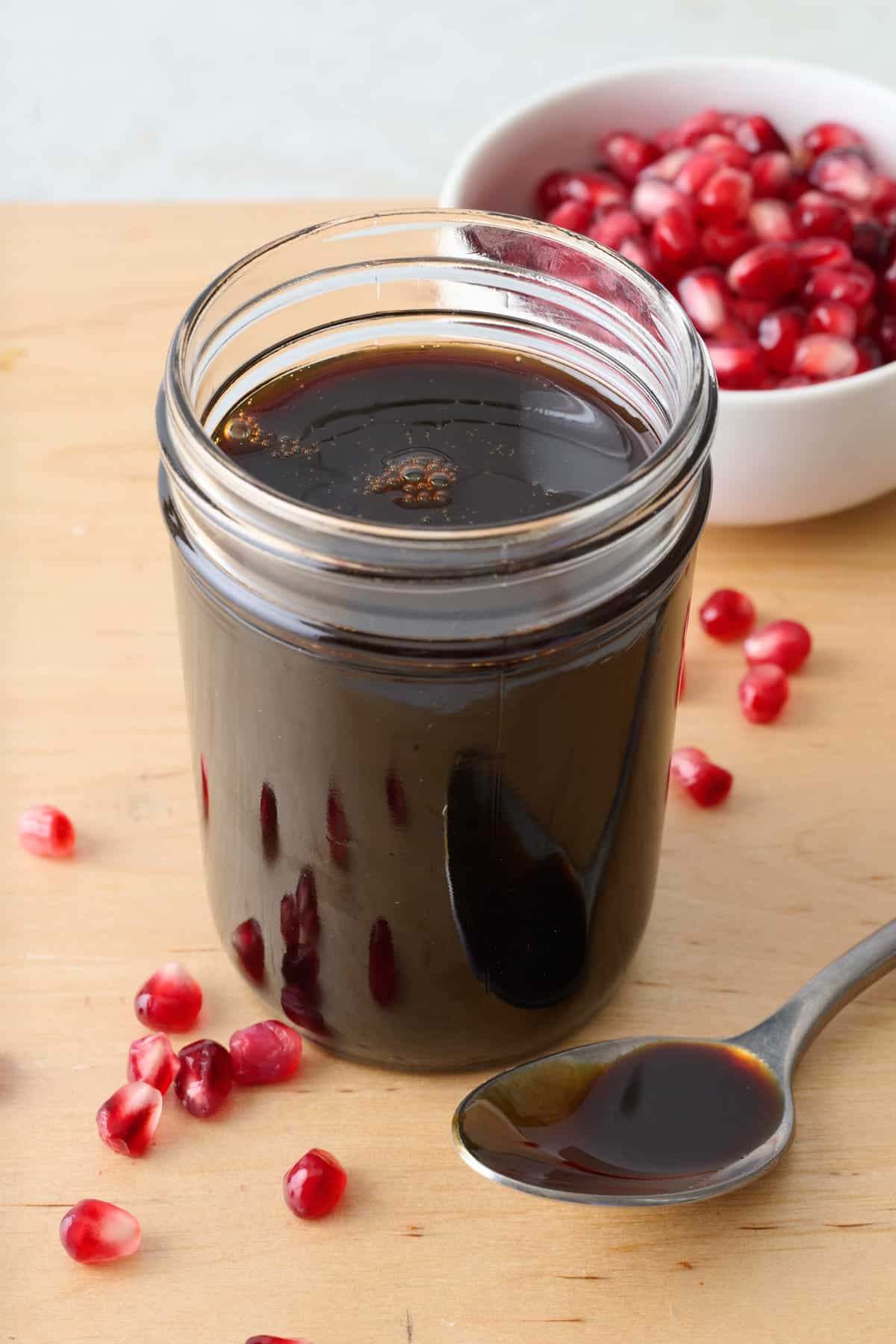
Knowing when to stop cooking it was the whole thing I had to figure out, because it fools you. While it’s hot in the pot, it looks way too thin to be done, nothing like the thick molasses you’re picturing, so the temptation is to just keep simmering it. That’s exactly what got me the first time. I cooked it until it actually looked thick in the pot, and once it cooled, it was a stiff, sticky mess that was almost hard. The thing nobody tells you is how much it thickens as it cools, so you have to pull it while it still looks a little too thin, when it just coats the back of a spoon. That’s around a quarter of what you started with, and trusting that even though it doesn’t look done yet is the hardest part.
The heat matters more toward the end than the beginning. Early on it can bubble away on its own, but as it reduces and gets concentrated, the sugars can catch and scorch on the bottom of the pan fast, and burnt pomegranate is bitter and not fixable. So I keep it at a steady simmer, not a hard boil, and stir it more often once it starts getting syrupy.
The juice you start with makes a real difference too. You want pure pomegranate juice with no added sugar, because if the juice is already sweetened, you end up with something cloying. I also learned the lemon juice isn’t just for flavor; it balances out the sweetness and helps keep the sugar from crystallizing, so I wouldn’t leave it out. Depending on how tart your juice is, you can nudge the sugar up or down to taste.
Happy Cooking!
– Yumna
Jump to Section
Pomegranate Molasses Ingredients
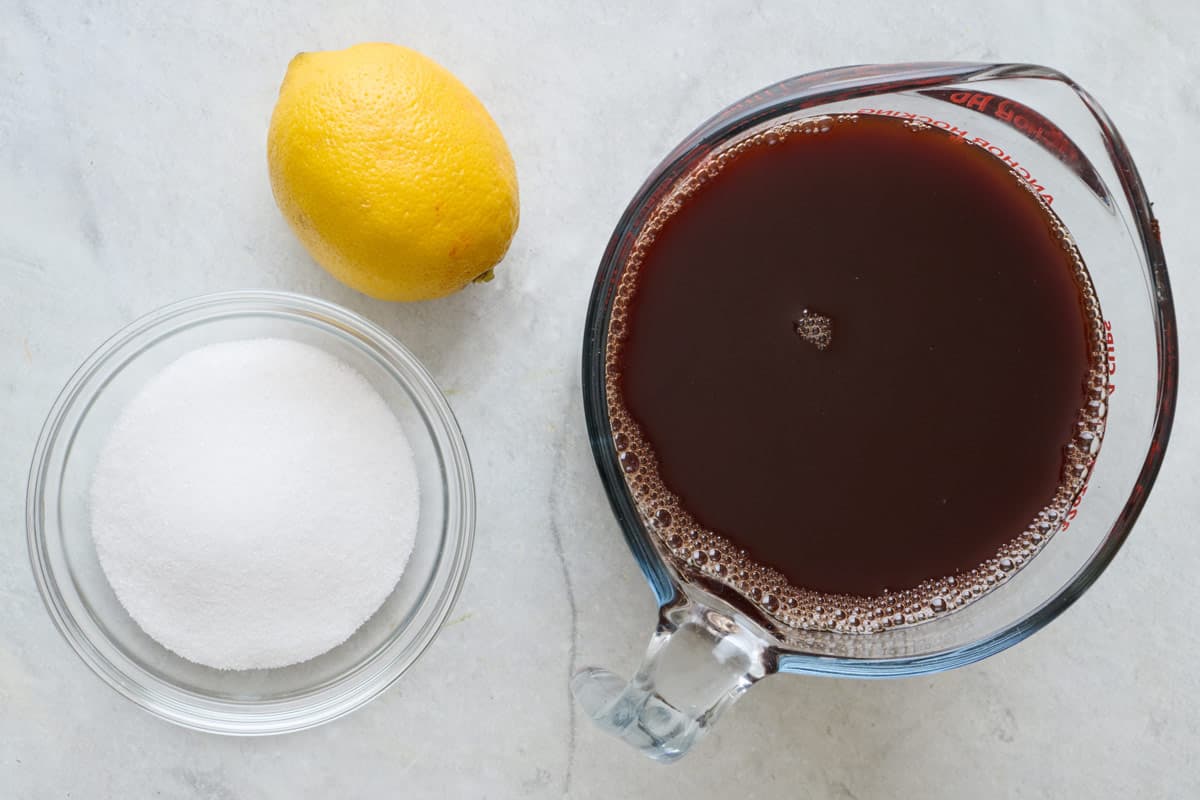
- Pomegranate juice: Look for 100% pure juice with no added sugar or artificial ingredients. Or, make your own juice from fresh-cut pomegranates!
- Sugar and lemon juice: I use granulated sugar and fresh lemon juice.
How to Make Pomegranate Molasses
These photos show what the pomegranate molasses mixture looks like as it cooks and reduces. The full ingredient amounts and instructions are in the recipe card below, or you can jump straight to the → Pomegranate Molasses Recipe
1. Combine the ingredients

Add the pomegranate juice, granulated sugar, and lemon juice to a medium saucepan over medium-high heat.
2. Dissolve the sugar

Stir until the granulated sugar has completely dissolved into the juice and the mixture looks smooth.
3. Bring to a simmer

Bring the mixture to a boil, then lower the heat and let it simmer uncovered.
4. Reduce the molasses

Continue simmering until the mixture has reduced to about one-quarter of its original volume. It should look thick and syrupy and coat the back of a spoon.
Full Pomegranate Molasses Recipe

Pomegranate Molasses Recipe
Video
Ingredients
- 4 cups pure pomegranate juice
- ½ cup granulated sugar
- ¼ cup fresh lemon juice
Instructions
- In a medium-sized saucepan over medium-high heat, combine the pomegranate juice, sugar, and lemon juice. Stir the mixture well to dissolve the sugar.
- Bring the mixture to a boil, then reduce the heat to a simmer. Allow it to simmer uncovered.
- Simmer the mixture until it reduces to a thick, syrupy consistency about a quarter of the amount, about 90 minutes. To check the consistency, place a small amount of the molasses on a spoon and let it cool slightly. It should have a syrupy texture and coat the back of the spoon. You'll get about 8 ounces.
- Allow the pomegranate molasses cool to room temperature. Pour the cooled pomegranate molasses into a clean, airtight jar or bottle and store in the fridge for up to 3 months.
Equipment
Notes
Nutrition
Nutrition information provided is an estimate. It will vary based on cooking method and specific ingredients used.
Recipe Variations
- Add more lemon: Add 1 additional tablespoon of fresh lemon juice along with the other ingredients for a more tart flavor.
- Add orange: Simmer the mixture with 2 strips of orange peel, then remove them before transferring the molasses to a jar.
- Add a warm spice: Simmer the mixture with 1 small cinnamon stick, then remove it once the pomegranate molasses finishes reducing.
Recipe Tips
- Use a wide pan to speed up the reduction. A wide-bottomed pan will provide more surface area for evaporation, which can help speed up the reduction process.
- Keep the simmer gentle. Once the mixture comes to a boil, lower the heat so it can reduce gradually. If the heat is too high, the liquid can reduce too quickly before it reaches the right consistency.
- Stir occasionally to promote even simmering. Stirring helps distribute heat evenly and prevents the molasses from sticking to the bottom of the pan.
- Watch it more closely toward the end. Most of the cooking is hands-off, but check the saucepan more often once the liquid has reduced significantly. There’s less liquid at that point, so the consistency can change faster.
Serving Ideas
- Brush it on meat: I love brushing cooked meat with a little bit of pomegranate molasses. Try my pomegranate roasted chicken thighs or brush it on pan-seared steak.
- Upgrade your salad: This molasses is a great addition to my Lebanese fattoush salad, turmeric rice salad, or bulgur chickpea salad. A little drizzle adds a lot of flavor.
- Add to a dip: Making homemade muhammara dip is one of my favorite uses for pomegranate molasses! You could also add 1–2 teaspoons to whipped feta dip, labneh, or baba ghanoush.
Troubleshooting
You probably need to reduce it for longer. The mixture starts with more than 4 cups of liquid and should cook down to about 1 cup. Keep it at a steady simmer and use the volume and spoon test rather than expecting it to look extremely thick while it’s still hot.
You likely reduced it too far. The molasses continues to thicken as it cools, so it should still be pourable when you take it off the heat. If it becomes very thick once cooled, gently warming it can make it easier to pour.
Yes, but you’ll have to simmer it for a longer time to allow it to thicken properly without sugar. Keep in mind that molasses made without sugar will also be more tart.






Comments
Hi Yumna, I am a big fan of your website and recipes. Quick question, I am tying to reproduce a lemon mint salad dressing we used to love from the now defunct EL Morocco restaurant that was located in Worcester, Ma. I don’t know if you ever heard of it or had been there, but I loved it. If you do something similar it would be great to hear from you. Thank you in advance.
David Mitchell
Hi David, I’m not familiar with that, but maybe try my fattoush dressing which has lemon, mint and pomegranate molasses? I think it’s a wonderful dressing that goes with so many salads!